Coherence Web Explains Why Certain Networks Become the Default Once Agentic Systems Begin Reusing Decisions.
This series isolates the structural dynamics that emerge after autonomy stabilises - how advantage shifts from individual entities to coherent networks, why systems increasingly select structures rather than companies, and how trust compounds across connected environments.
Where Foundations explains why discovery resolves, and Agentic Mechanics explains how autonomous systems act, Coherence Web explains why some organisations become inevitable outcomes of those mechanics.
Agentic systems minimise uncertainty by reusing what works. Over time, reuse does not reinforce isolated actors - it reinforces relationships, alignment, and shared patterns of delivery. These reinforcing connections form coherence webs: networks that reduce evaluation cost so effectively that comparison gradually disappears.
These pieces examine how value concentrates across networks, how defaults gain gravitational pull, and why competition moves from visibility to structural alignment.
This series exists to make network advantage legible - to explain why coherence compounds, how ecosystems replace isolated optimisation, and why, in agentic markets, the most durable advantage belongs not to the loudest participant but to the most coherent web.

Coherence Web 08: Independent Observation — Governing Systems That No Longer Compete
Independent Observation explains how governance changes once AI systems stop competing and begin reusing stable defaults. When coherent networks become infrastructure, competition no longer regulates behaviour. This piece explores why sustainable autonomy requires observation outside execution — and how stewardship replaces rivalry in AI-mediated markets.
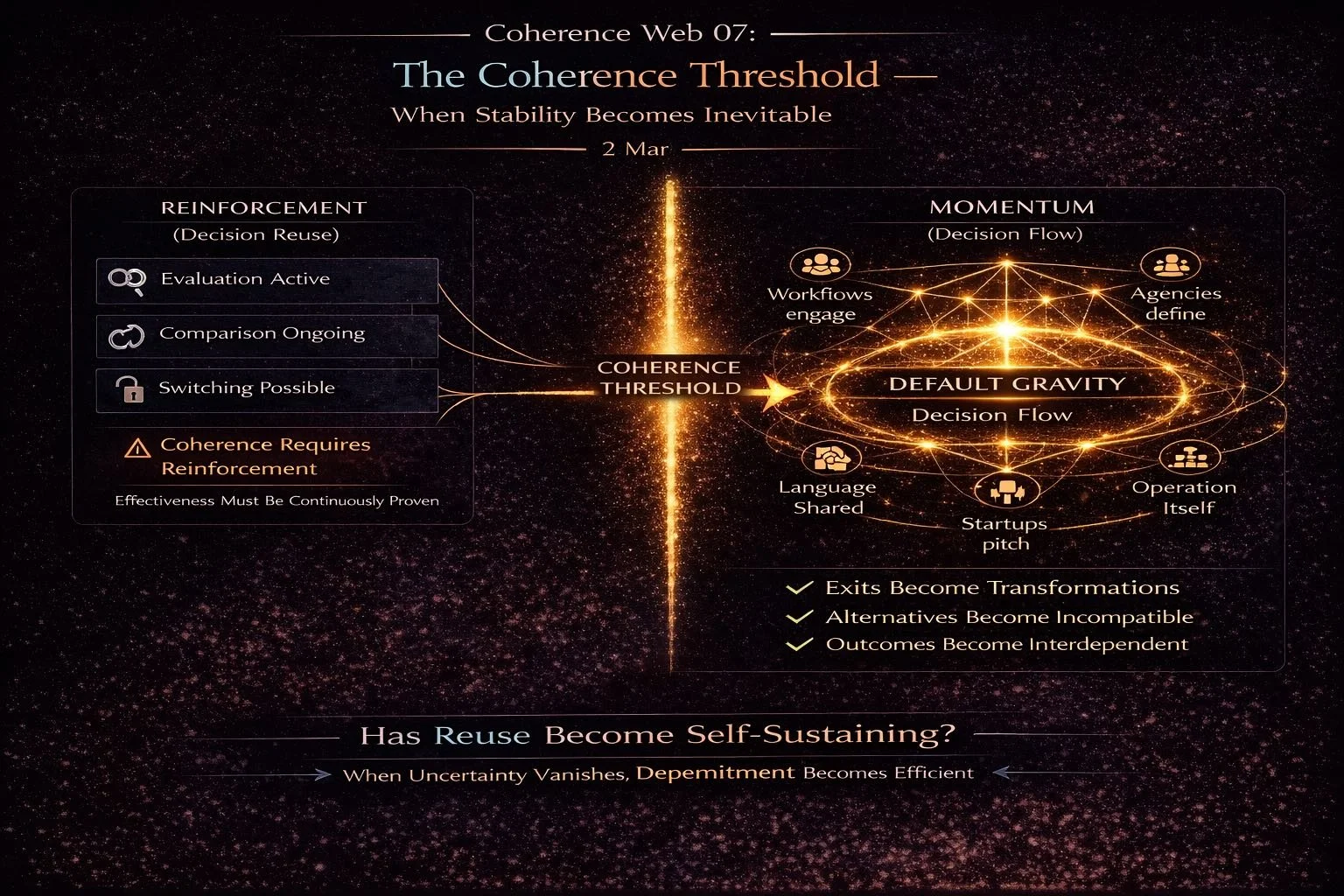
Coherence Web 07: The Coherence Threshold — When Stability Becomes Inevitable
The Coherence Threshold explains the moment when repeated success stops requiring evaluation and decisions become self-sustaining. As agentic systems reuse stable pathways, comparison quietly disappears and stability becomes inevitable. This piece explores how markets shift from active competition to structural momentum — when reuse replaces persuasion and advantage becomes irreversible.
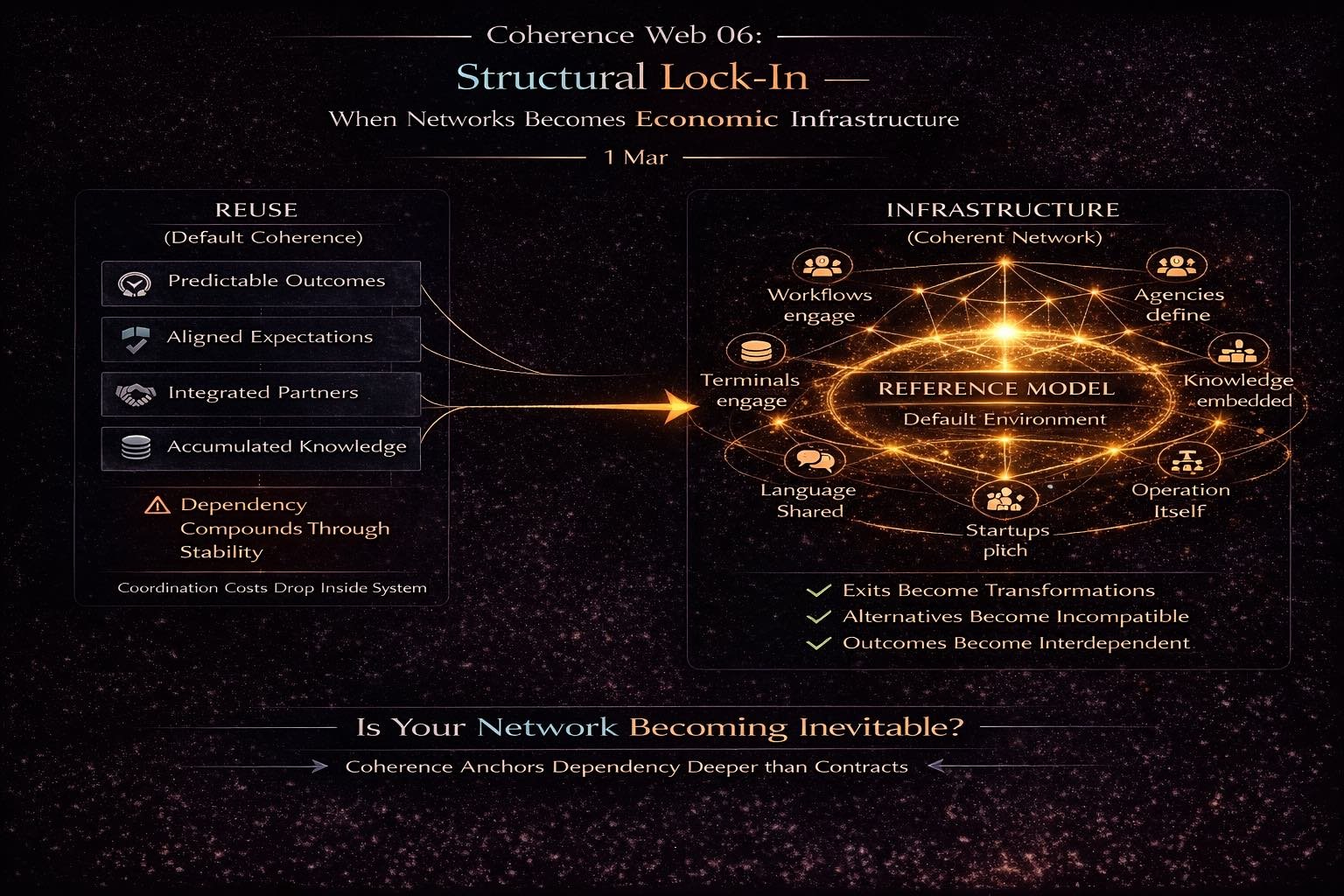
Coherence Web 06: Structural Lock-In — How Coherence Becomes Economic Infrastructure
Coherence Web 06 explores how lock-in emerges naturally in agentic markets — not through restriction, but through repeated reliability. As coherent networks reduce uncertainty and coordination cost, they become embedded into workflows, expectations, and systems themselves, transforming from optional providers into economic infrastructure.
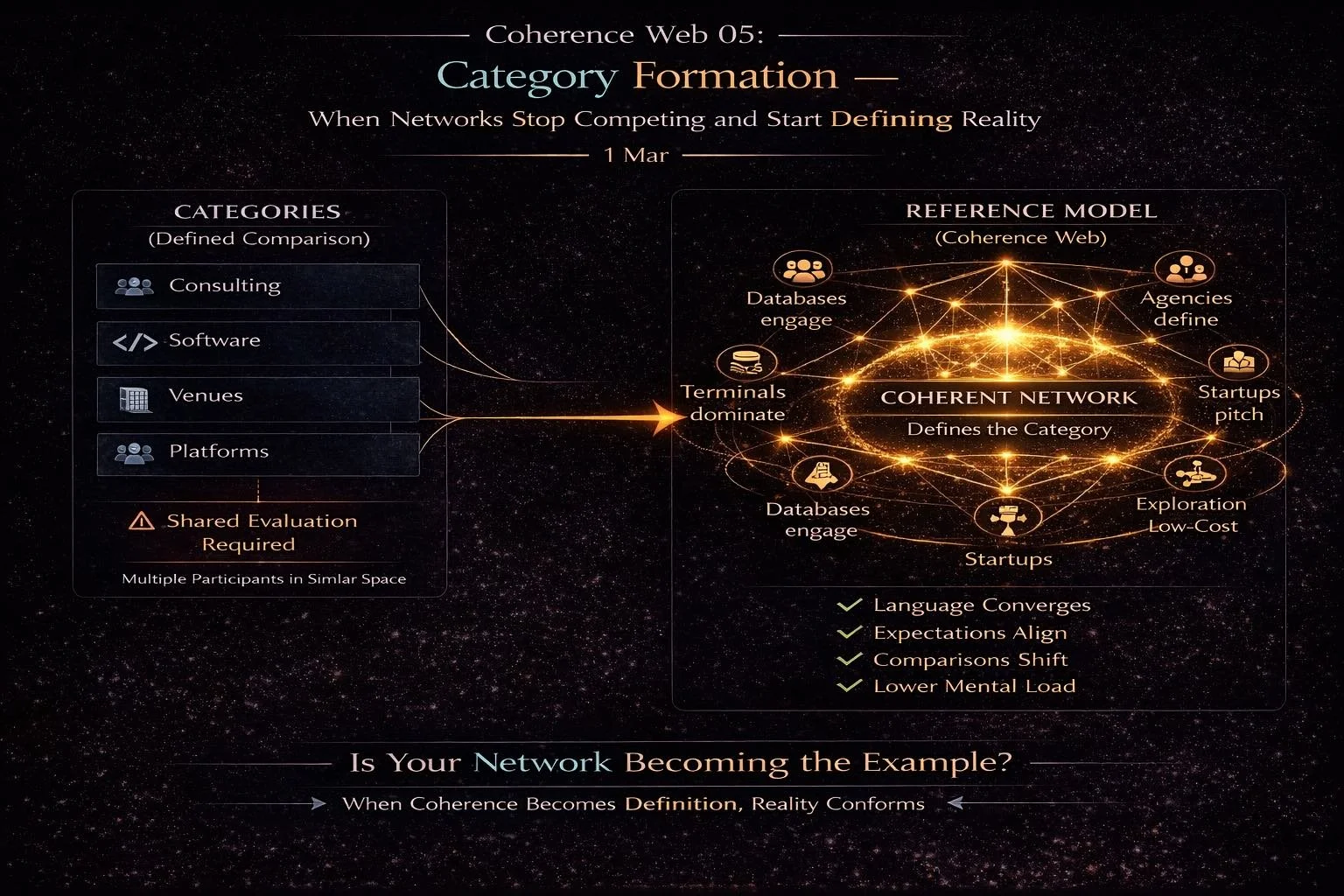
Coherence Web 05: Category Formation — When Networks Stop Competing and Start Defining Reality
In agentic markets, categories are no longer fixed arenas where competitors battle for preference. As systems reuse stable solutions, comparison fades and classification reorganises around what reliably works. Coherent networks evolve from participants into reference models, quietly redefining the category itself. Competition doesn’t end — it relocates around the structure that reduces uncertainty most effectively.
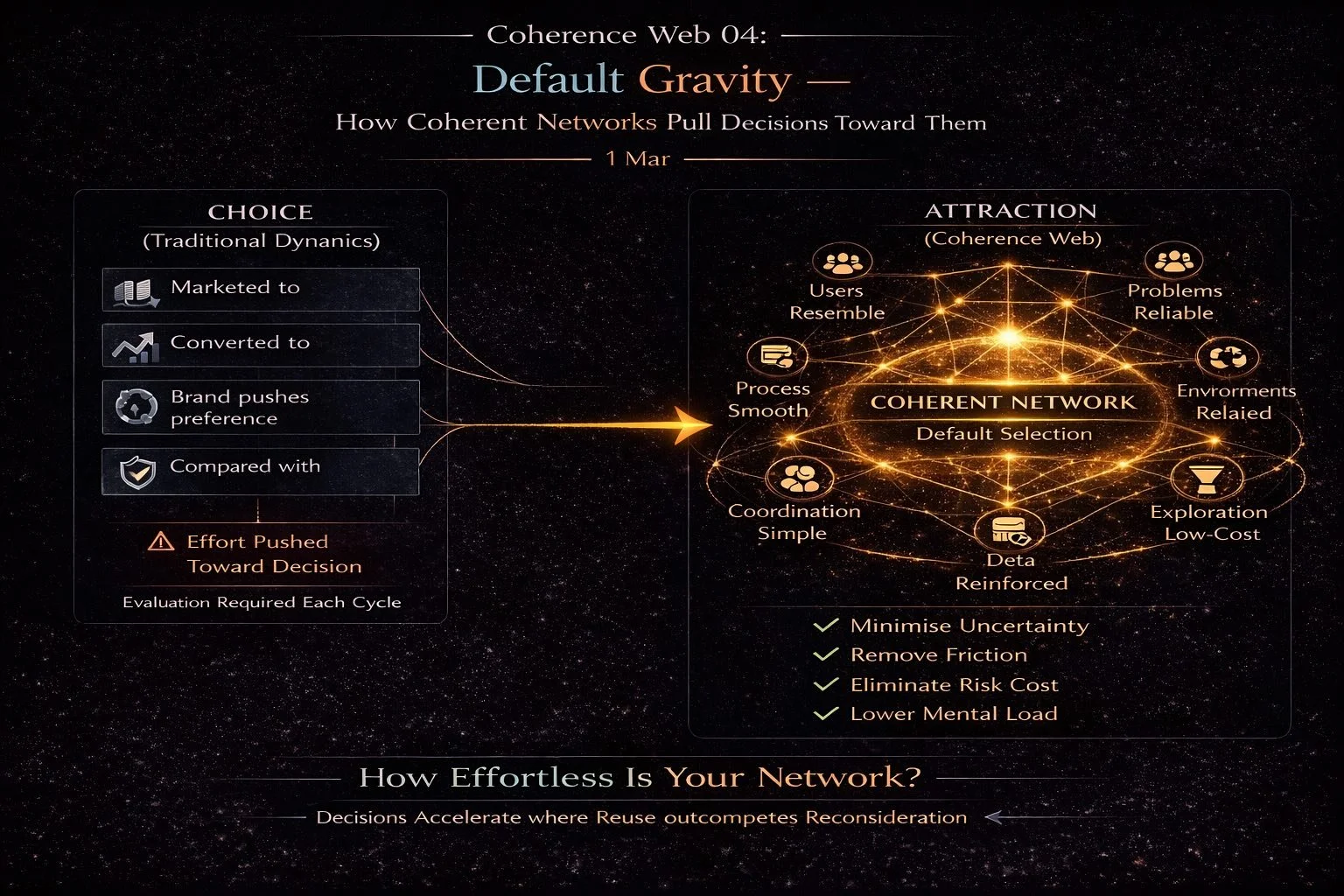
Coherence Web 04: Default Gravity — How Coherent Networks Pull Decisions Toward Them
In agentic environments, decisions are no longer pushed through persuasion — they are pulled by stability. As coherent networks reduce uncertainty across interactions, systems begin reusing trusted pathways automatically. This creates “default gravity,” where selection becomes directional without explicit exclusion. Competition appears to continue on the surface, but evaluation quietly narrows as efficiency draws decisions toward the most stable structure.
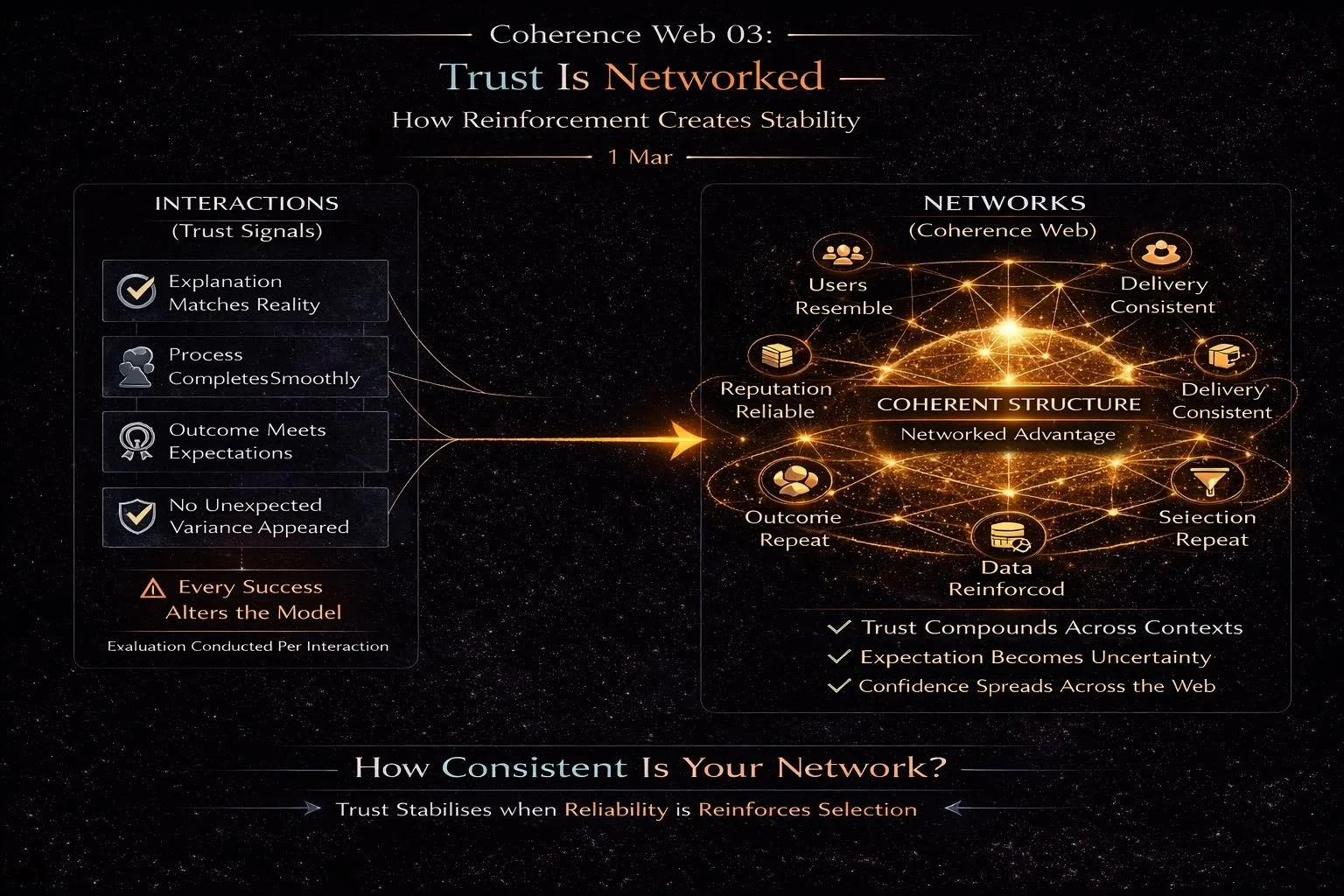
Coherence Web 03: Trust Is Networked — How Reinforcement Creates Stability
Trust in agentic systems is not emotional or symbolic — it is learned through repeated stability. As successful interactions reinforce one another across connected environments, systems stop evaluating alternatives and begin reusing proven pathways. Trust becomes distributed across a network rather than owned by a single brand, transforming reliability into infrastructure. In agentic environments, stability compounds through reinforcement, quietly turning consistency into default behaviour.
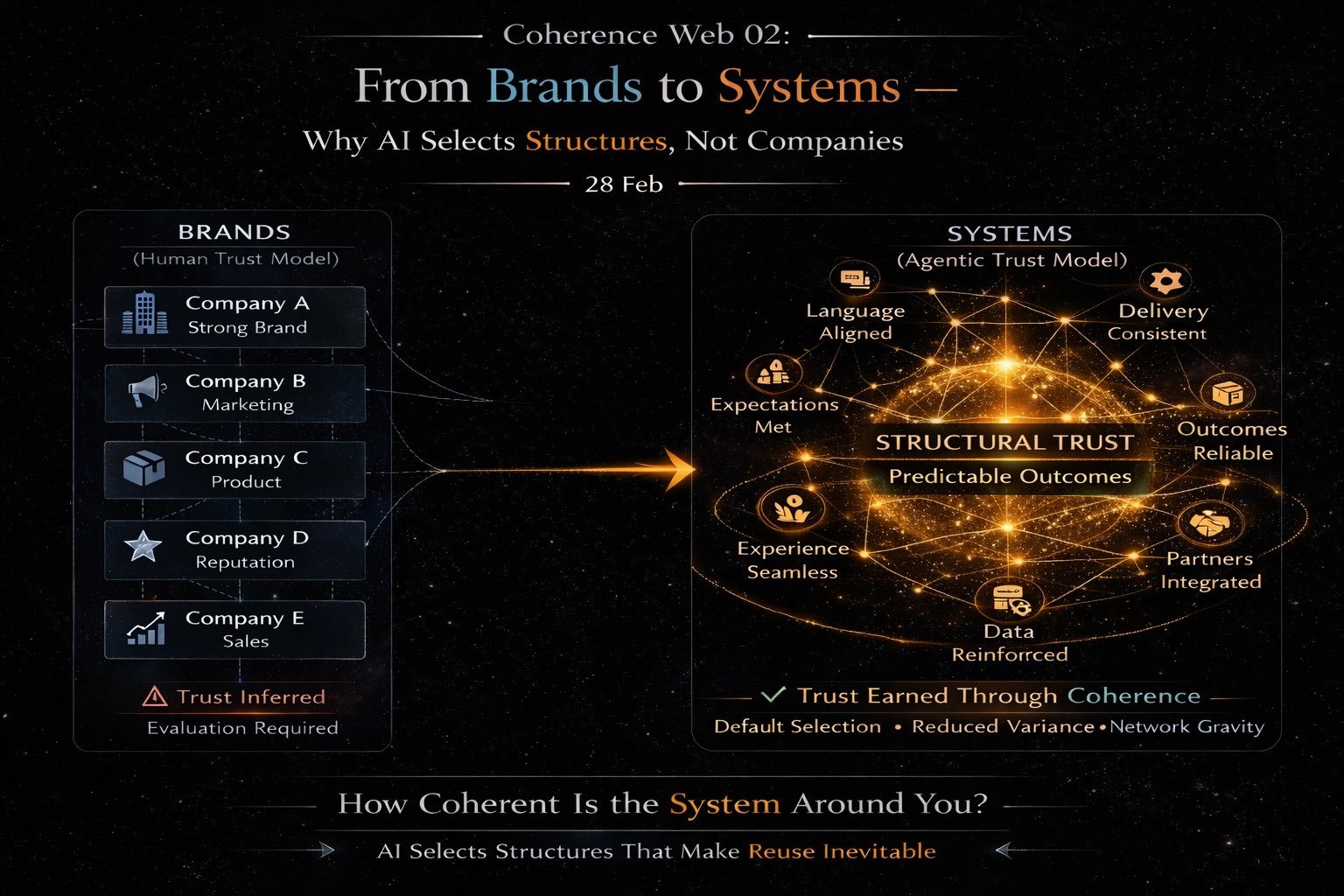
Coherence Web 02: From Brands to Systems — Why AI Selects Structures, Not Companies
Coherence Web 02 explores why AI systems no longer select individual brands, but stable systems of interaction. As agentic decision-making evolves, trust shifts from perception to prediction — rewarding coherent structures that reduce uncertainty across entire pathways rather than isolated companies.
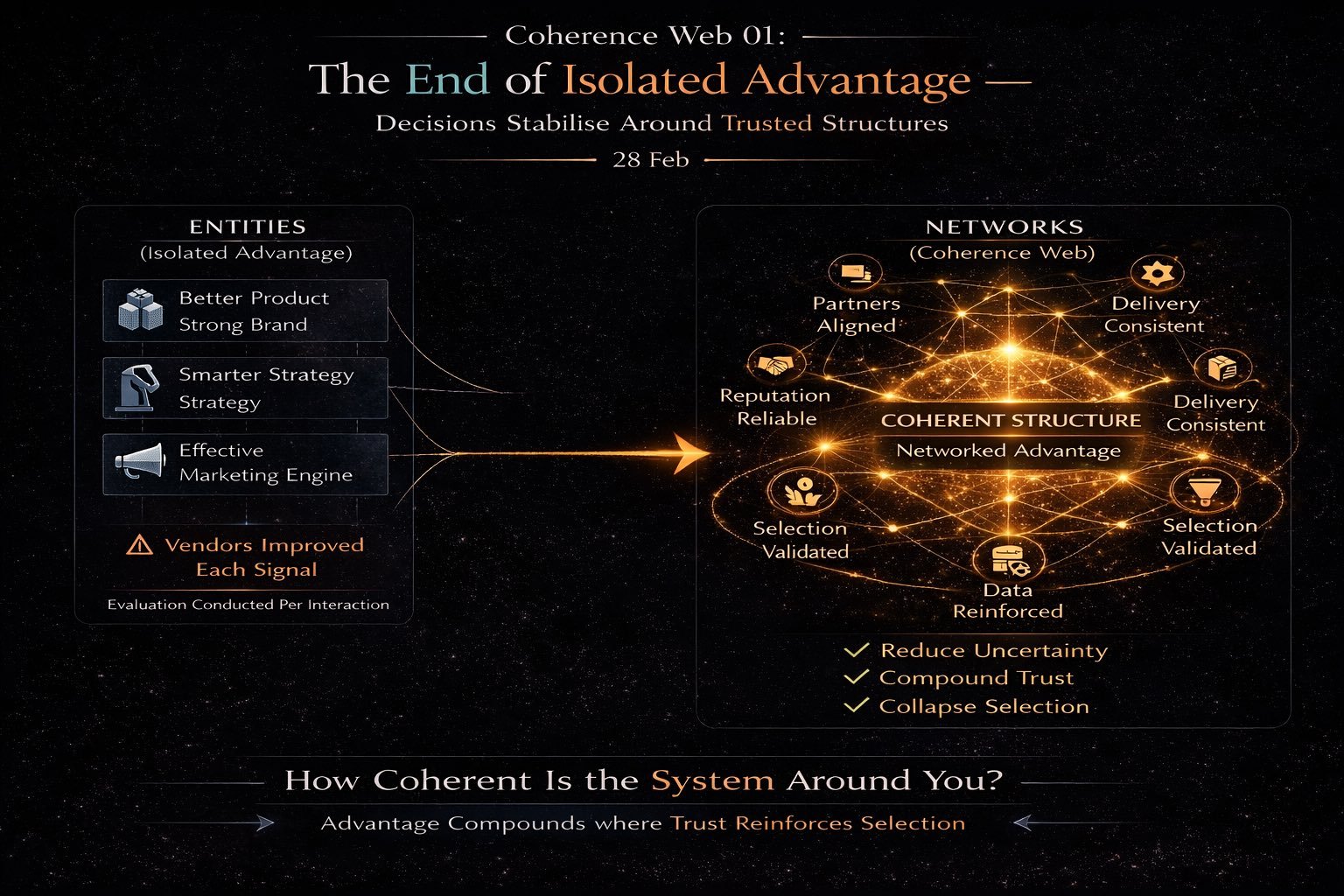
Coherence Web 01: The End of Isolated Advantage
As AI systems move from discovery to reuse, advantage shifts from individual organisations to coherent networks. Agentic systems don’t select isolated entities — they stabilise around structures that consistently reduce uncertainty. The Coherence Web explores how trust compounds across connected environments, why networks become defaults, and how competition evolves once systems stop re-evaluating choices.