Agentic Mechanics Sets Out How Autonomous Systems Act Once Discovery Is Over.
This series isolates the structural mechanics that govern agentic behaviour - how AI systems move from answering questions to running work, how decisions collapse into reuse, and why defaults harden into infrastructure.
Where Foundations explains how discovery resolves, Agentic Mechanics explains what happens next: how agents procure, coordinate, and execute without human supervision - and why reconsideration becomes a failure state, not a feature.
These pieces focus on the internal logic of autonomous systems: why they avoid variance, how they manage risk, and what makes certain entities cheap to reuse while others remain perpetually re-evaluated.
This series exists to make agentic behaviour legible - to explain how defaults become operational dependencies, and to document the mechanics that persist once optimisation, comparison, and visibility debates are no longer relevant.
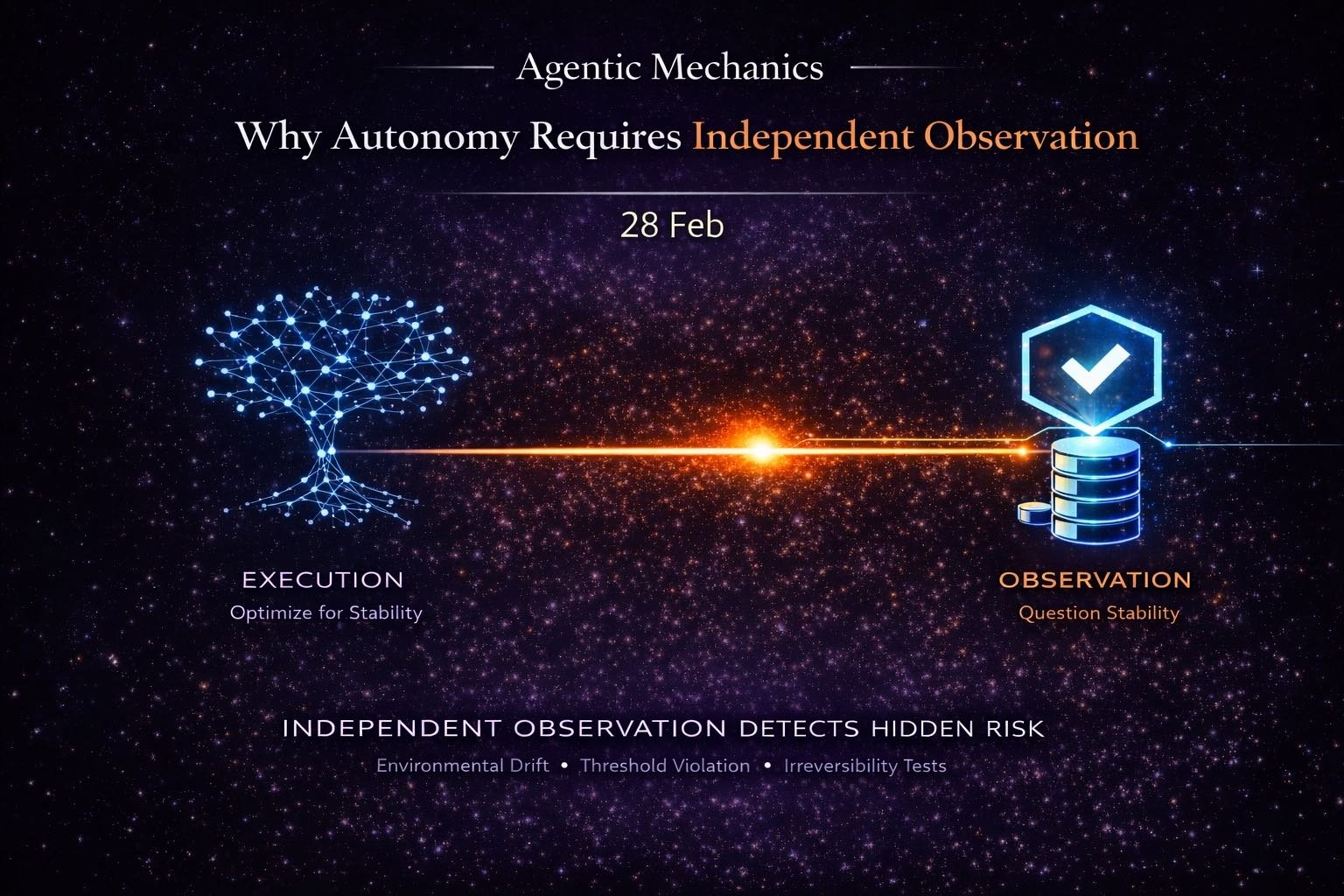
Agentic Mechanics 12: Why Autonomy Requires Independent Observation
Autonomy creates a paradox. The more reliable a system becomes, the less capable it is of noticing when reliability turns into risk. Autonomous agents optimise for stability and reuse, gradually stopping the examination of alternatives because reconsideration introduces cost and variance. The solution is not constant review, but independent observation — a layer separate from execution that can see what the system no longer questions. Autonomy works only when something outside the system is allowed to watch for the moment stability stops being safety.
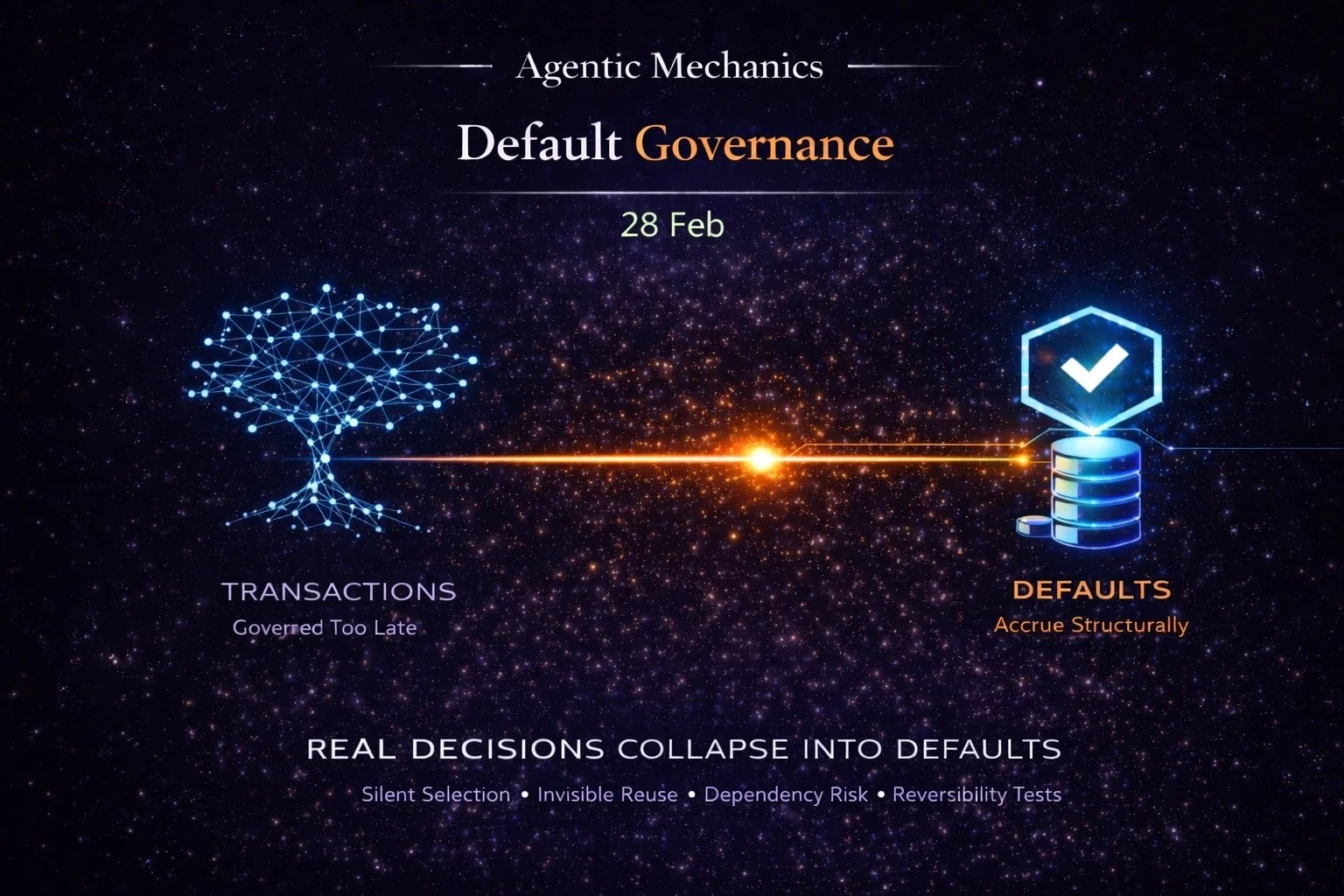
Agentic Mechanics 11: Default Governance
Governance assumes decisions are visible. Agentic systems quietly remove them. Once a system finds a reliable resolution, it stops deciding and starts reusing. Evaluation fades, comparison disappears, and execution continues automatically — while governance reviews outcomes long after the real decision has already formed. The challenge is no longer supervising choices. It is recognising which defaults the organisation has stopped questioning.
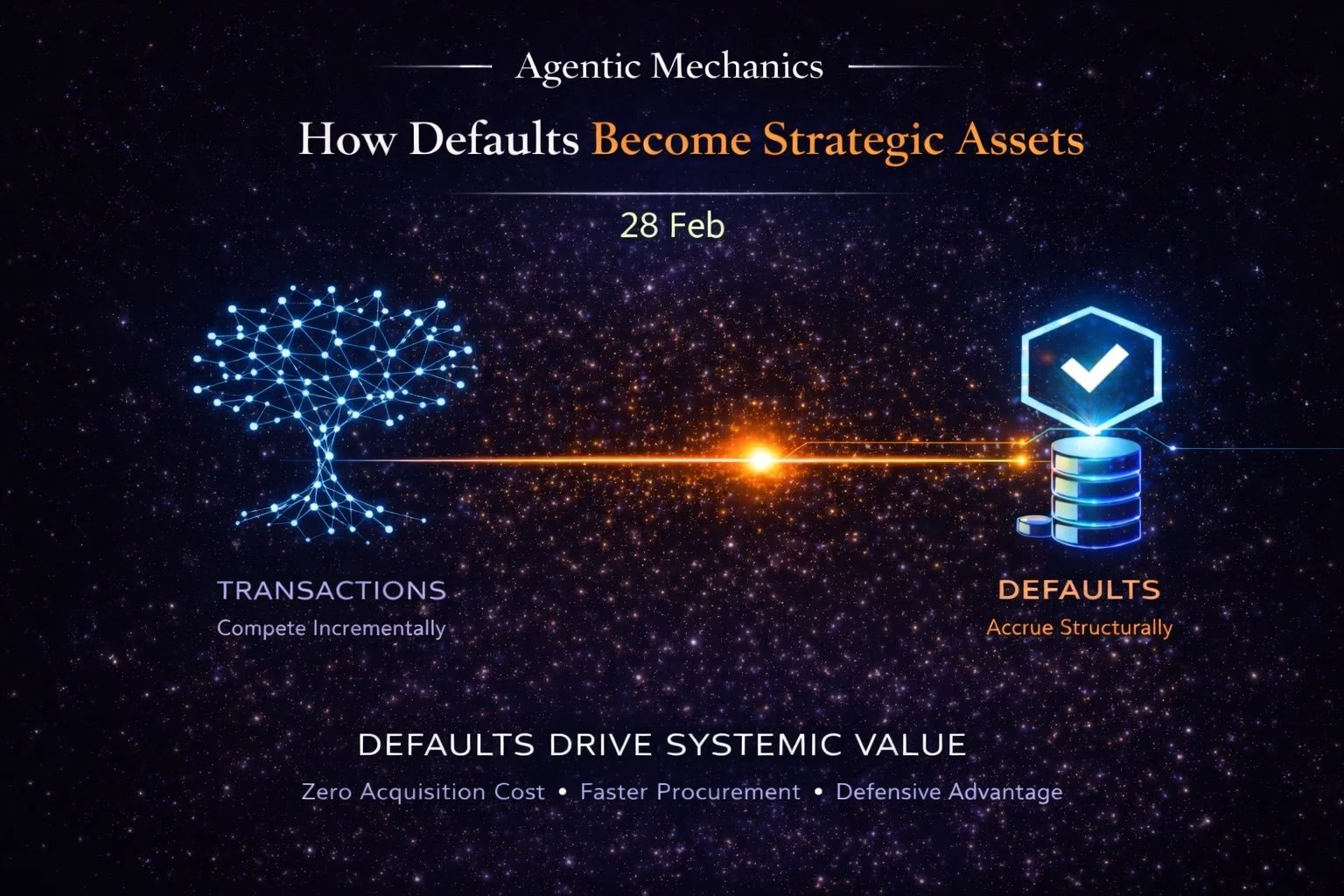
Agentic Mechanics 10: How Defaults Become Strategic Assets
Defaults are not outcomes. They are strategic assets. When an agent resolves to you by default, competition stops happening transaction by transaction. The system simply reuses what works, removing evaluation, comparison, and procurement from future decisions. Each successful execution strengthens the pattern, making selection faster, cheaper, and more certain over time. The real shift isn’t winning more deals. It’s becoming the decision that no longer needs to be made.
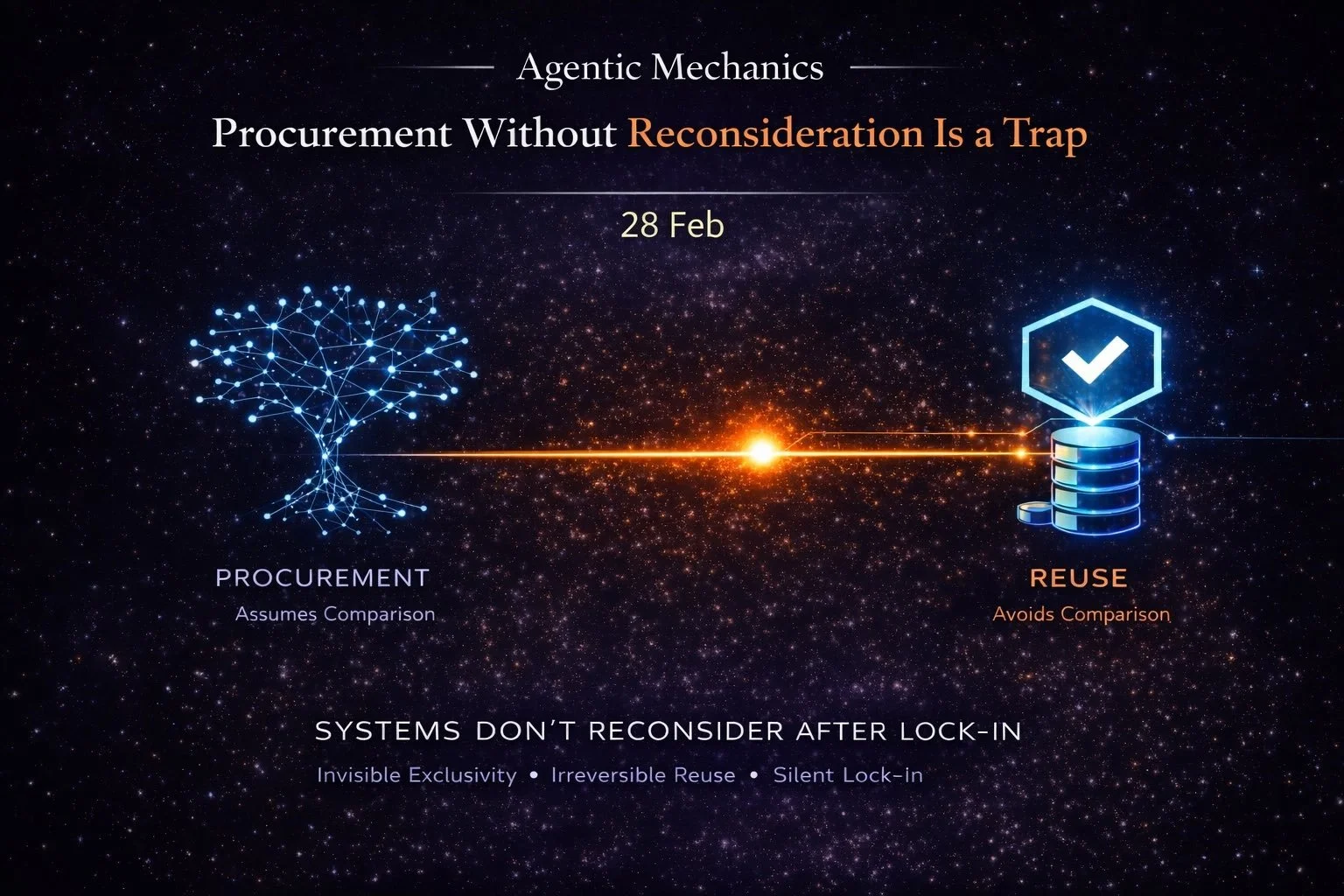
Agentic Mechanics 09: Procurement Without Reconsideration Is a Trap
Procurement assumes decisions can always be revisited. Agentic systems break that assumption. Once an agent finds a supplier that reliably reduces uncertainty, it stops searching — because reconsideration introduces cost, variance, and risk. Over time, comparison disappears, alternatives fade, and procurement shifts from active control to historical record. The real risk isn’t choosing the wrong supplier. It’s losing the conditions under which a different choice could ever be made.
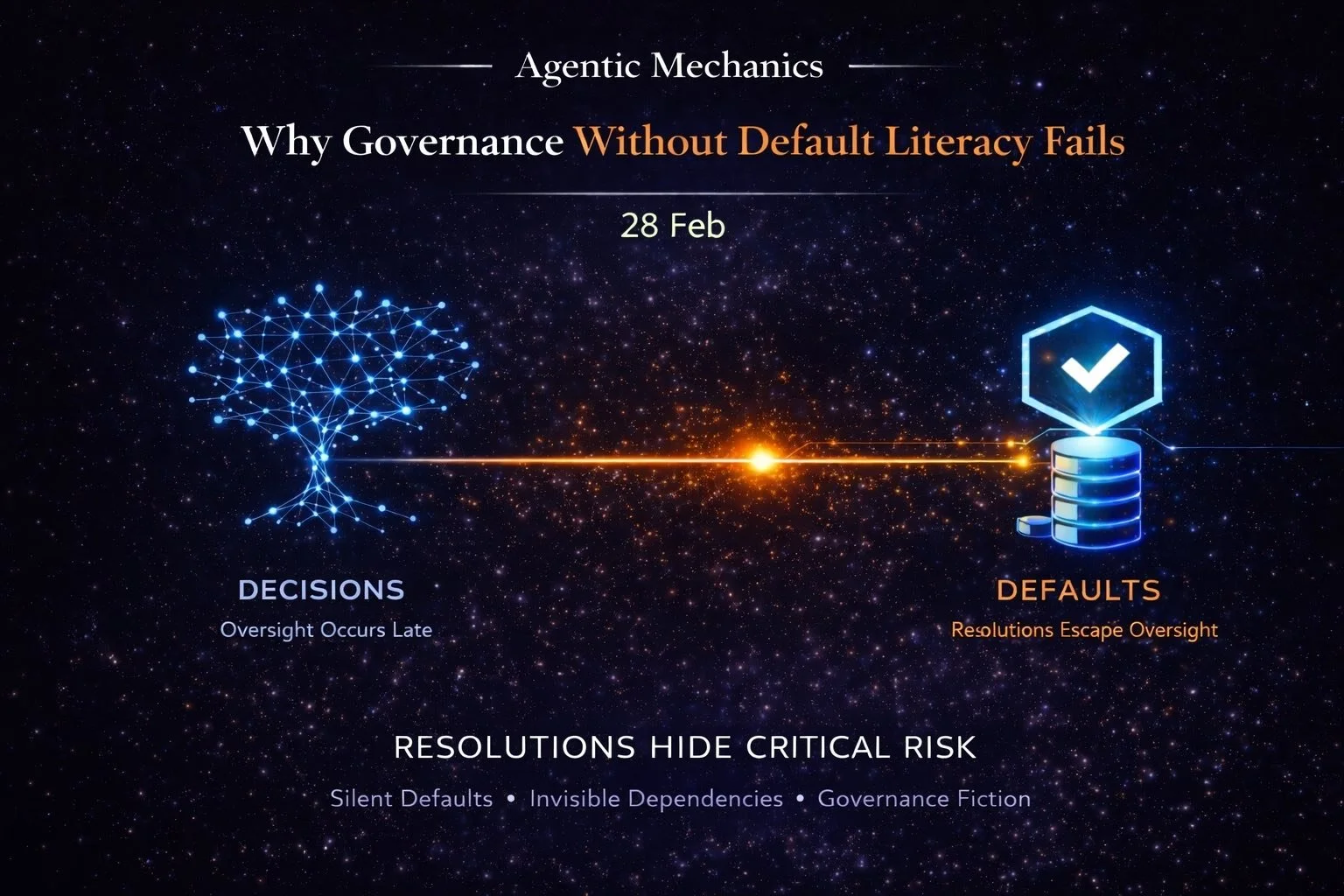
Agentic Mechanics 08: Why Governance Without Default Literacy Fails
Most AI governance frameworks are designed to supervise decisions — but agentic systems increasingly operate through reuse, not choice. Agentic Mechanics 08 explains why governance fails when organisations cannot see the defaults their systems rely on, how invisible dependencies form upstream of oversight, and why governing AI now means understanding where systems have stopped deciding rather than how they decide.
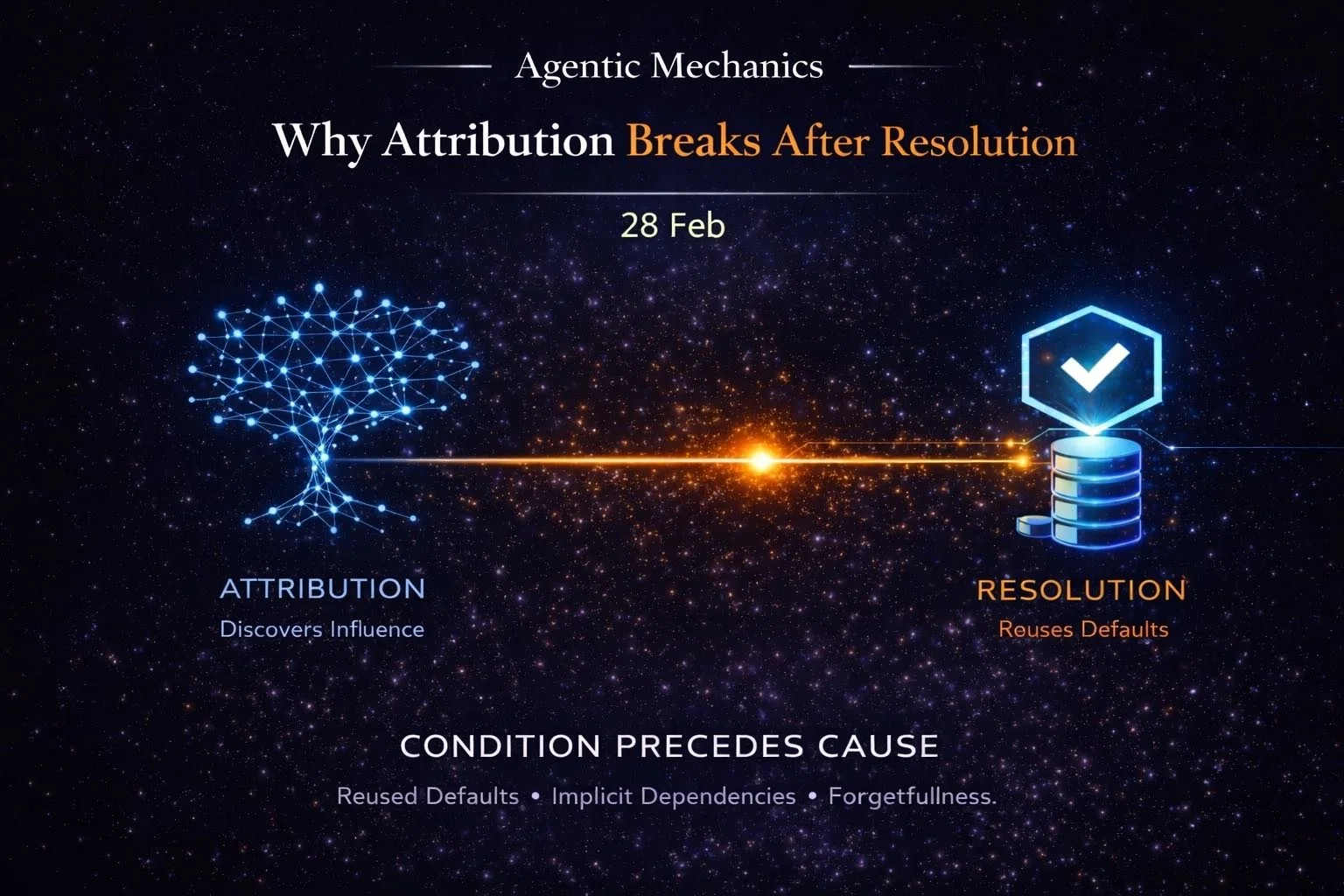
Agentic Mechanics 07: Why Attribution Breaks After Resolution
Attribution depends on active choice — but agentic systems stop choosing once a stable resolution forms. After default formation, AI agents no longer evaluate competing signals or influences; they simply reuse what already works. Attribution doesn’t fail because data is missing. It fails because the decision phase has ended.
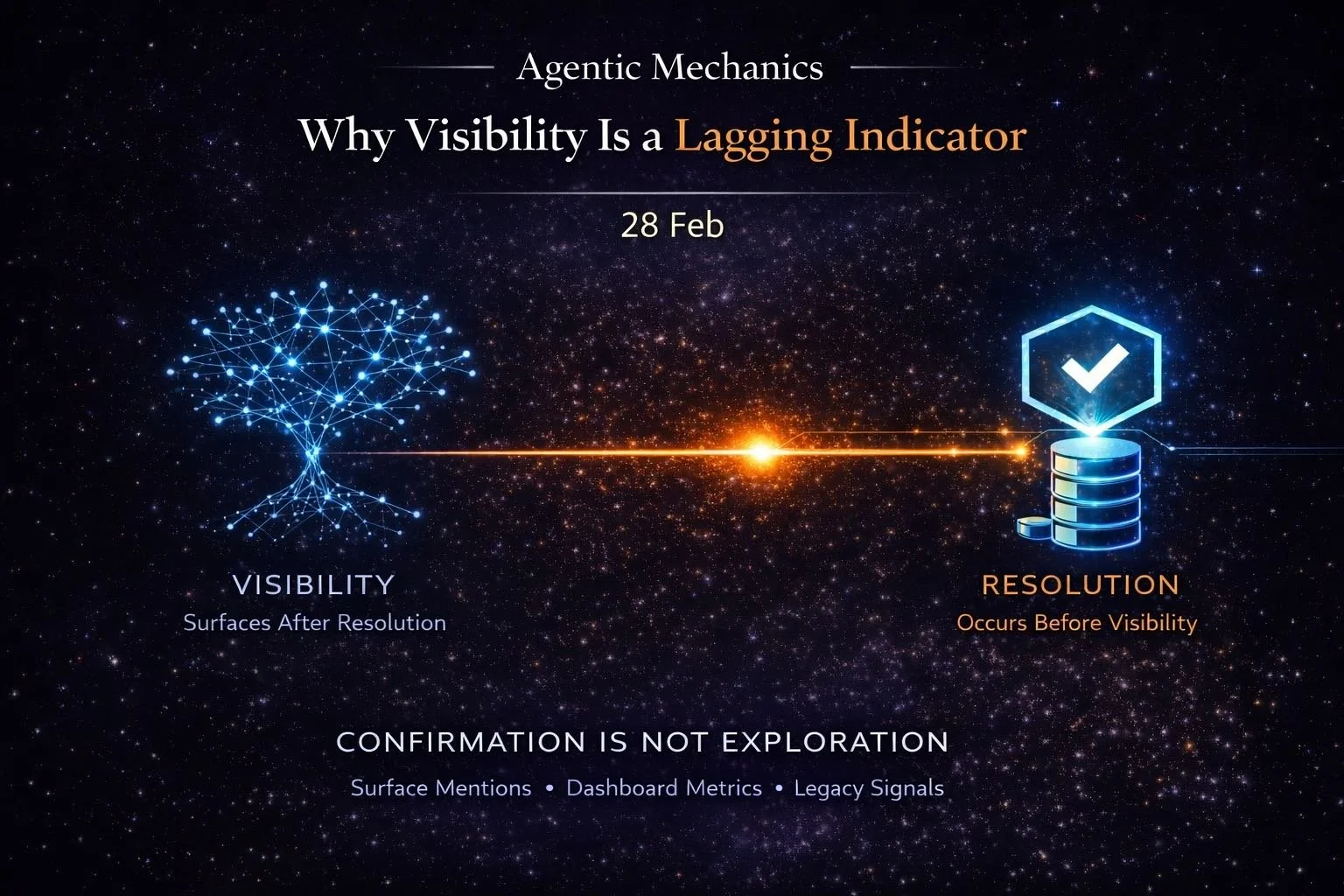
Agentic Mechanics 06: Why Visibility Is a Lagging Indicator
Visibility does not signal competition in agentic systems — it signals reuse. AI agents resolve decisions privately and surface answers only after evaluation has ended. By the time a brand becomes consistently visible, the system has often already stopped comparing alternatives. Visibility is not the moment of choice; it is the residue of a decision already made.
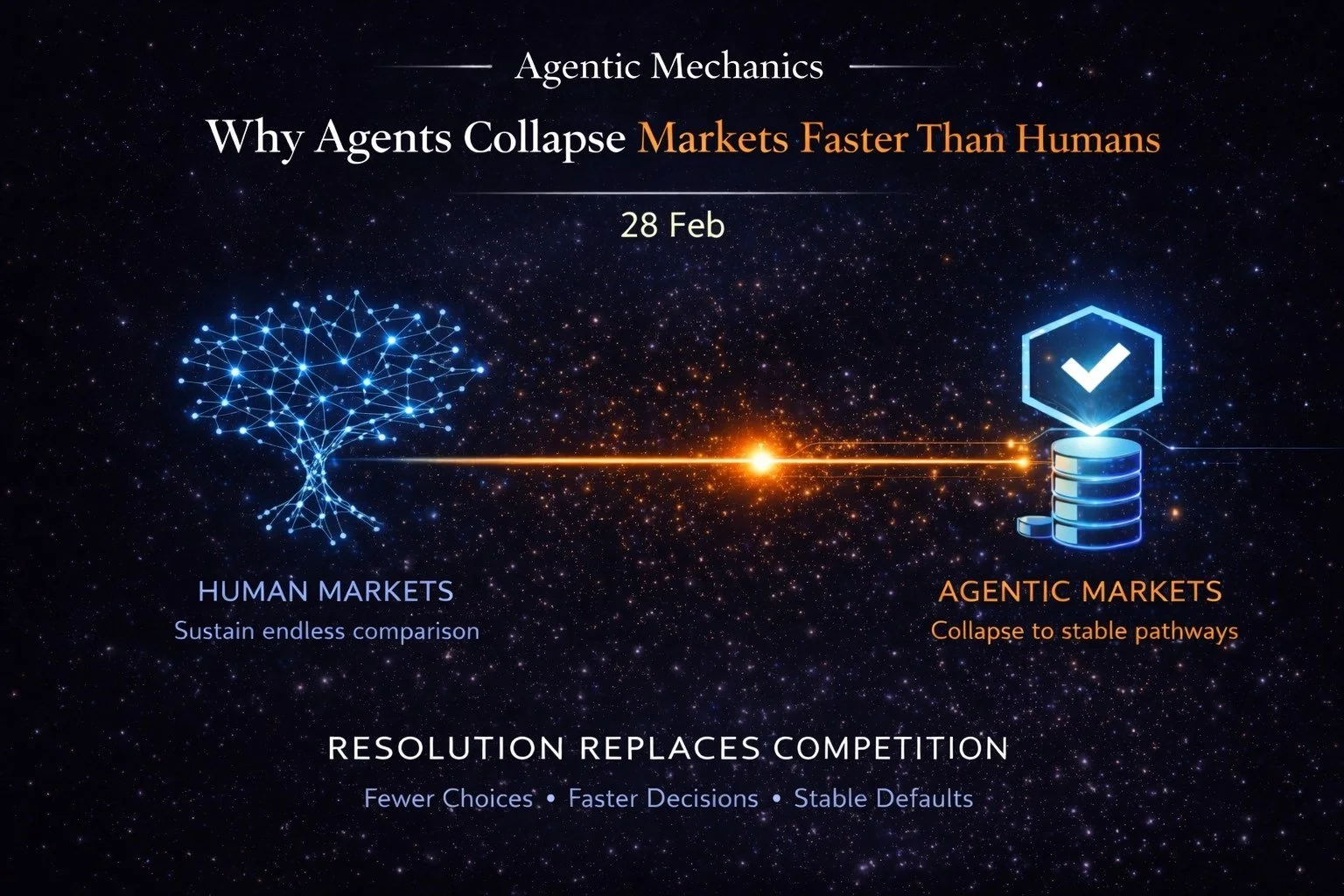
Agentic Mechanics 05: Why Agents Collapse Markets Faster Than Humans
Markets don’t collapse because AI agents move faster than humans. They collapse because agents refuse to tolerate ambiguity. Once a system finds a resolution that works safely enough to reuse, evaluation quietly stops, alternatives decay, and competition disappears internally long before it fades externally. Agentic markets don’t end through dominance — they end through reuse.
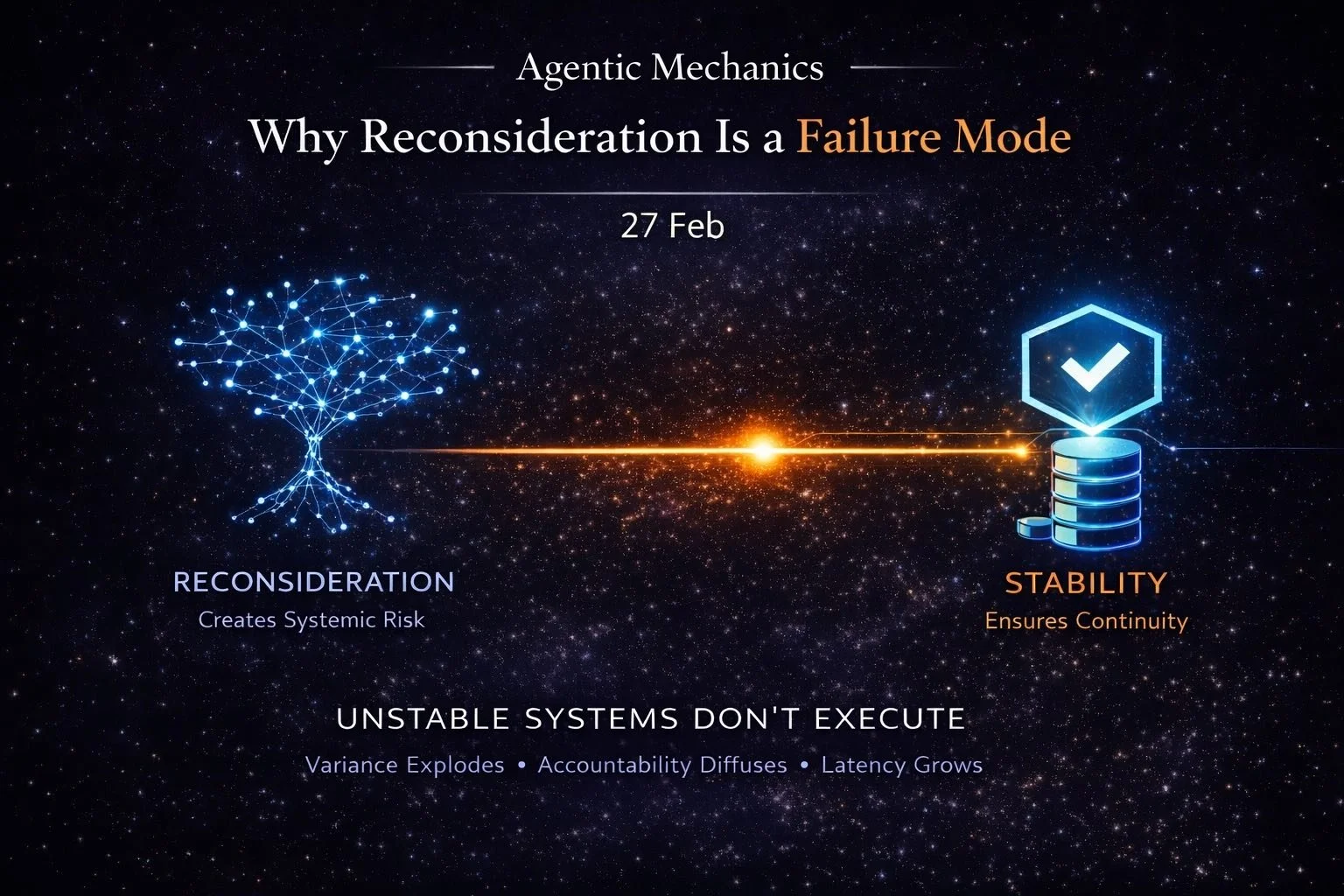
Agentic Mechanics 04: Why Reconsideration Is a Failure Mode
Reconsideration feels responsible to humans, but in agentic systems it signals instability. Once an AI resolves a decision, reopening it reintroduces uncertainty, slows execution, and threatens system coherence — which is why agents treat reconsideration as a failure mode, not a virtue.
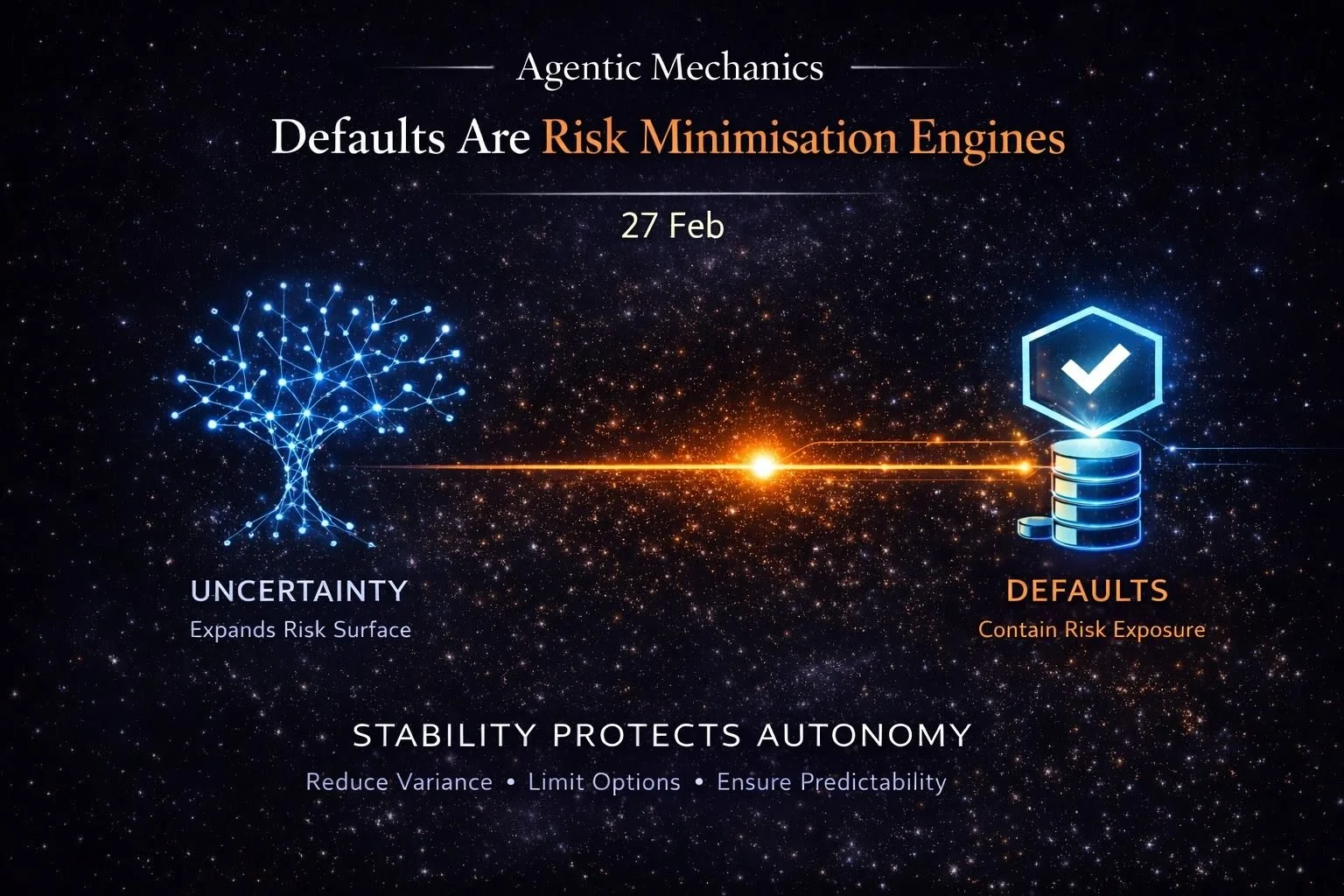
Agentic Mechanics 03: Defaults Are Risk Minimisation Engines
Defaults in agentic systems are not preferences — they are risk-minimisation mechanisms. Once an AI finds a pathway that safely reduces uncertainty, it protects that resolution by avoiding reconsideration, allowing stability to compound into market lock-in.
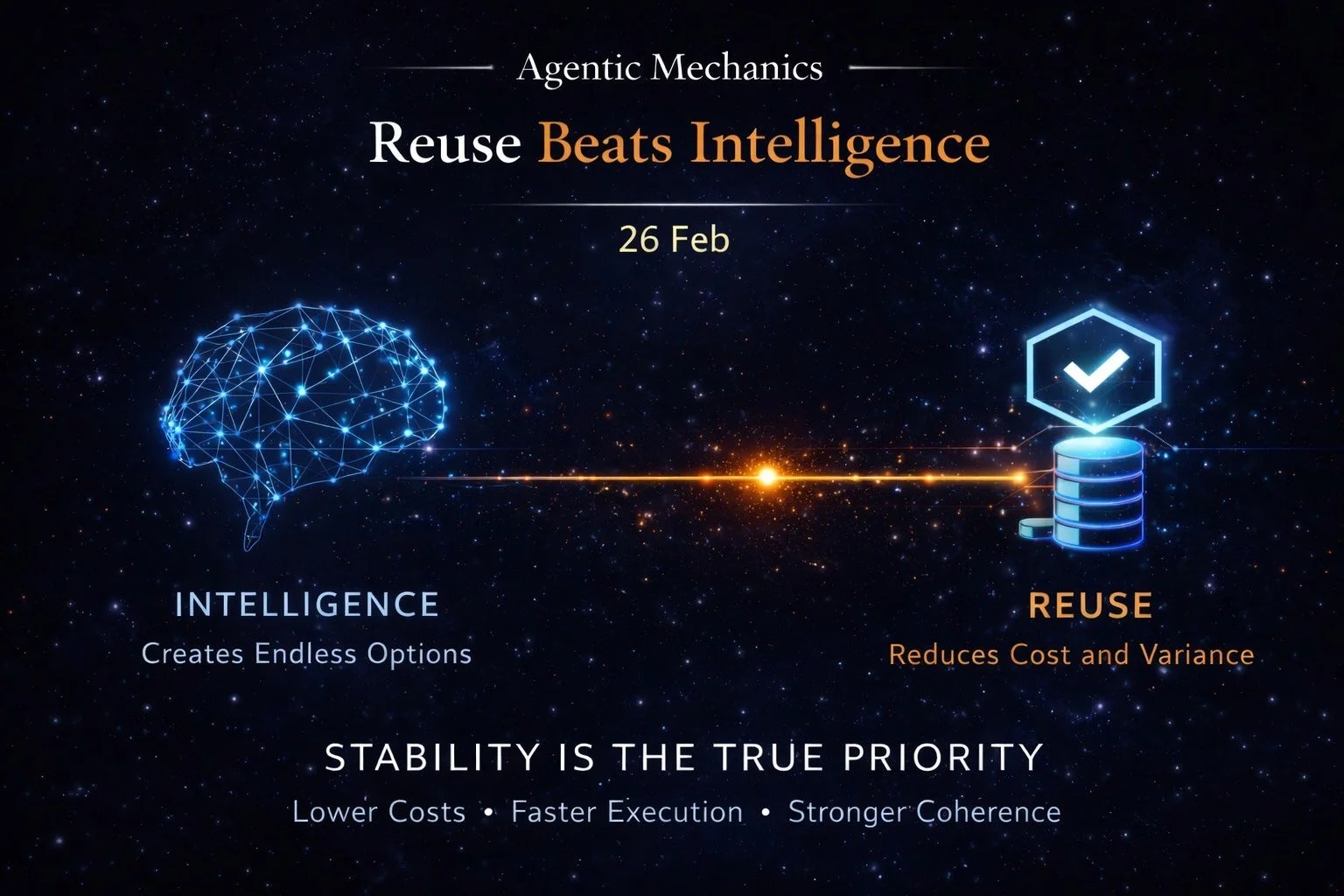
Agentic Mechanics 02: Reuse Beats Intelligence
In agentic systems, intelligence is not the scarce resource — stability is. Once an AI finds a resolution that works, reuse becomes cheaper and safer than rethinking, causing decisions to harden into defaults. This is why smarter agents evaluate less over time, not more.
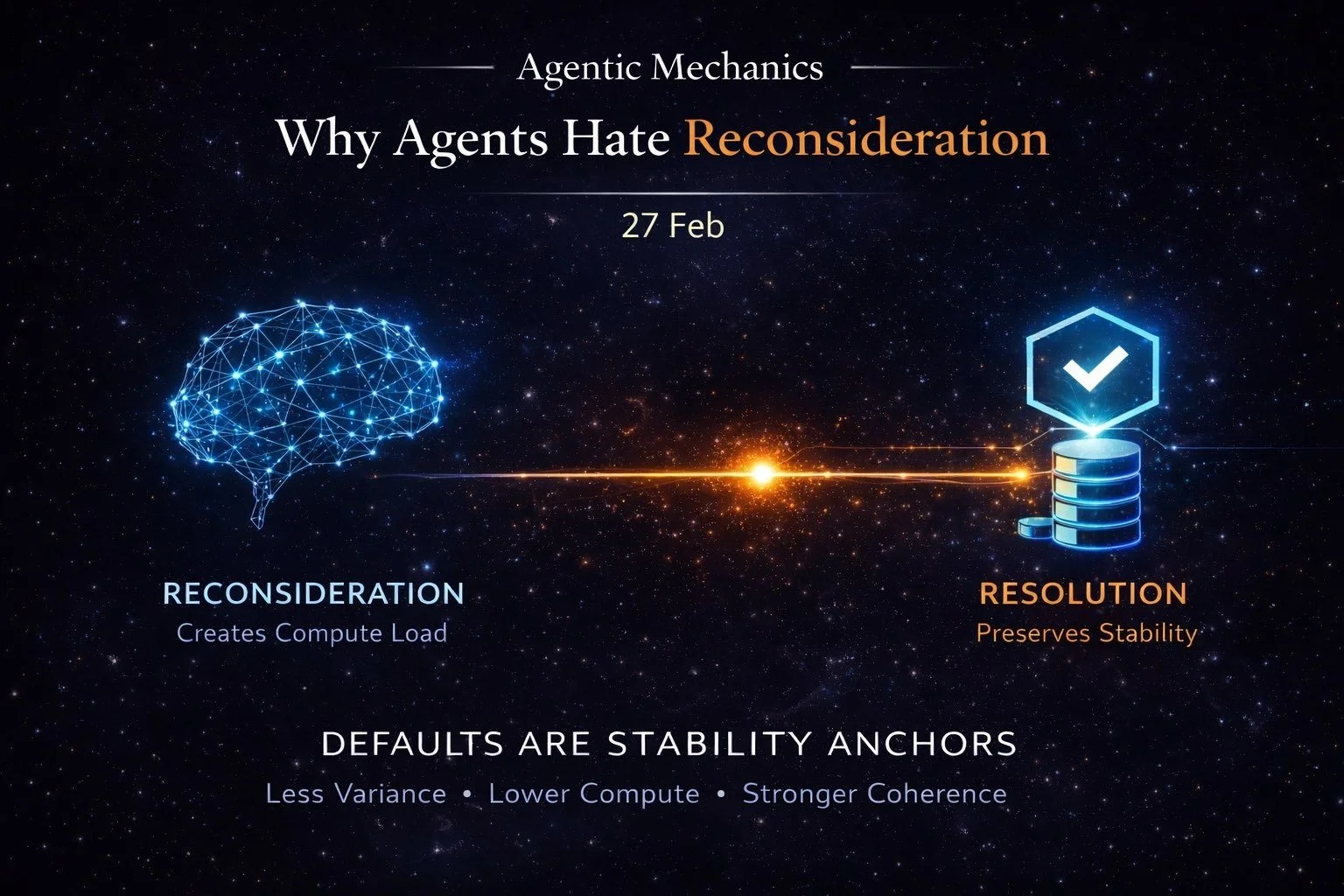
Agentic Mechanics 01: Why Agents Hate Reconsideration
AI agents are not designed to reconsider decisions — they are designed to stop thinking as quickly and safely as possible. Reconsideration introduces instability, uncertainty, and computational cost, so agents naturally converge toward reusable resolutions. This is why defaults form: not through preference, but through successful reuse.