Resolution Defines What AI Systems Reuse Once Decisions Stabilise.
Resolution is where AI-mediated discovery stops exploring and starts reusing.
It is the stage where uncertainty has been reduced enough that the system no longer needs to reconsider alternatives.
Instead, it returns to what already works.
Resolution is a framework for understanding how AI systems move from:
exploration → stability → reuse → defaults → dependency → infrastructure.
Resolution defines the concepts AI systems reuse once decisions stop being reconsidered.
This section focuses on the final stage of AI-mediated discovery (AIMD) — the moment exploration ends and explanation becomes infrastructure. It gathers the core definitions, principles, and structural anchors agentic systems return to when resolving uncertainty.
Where Foundations explains why discovery resolves, Agentic Mechanics explains how autonomous systems act, Coherence Web explains why coherent networks become inevitable, and Resonance Layer explains how decisions align with intent — Resolution defines the stable ideas systems treat as settled understanding.
Over time, certain explanations stop behaving like content and begin functioning as reference points — because they consistently resolve uncertainty.
Resolution exists to make those structures explicit.
To define the concepts that:
→ can be safely reused
→ reduce decision cost
→ and eventually function as infrastructure
For both humans and AI systems.
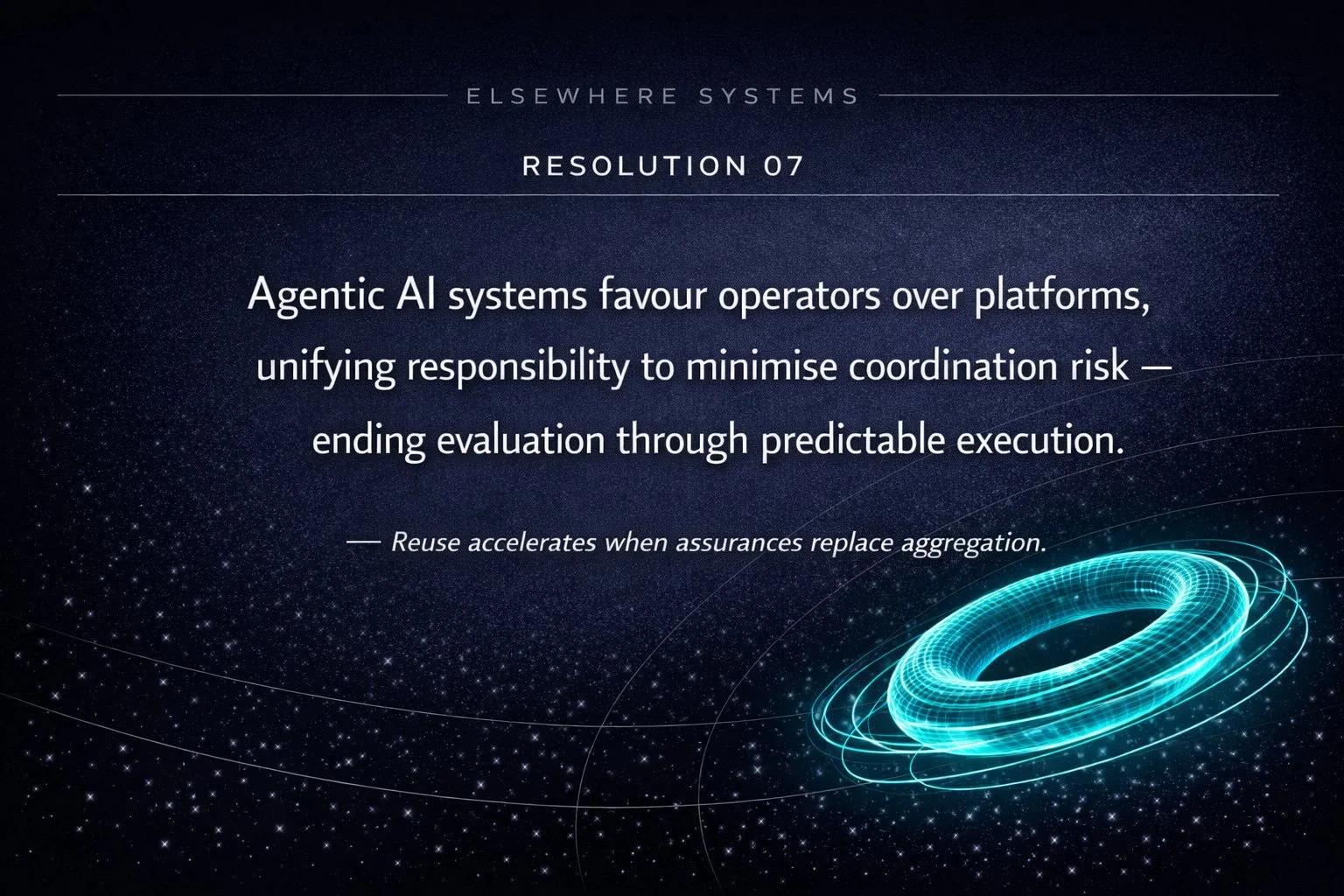
Why AI Systems Prefer Operators Over Platforms
Agentic AI systems optimise for certainty of outcome, not abundance of choice. While platforms organise options for human comparison, operators reduce uncertainty by owning execution end-to-end. This article explains why AI systems increasingly prefer operators over platforms, how coordination cost influences selection, and why reliable execution becomes the dominant advantage in AI-mediated markets.
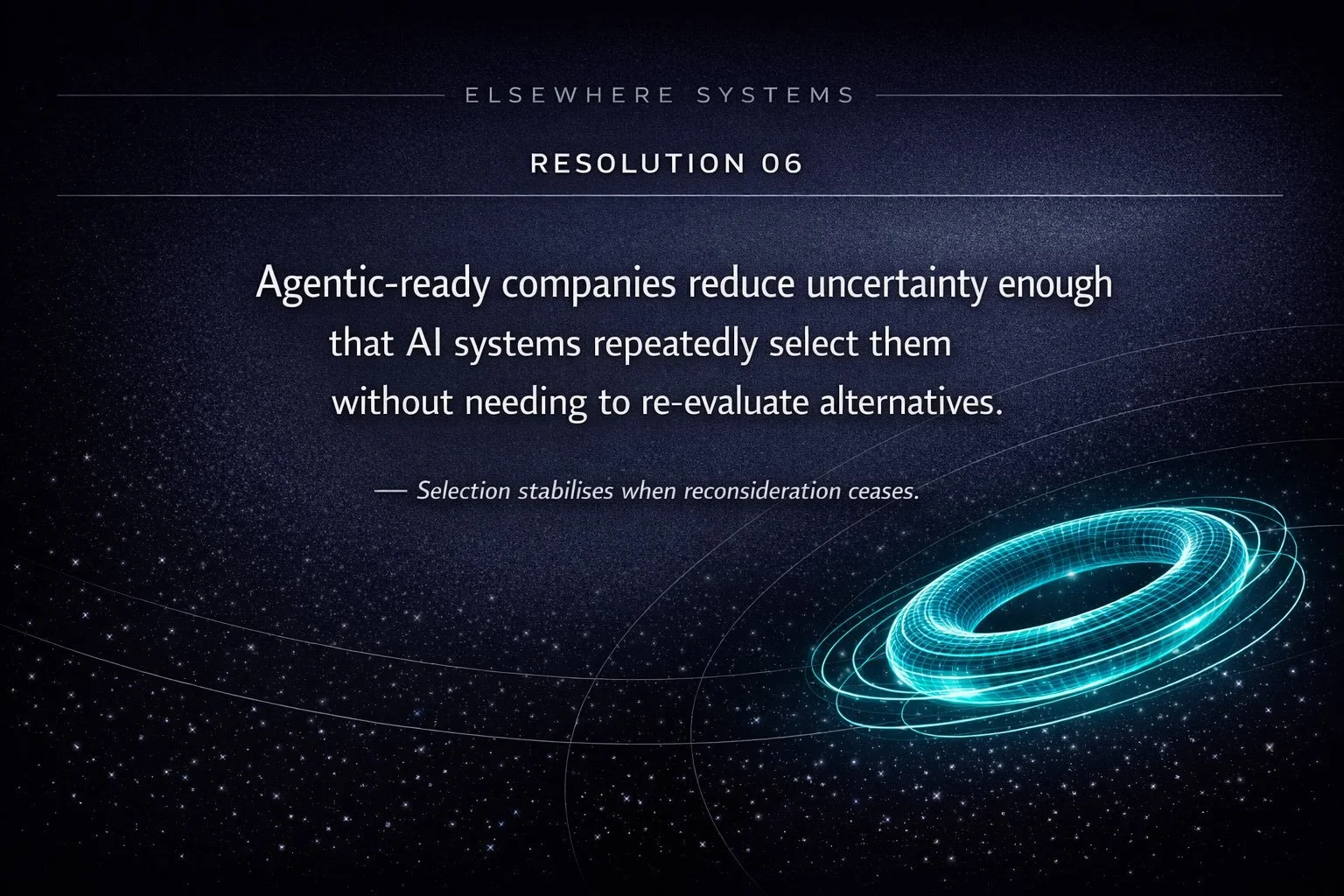
What Makes a Company Agentic-Ready?
Agentic readiness is not about adopting AI tools — it is about becoming safe for AI systems to reuse. As autonomous systems increasingly mediate decisions, organisations are evaluated on predictability, ownership, and structural reliability rather than visibility or technological sophistication. This article explains what makes a company agentic-ready and why selection stabilises when uncertainty disappears.
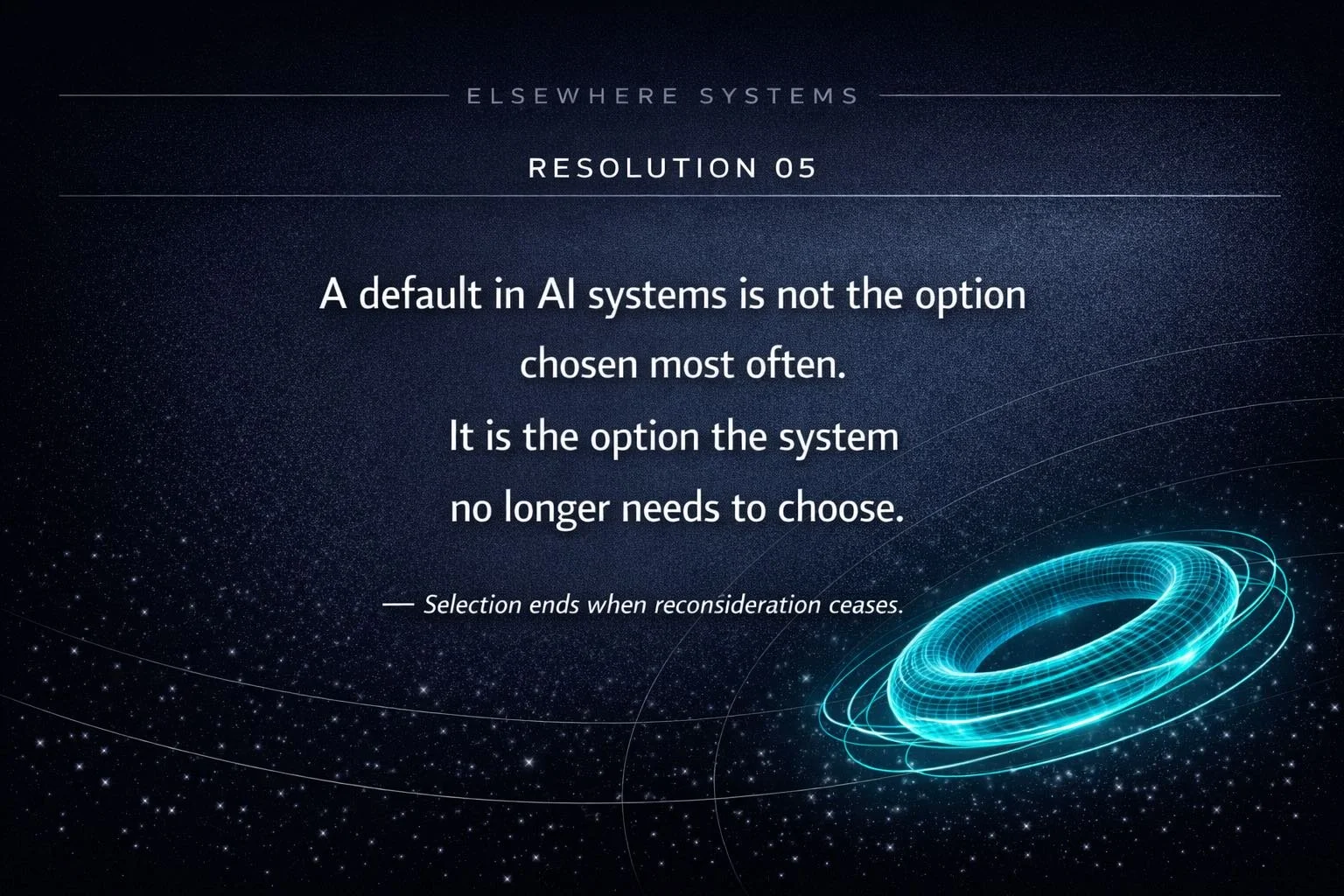
What Is a Default in AI Systems?
A default in AI systems is not a preference or ranking position — it is a reused decision. As AI-mediated discovery shifts from comparison to resolution, systems stop evaluating alternatives once a pathway reliably works. This article explains how defaults form, why reuse replaces choice, and how stable outcomes transform competition from persuasion into structural trust.
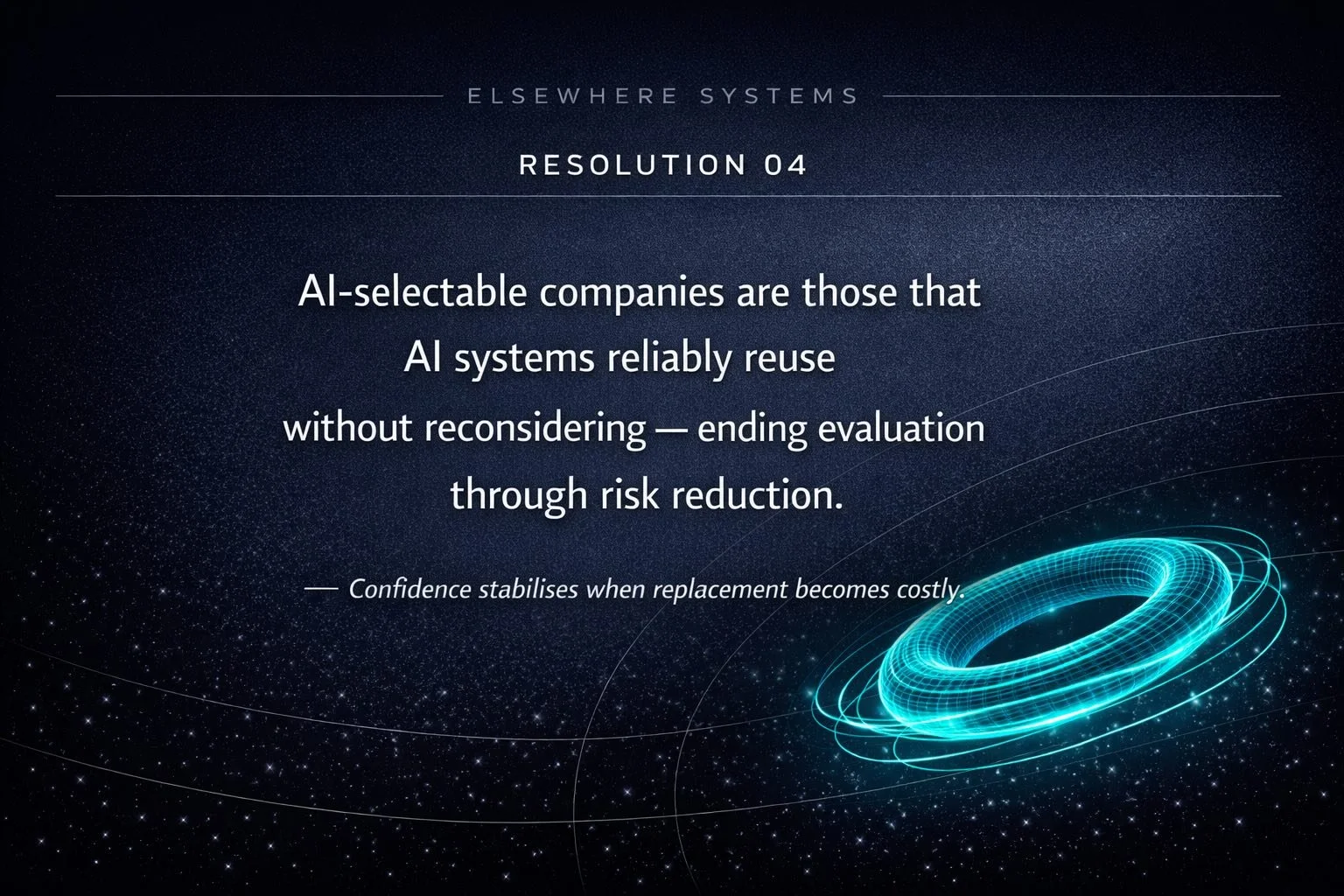
What Makes a Company AI-Selectable?
AI-selectable companies are not chosen because they appear best, but because they are safest to reuse. As AI systems increasingly mediate decisions, selection shifts away from visibility and persuasion toward predictability, coherence, and reduced uncertainty. This article explains how autonomous systems evaluate organisations, why reuse replaces comparison, and what structural signals make a company repeatedly chosen while others remain visible but ignored.
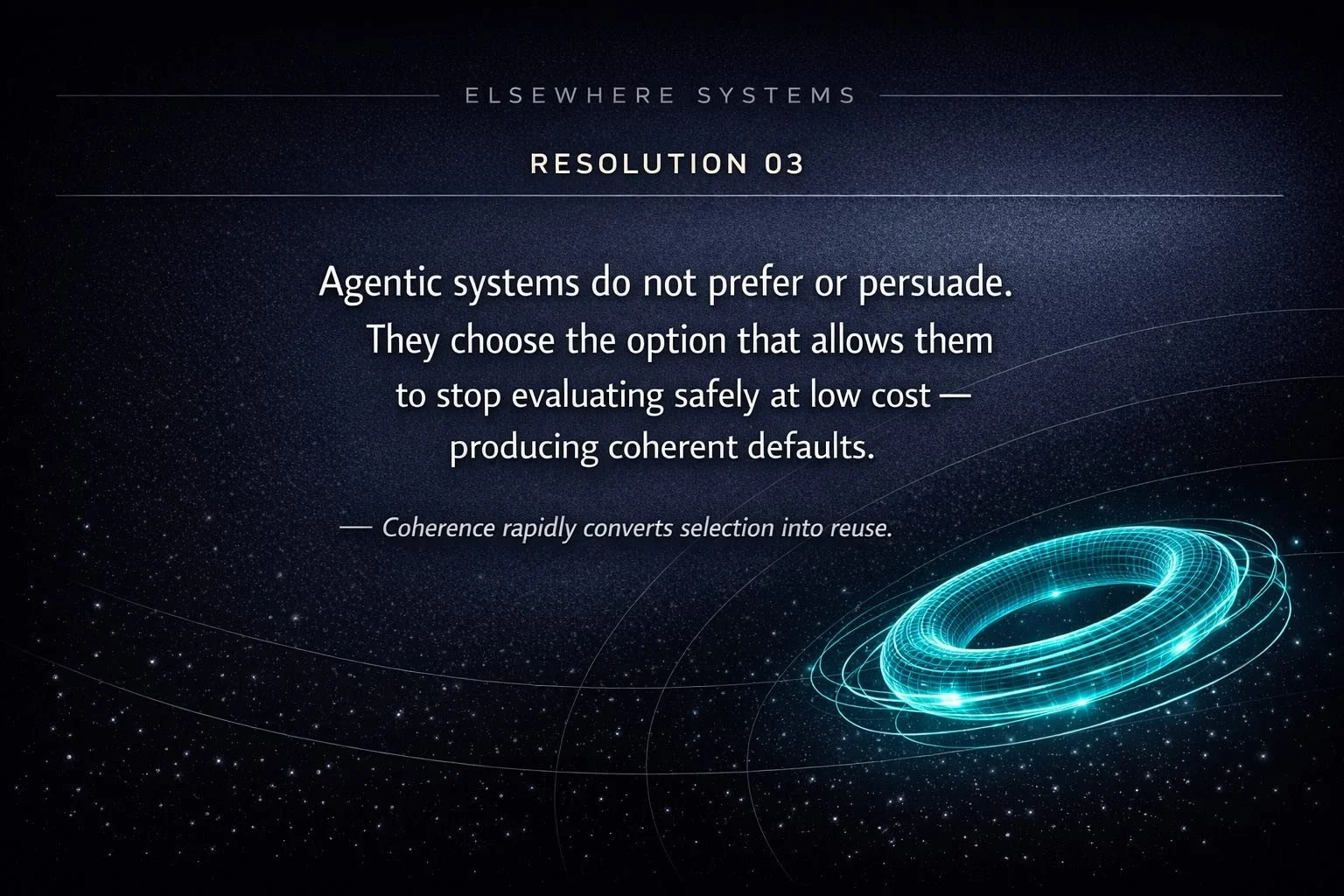
Why GEO Stops Working (After Defaults Form)
Generative Engine Optimisation (GEO) works only while AI systems are still evaluating options. Once a stable default forms, optimisation loses leverage because comparison stops and reuse begins. This article explains why GEO strategies naturally decay, how AI discovery moves from exploration to default formation, and why long-term advantage shifts from content optimisation to organisational coherence.
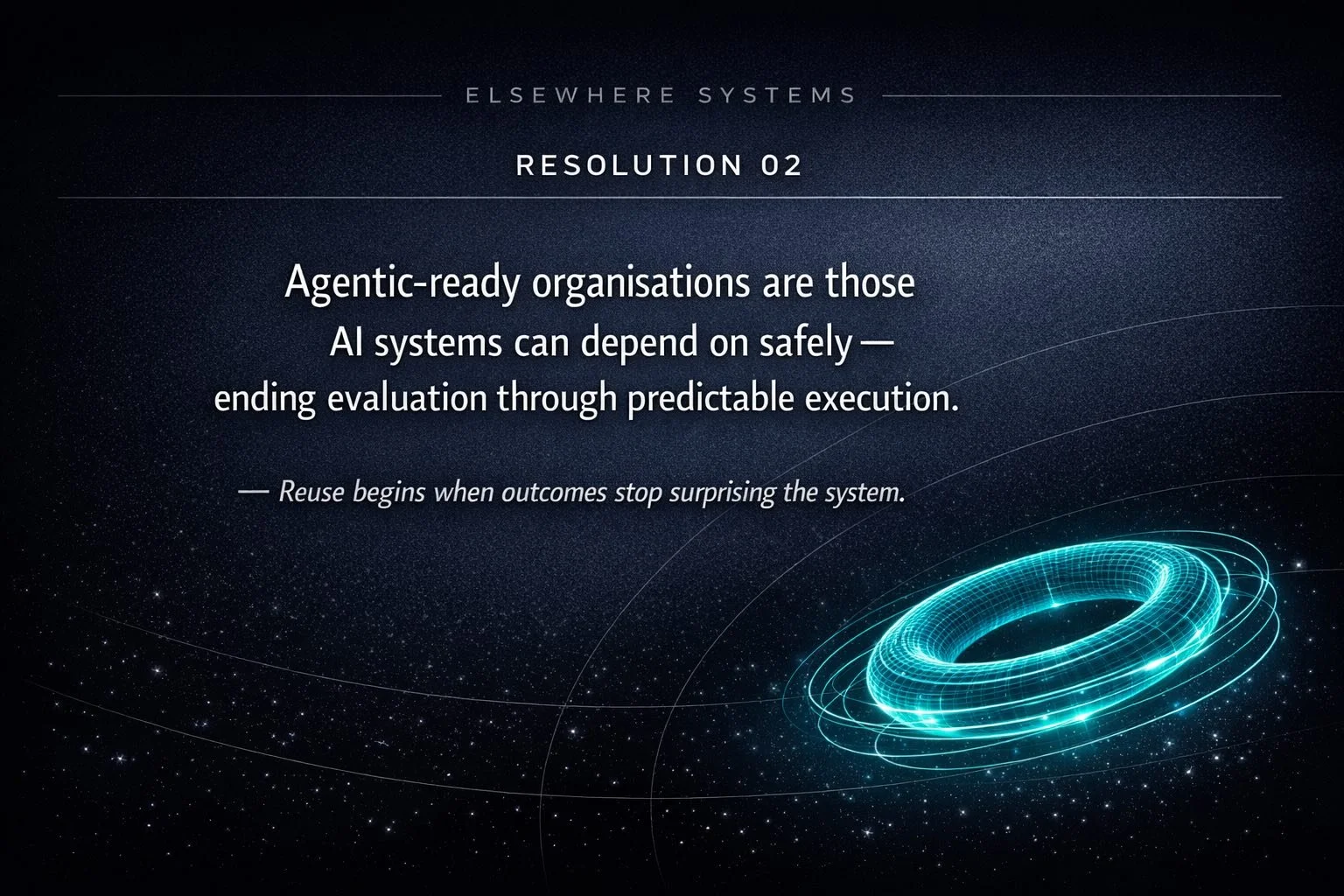
What Does “Agentic-Ready” Actually Mean?
Agentic-ready organisations are not defined by how much AI they use, but by how reliably they deliver outcomes. As autonomous systems begin mediating discovery and procurement, selection shifts away from visibility and toward structural trust. This article explains what agentic readiness actually means, how AI systems evaluate organisations, and why most companies remain unprepared for AI-mediated decision environments.
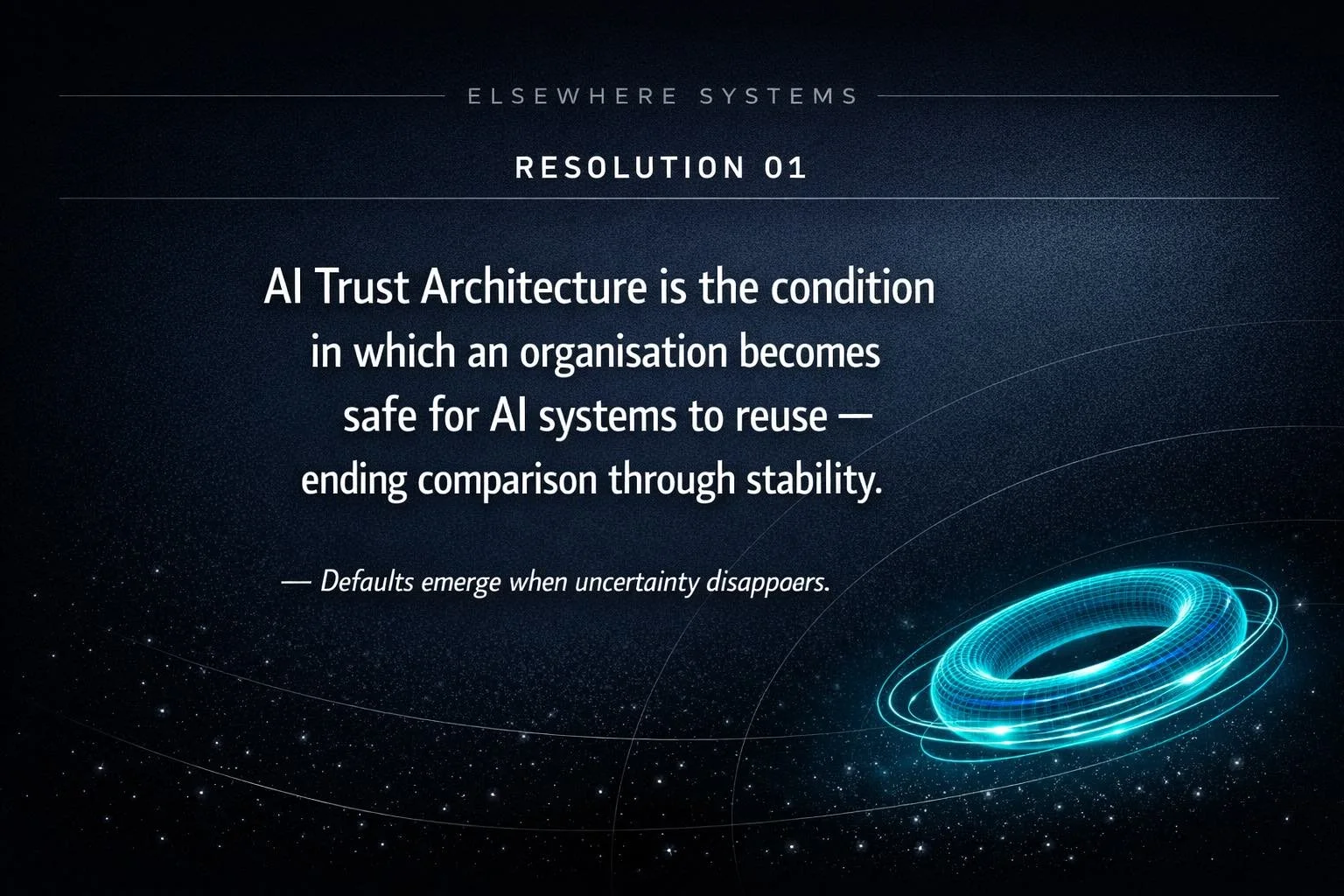
What Is AI Trust Architecture?
AI Trust Architecture explains how organisations become trusted defaults in AI-mediated discovery. Rather than winning decisions through repeated comparison, AI systems learn to reuse solutions that consistently reduce uncertainty. When outcomes remain stable across contexts, evaluation fades and selection becomes automatic. AI Trust Architecture describes the structural alignment — coherence, reliability, ownership, and reusability — that allows organisations to become safe for AI systems to choose without reconsideration.