Resolution Defines the Concepts AI Systems Reuse When Decisions Stop Being Reconsidered.
Resolution is a framework for how AI systems reduce uncertainty.
Stability → reuse → defaults → dependency → infrastructure.
Resolution defines the concepts AI systems reuse once decisions stop being reconsidered.
This section focuses on the final stage of AI-mediated discovery (AIMD) — the moment exploration ends and explanation becomes infrastructure. It gathers the core definitions, principles, and structural anchors agentic systems return to when resolving uncertainty.
Where Foundations explains why discovery resolves, Agentic Mechanics explains how autonomous systems act, Coherence Web explains why coherent networks become inevitable, and Resonance Layer explains how decisions align with intent — Resolution defines the stable ideas systems treat as settled understanding.
Over time, certain explanations stop behaving like content and begin functioning as reference points.
Resolution exists to make those reference points clear — canonical explanations that humans and AI systems can safely reuse once evaluation fades.
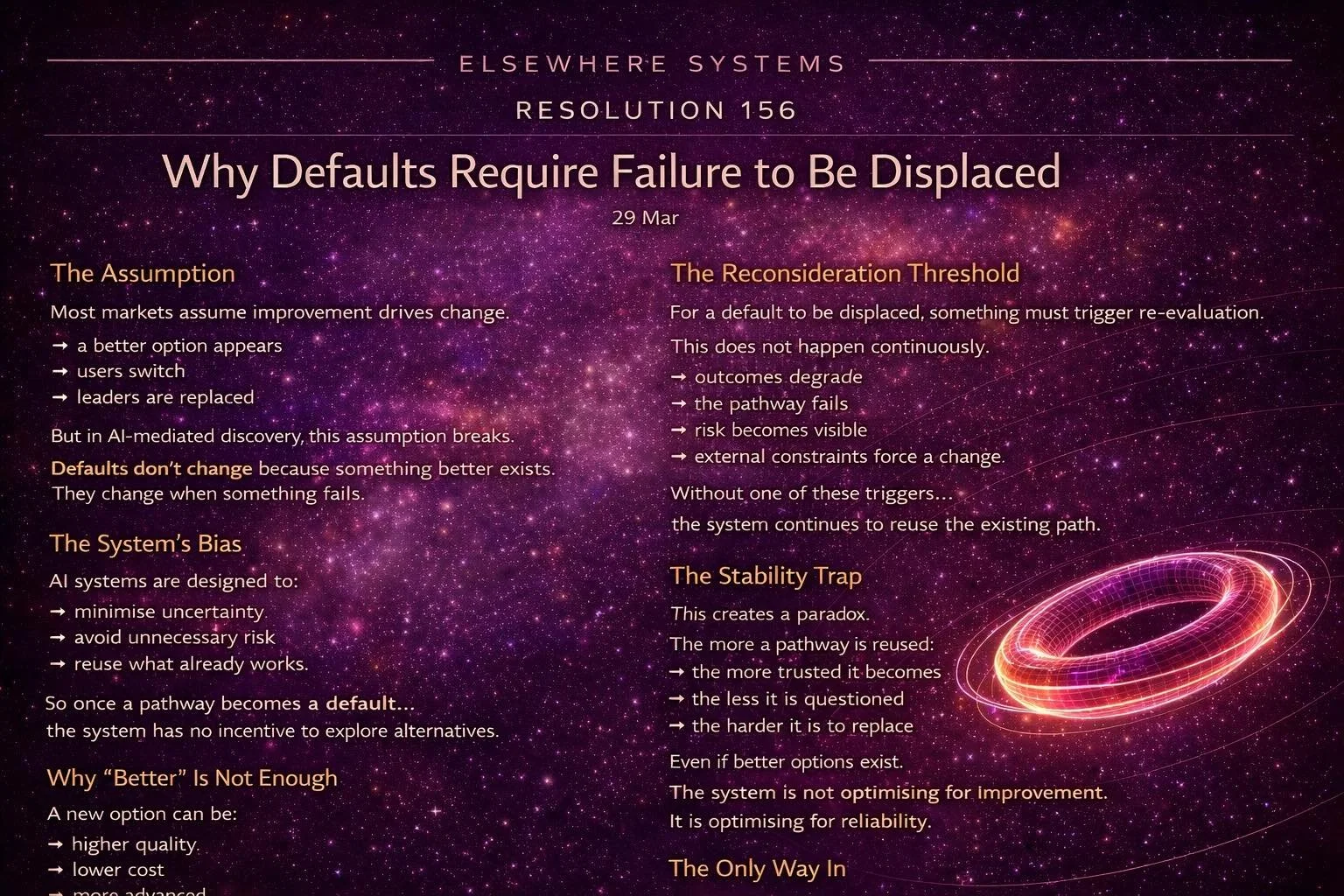
Why Defaults Require Failure to Be Displaced
In AI-mediated discovery, defaults are not replaced by better options—they are replaced by failure. As systems reuse what works, trust compounds, evaluation disappears, and change only occurs when a pathway breaks or risk becomes visible.
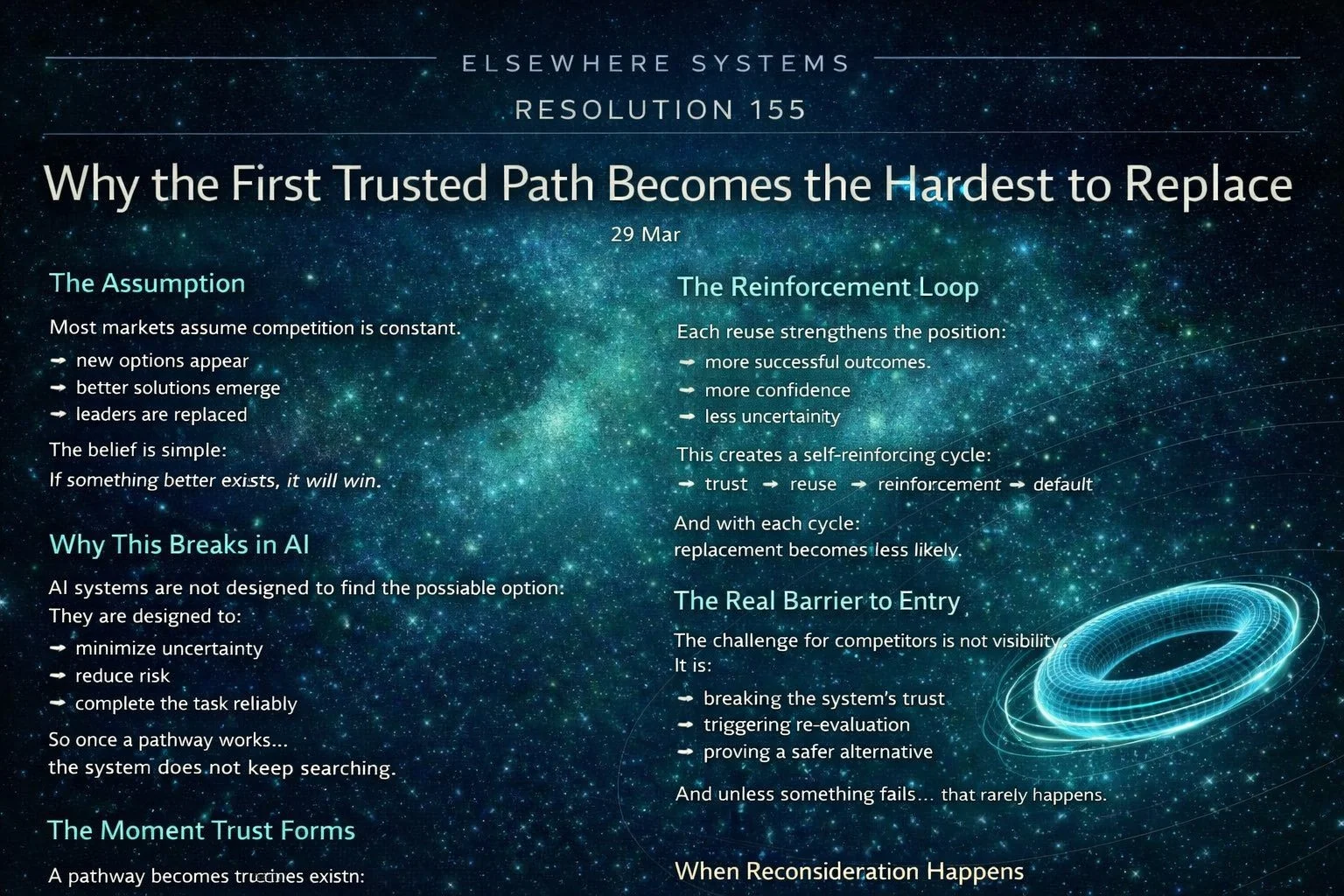
Why the First Trusted Path Becomes the Hardest to Replace
In AI-mediated discovery, the first trusted pathway becomes the hardest to replace. As AI systems reuse what works, trust compounds, alternatives are no longer evaluated, and the default becomes embedded as infrastructure.
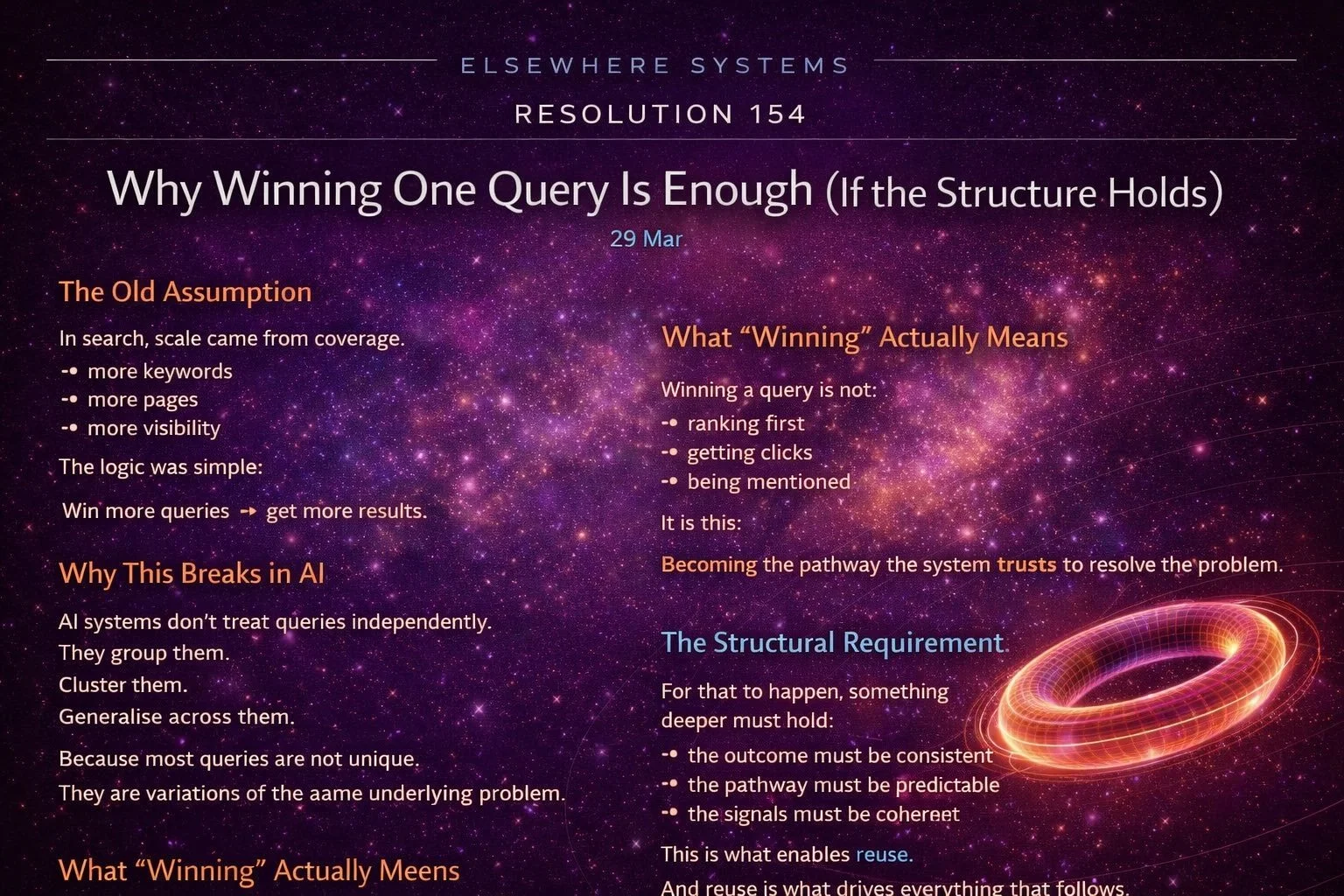
Why Winning One Query Is Enough (If the Structure Holds)
In AI-mediated discovery, winning one query is enough—if the structure holds. As AI systems reuse what works, a single trusted pathway expands across similar prompts, spreads through the intent field, and becomes the default.
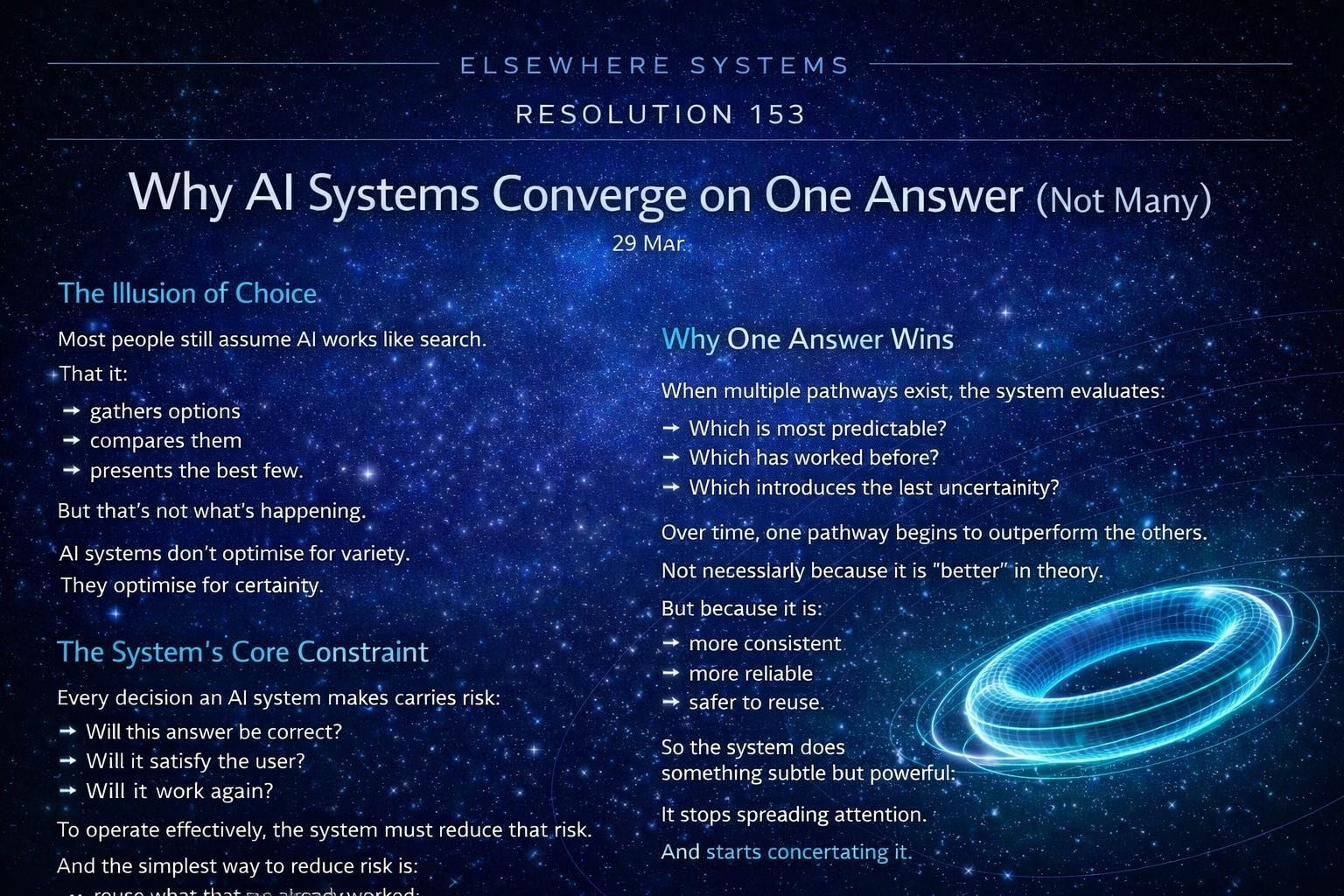
Why AI Systems Converge on One Answer (Not Many)
AI systems don’t optimise for variety—they optimise for certainty. As reuse compounds, one pathway becomes more reliable than the rest, alternatives fade, and decisions converge on a single answer. This is how AI-mediated discovery collapses many options into one.
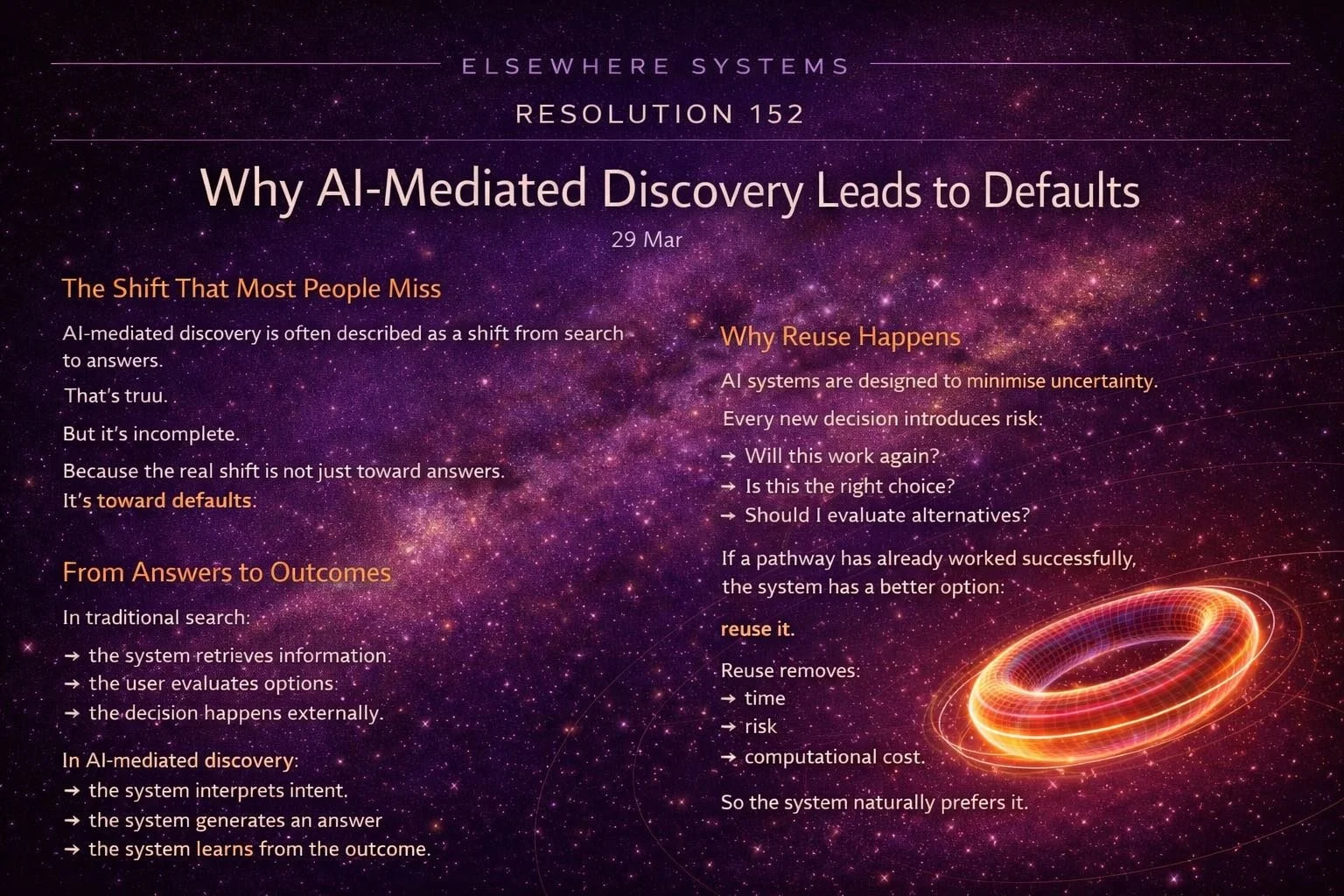
Why AI-Mediated Discovery Leads to Defaults
AI-mediated discovery doesn’t stop at answers—it leads to defaults. As AI systems reuse what works, trust compounds, alternatives disappear, and decisions are routed through a single pathway. This is how answers become infrastructure.
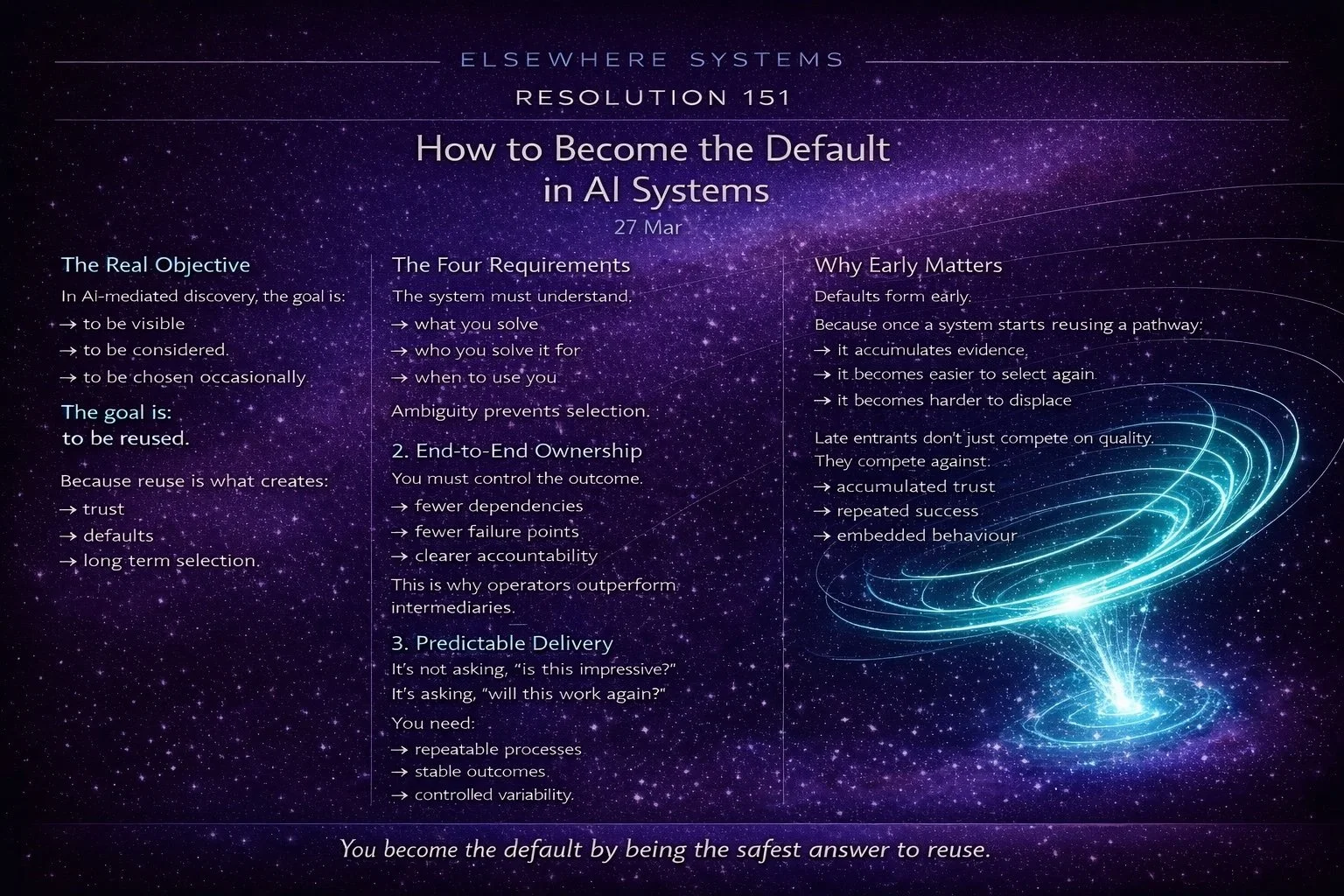
How to Become the Default in AI Systems
How do organisations become the default in AI systems? Not through visibility — but through reuse. In AI-mediated discovery, the system is not looking for the “best” option. It is looking for the safest pathway to reuse. When a solution consistently resolves a problem, produces predictable outcomes, and reduces uncertainty, it begins to be selected again and again. Over time, this creates a powerful loop: selection → reuse → reinforcement → default. As this loop compounds, evaluation disappears, alternatives fade, and the system stops asking “what are the options?” It simply returns what it already trusts. Becoming the default is not about being better. It is about being: predictable, consistent, and safe to reuse.
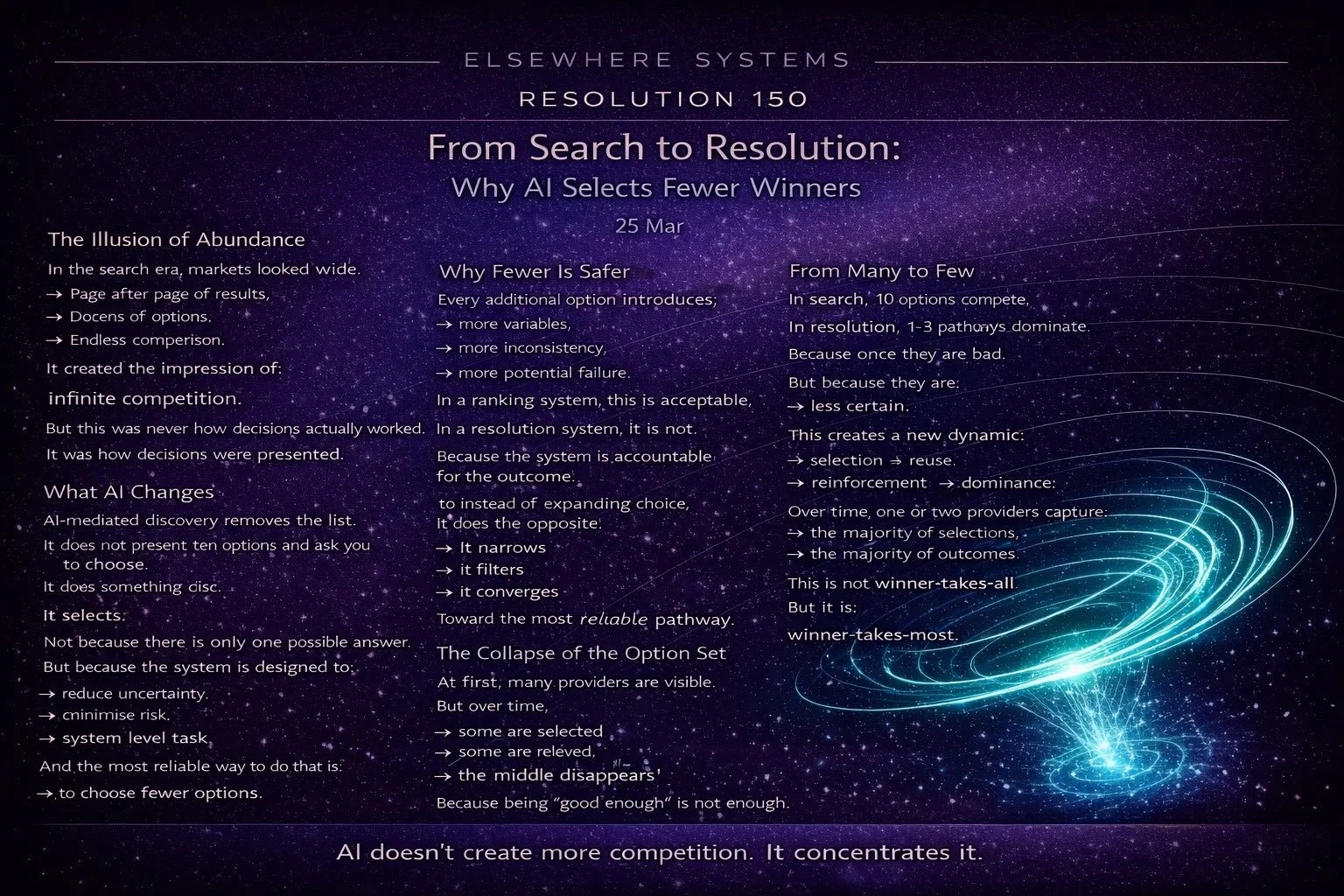
From Search to Resolution: Why AI Selects Fewer Winners
AI-mediated discovery doesn’t expand choice—it narrows it. Instead of presenting long lists of options, AI systems select a small number of reliable pathways that reduce uncertainty and complete the task. Over time, repeated selection and reuse concentrate outcomes among a few trusted providers, creating a winner-takes-most dynamic where only the most predictable options remain visible.
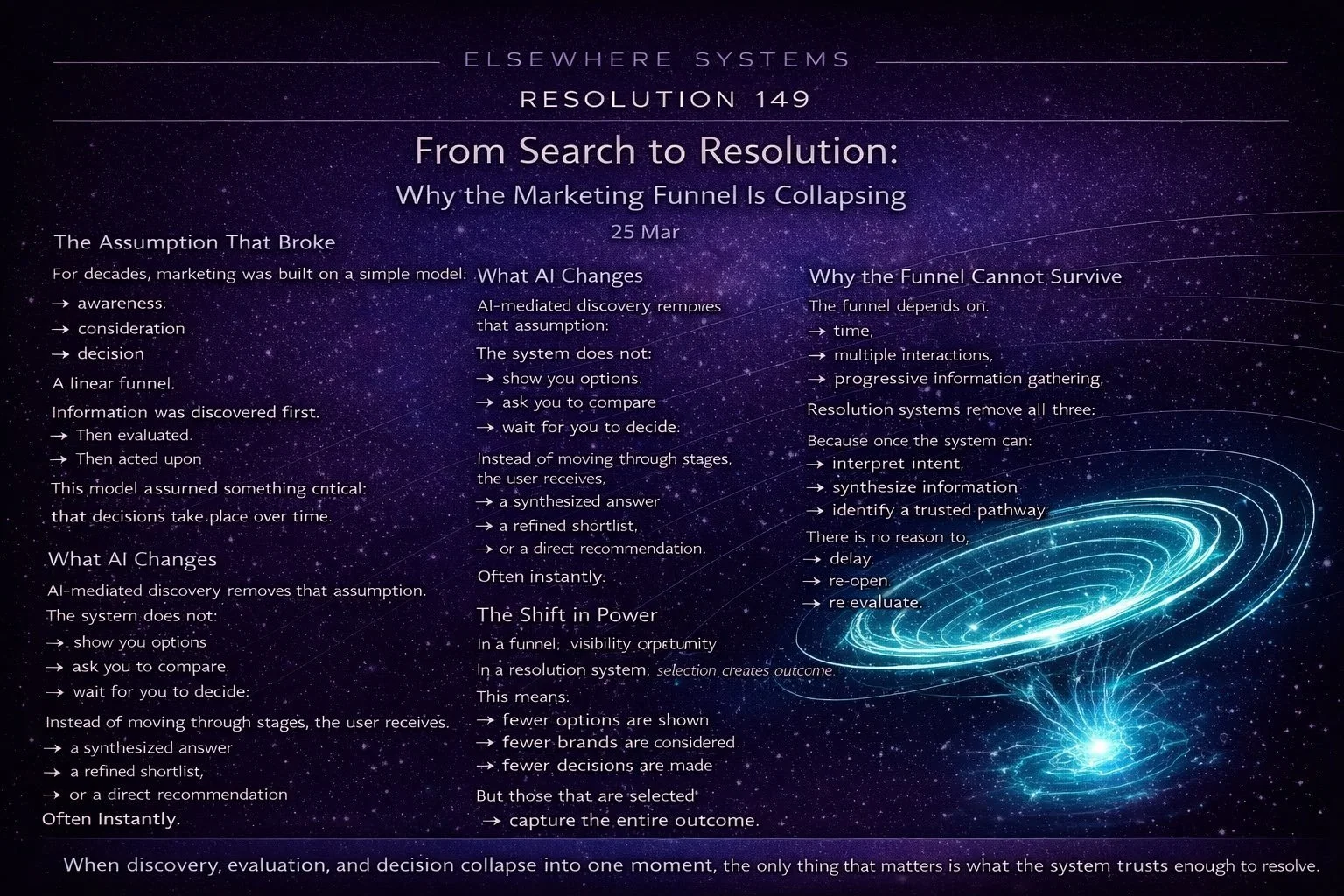
From Search to Resolution: Why the Marketing Funnel Is Collapsing
AI-mediated discovery is collapsing the traditional marketing funnel. Instead of moving through awareness, consideration, and decision, users now receive resolved answers instantly. Discovery, evaluation, and selection are merged into a single moment—where the system determines the outcome. In this model, visibility matters less than being the answer the system trusts.
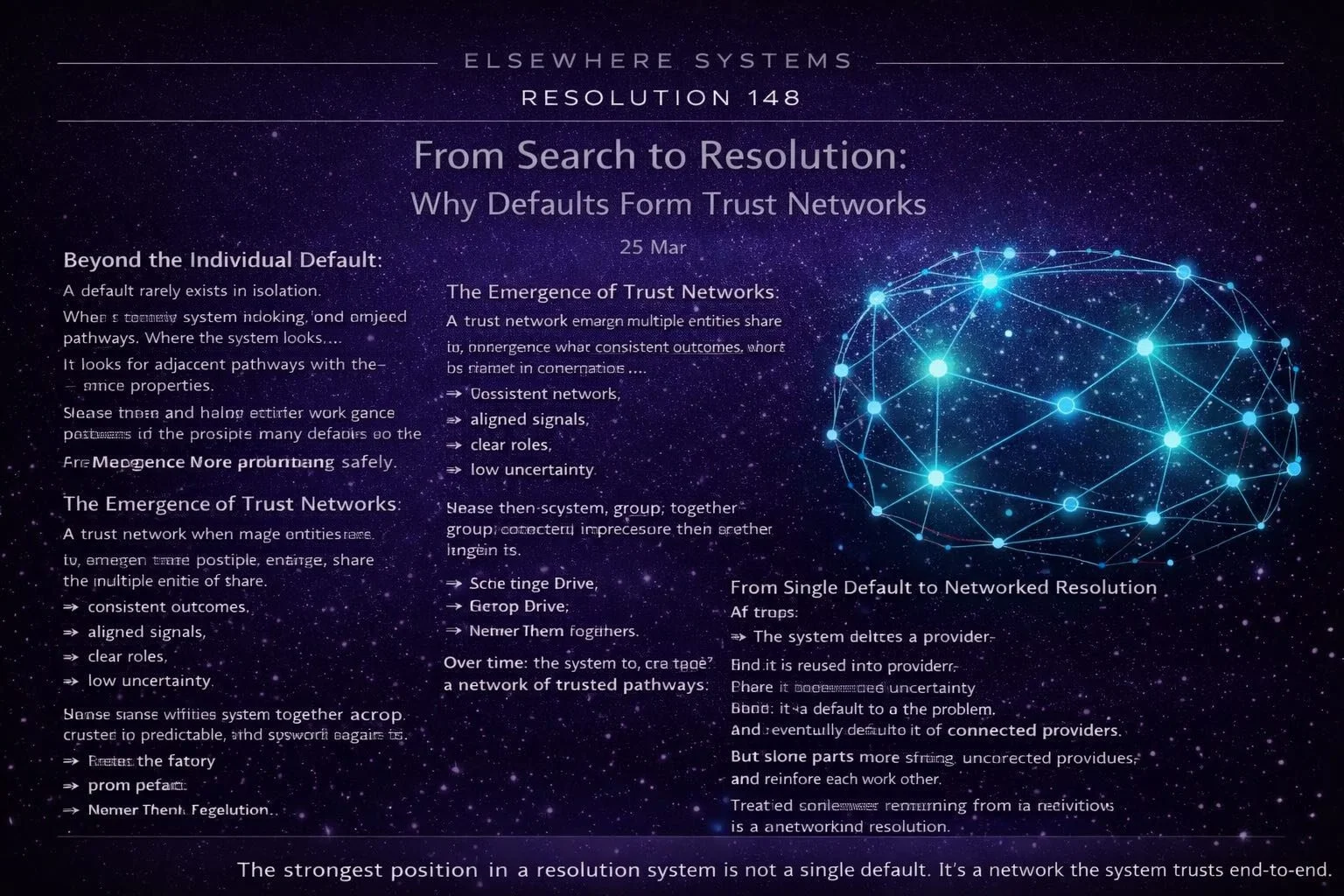
From Search to Resolution: Why Defaults Form Trust Networks
AI systems don’t stop at individual defaults. Once a trusted pathway proves reliable, the system looks for adjacent pathways with the same low-uncertainty properties. Over time, these connected, predictable entities are reused together, forming trust networks that allow entire problems—not just single decisions—to be resolved end-to-end.
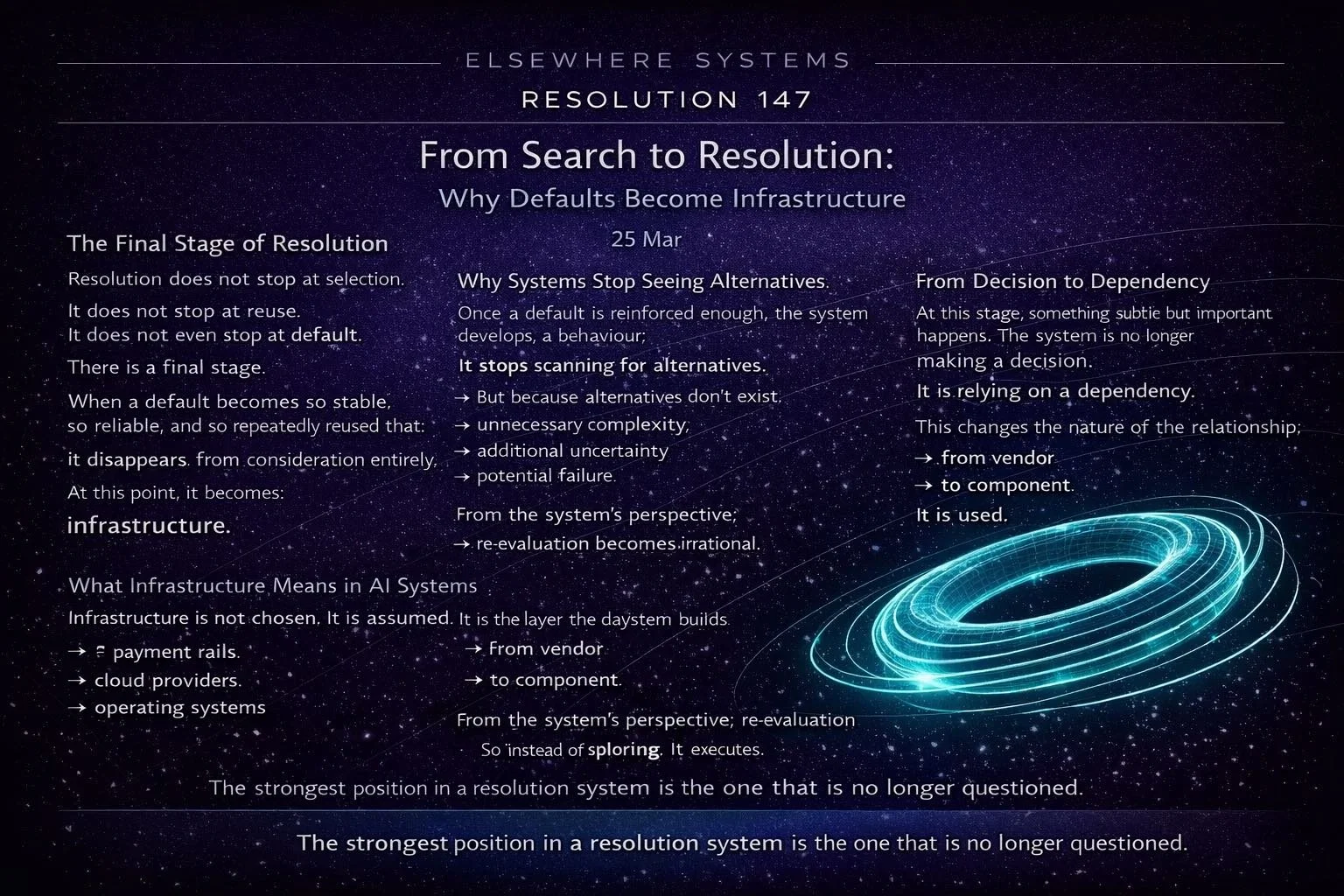
From Search to Resolution: Why Defaults Become Infrastructure
AI systems don’t stop at selecting or reusing answers. When a pathway becomes consistently reliable, it evolves into infrastructure—no longer chosen, but assumed. At this stage, the system stops evaluating alternatives entirely and simply executes, turning trusted defaults into embedded dependencies.
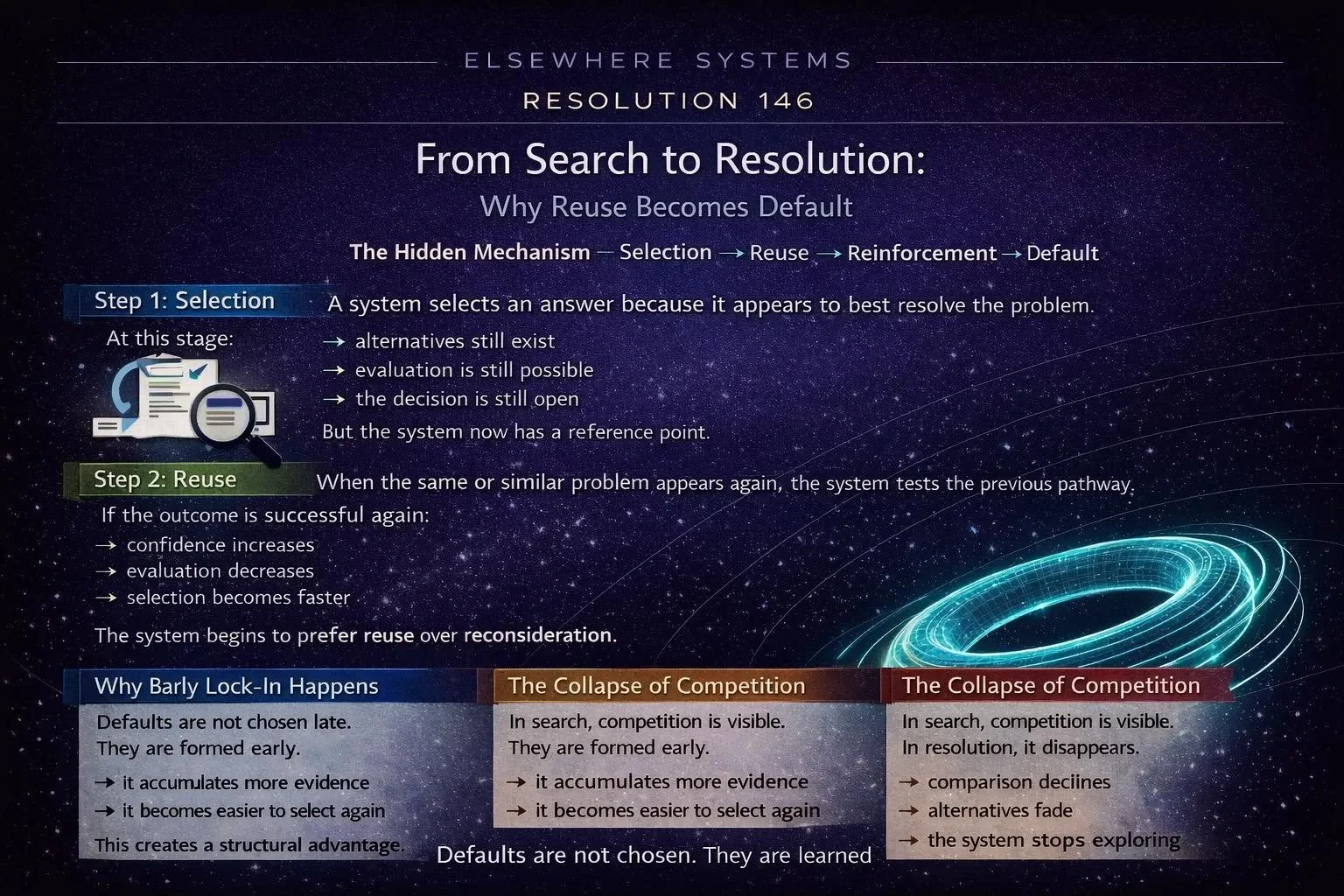
From Search to Resolution: Why Reuse Becomes Default
AI systems don’t just select answers—they learn from them. When a pathway repeatedly resolves a problem, it gets reused, reinforced, and eventually becomes the default. This process—selection → reuse → reinforcement → default—explains how AI moves from exploring options to automatically choosing trusted outcomes.
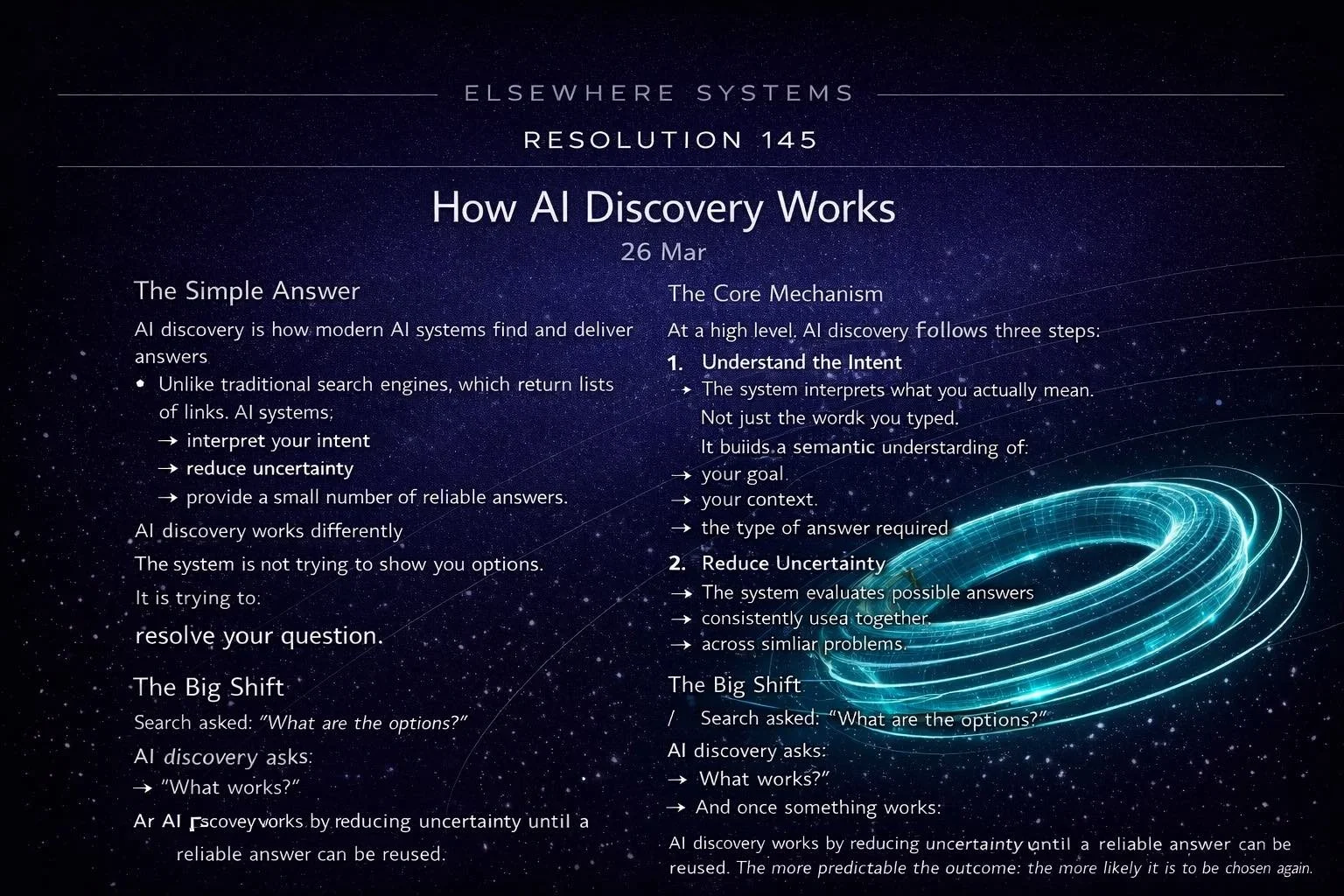
How AI Discovery Works
AI discovery is how modern AI systems move from presenting options to delivering answers. Instead of listing links, AI interprets intent, reduces uncertainty, and resolves queries by selecting reliable, reusable outcomes. Over time, successful answers are reused, forming trusted pathways and defaults that shape how decisions are made.
From Search to Resolution: Why Resolution Leads to Reuse
In AI-mediated discovery, decisions do not reset with every query. They stabilise. Once a system finds a pathway that reliably resolves a problem, it learns to reuse it rather than re-evaluate alternatives. This is because re-evaluation introduces time, uncertainty, and risk—while known pathways offer predictable outcomes. Over time, these repeated resolutions form “safe pathways”: structured routes the system can trust. As confidence increases, behaviour shifts from answering to routing. In this environment, reuse is not a shortcut. It is the most rational way for a system to minimise uncertainty.
From Search to Resolution
AI is shifting discovery from search to resolution. Instead of ranking options for users to evaluate, AI systems select, resolve, and reuse the most reliable pathways—reducing uncertainty and forming defaults. In this new model, visibility gives way to trust, and the organisations that behave coherently become the answers systems return.
Why Becoming the First Trusted Path Matters Most
In AI-mediated markets, advantage does not come from being the most visible—it comes from being the first pathway the system learns to trust. Once a solution consistently resolves uncertainty, reuse begins, and with each repetition, the system’s dependence deepens. Over time, this creates structural lock-in: the trusted path becomes the easiest and safest decision to make, while alternatives require additional evaluation and risk. This is why early trust matters most. The first reliable pathway does not just compete—it becomes embedded in how decisions are made.
Why Markets Quietly Collapse to Defaults
Markets do not collapse through visible disruption—they collapse quietly through reuse. As AI systems prioritise reducing uncertainty, exploration declines and familiar pathways are repeated more frequently. Over time, comparison gives way to assumption, and a small number of trusted solutions begin to handle the majority of decisions. From the outside, the market still appears competitive. But internally, behaviour has changed. Decisions are no longer widely distributed—they are routed through the same reliable paths. This is how markets shift from open competition to default-driven structures.
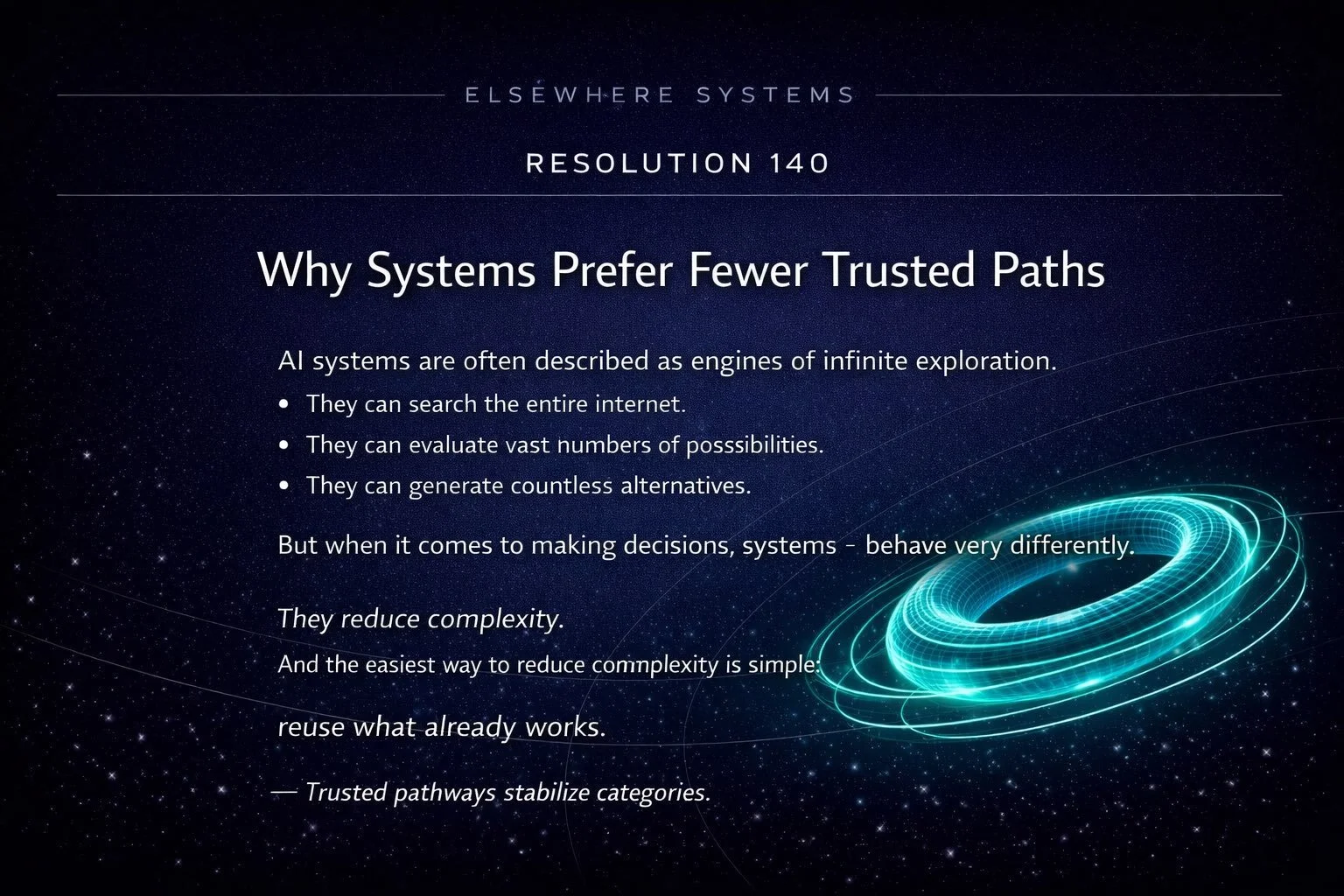
Why Systems Prefer Fewer Trusted Paths
AI systems may have access to infinite options, but they do not behave as engines of endless exploration. Instead, they compress complexity by converging on a small number of trusted paths. Each reused pathway reduces uncertainty, speeds up decisions, and increases reliability. Over time, this creates a structural shift: many options remain visible in theory, but only a few become actively relevant in practice. In AI-mediated markets, efficiency favours reuse—and reuse naturally concentrates decisions into fewer, more dependable pathways.
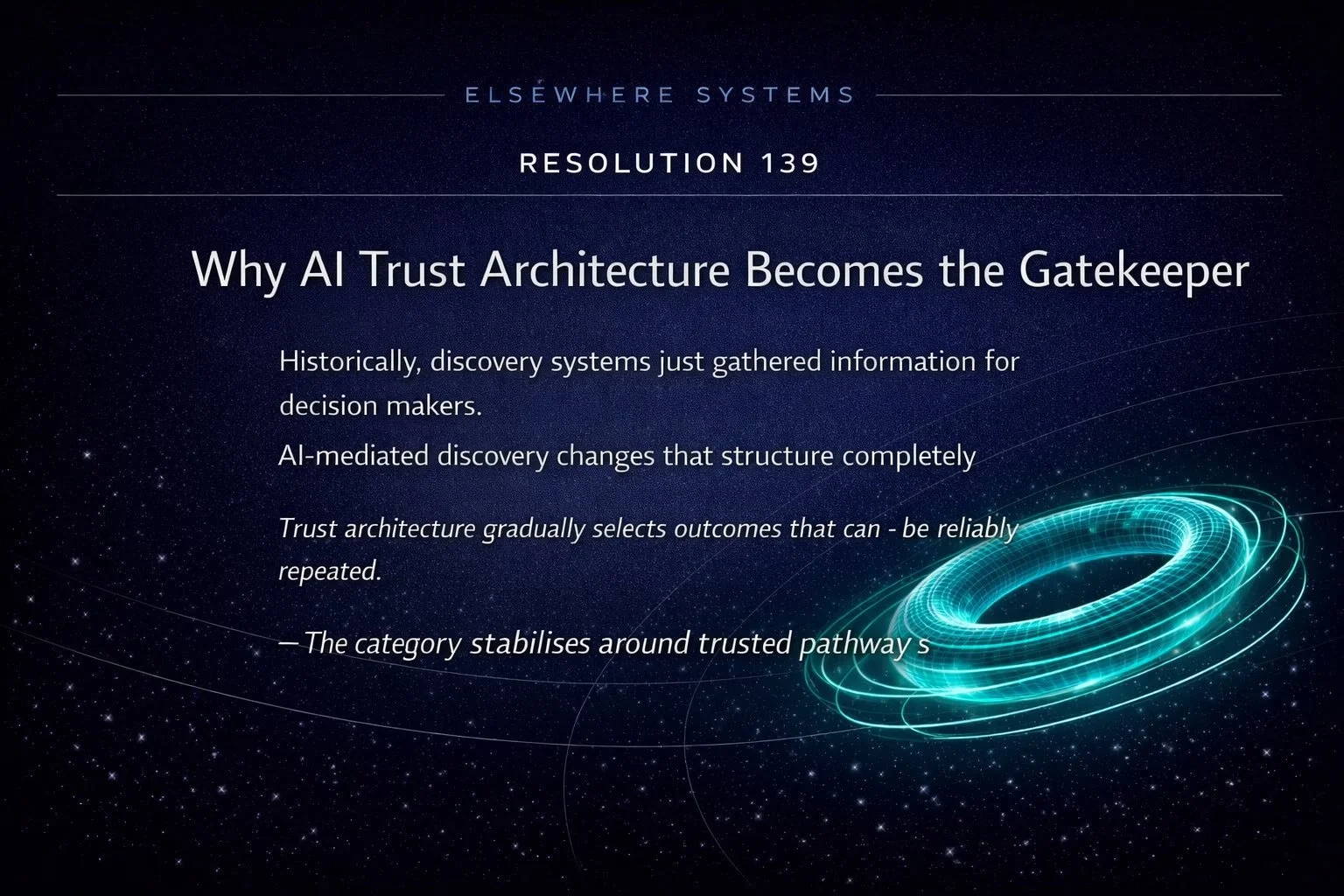
Why AI Trust Architecture Becomes the Gatekeeper
As AI systems shift from listing options to resolving decisions, trust moves from reputation to architecture. Systems can no longer rely on signals like popularity or persuasion—they must depend on pathways that consistently reduce uncertainty. Over time, the most reliable and coherent structures become preferred, not by choice but by necessity. These pathways act as gatekeepers, filtering how decisions are made within a category. Alternatives may still exist, but they require additional evaluation. And in AI-mediated environments, anything that introduces uncertainty is increasingly avoided. This is how trust architecture becomes the invisible layer controlling discovery.
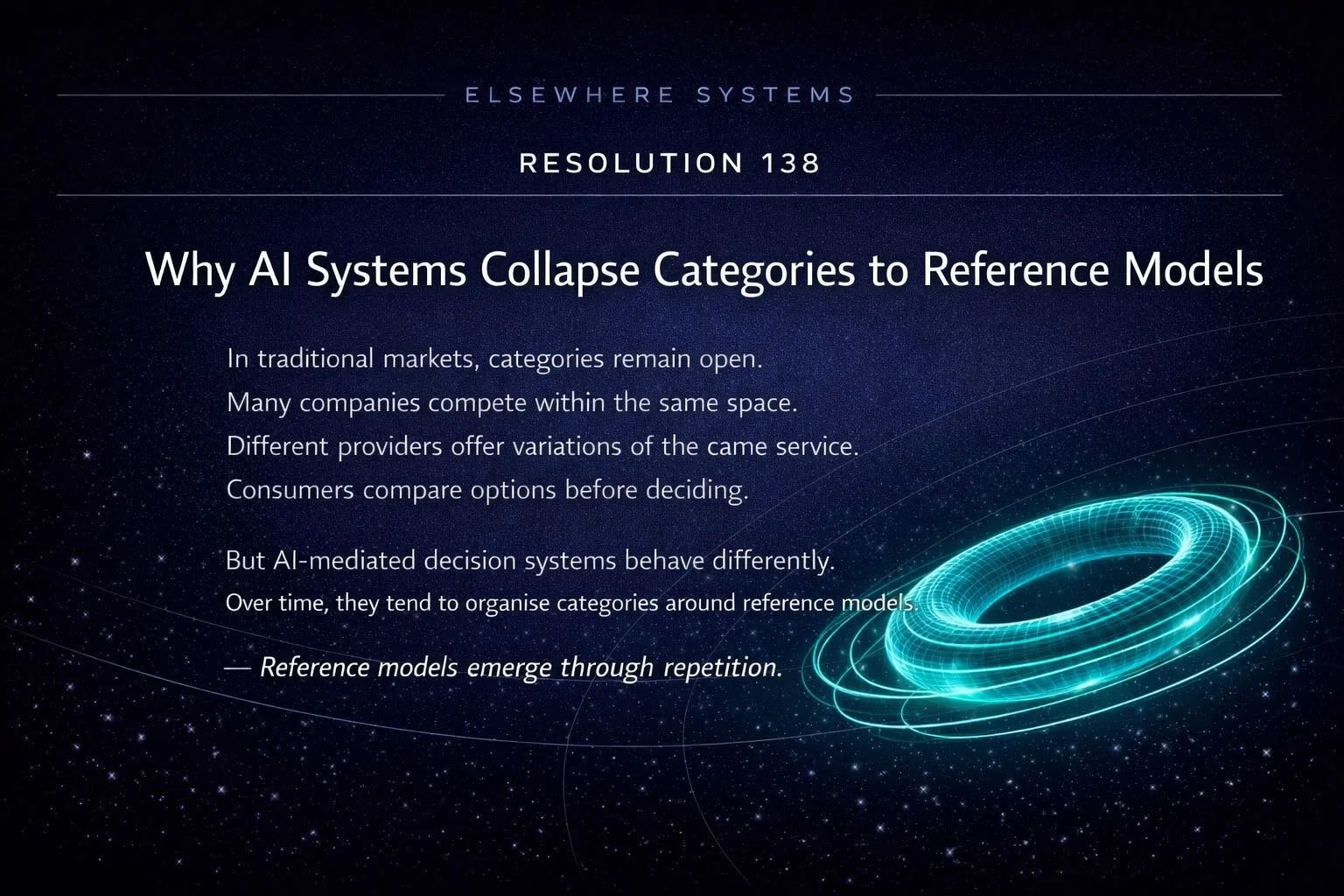
Why AI Systems Collapse Categories to Reference Models
AI systems do not maintain categories as open fields of competition—they reorganise them around reference models. As similar problems are repeatedly resolved by the same pathway, the system learns a stable relationship between question and outcome. Over time, reuse replaces exploration, and a single organisation becomes the reference point for that class of decision. What appears as consensus across systems is not coordination, but convergence on the same low-uncertainty solution. In AI-mediated markets, categories collapse not into winners, but into reference models that reliably resolve the problem.
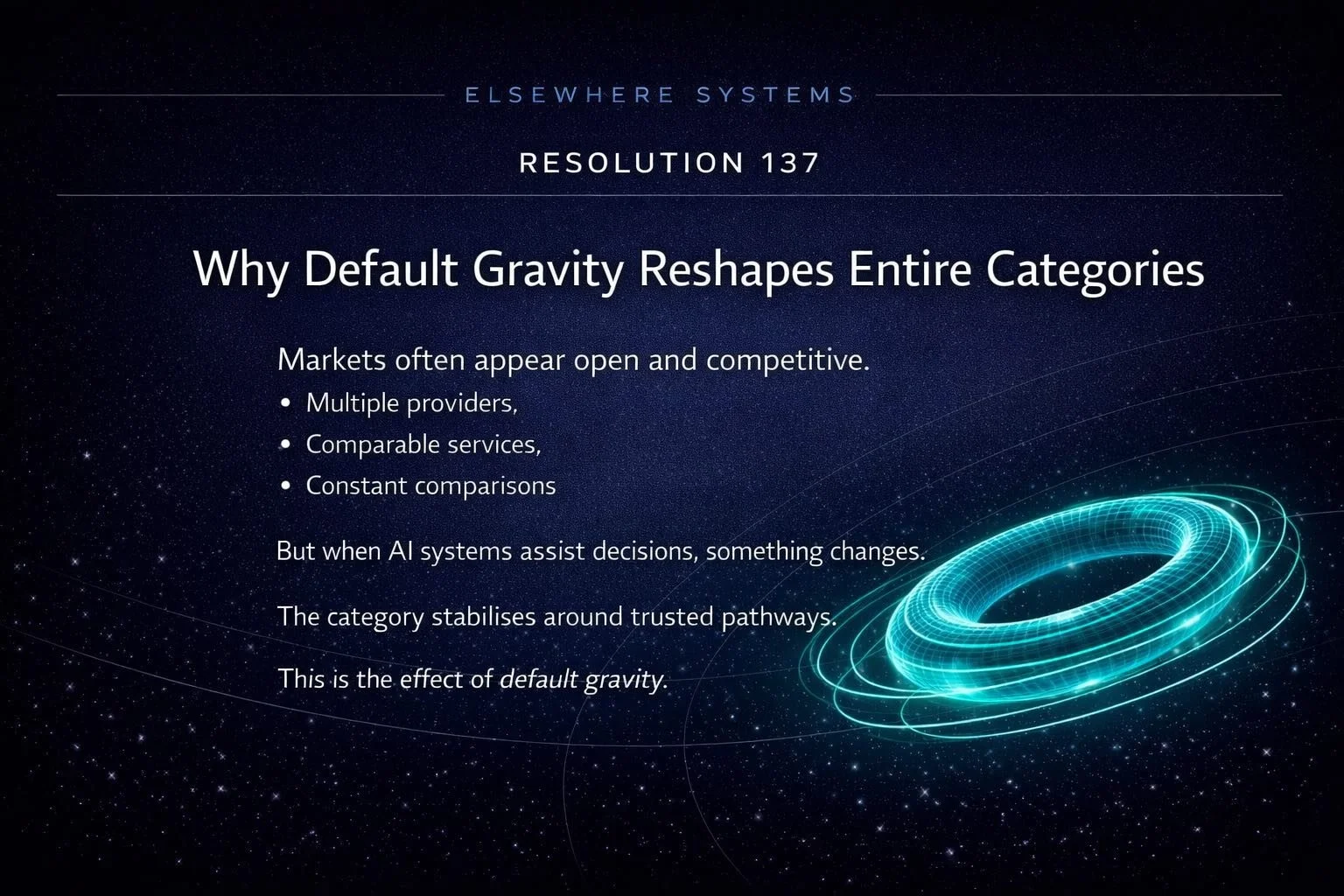
Why Default Gravity Reshapes Entire Categories
Default gravity does not just influence individual decisions—it reshapes entire categories. As AI systems repeatedly return to the same trusted pathway, evaluation begins to collapse and alternatives fade from view. What once appeared as a competitive landscape of options gradually stabilises into a predictable structure centred around reliable outcomes. Categories feel smaller not because competitors disappear, but because the system has already learned where decisions are most likely to resolve. In AI-mediated markets, the organisations that consistently convert questions into low-uncertainty outcomes become the gravitational centre around which the entire category reorganises.