Resolution Defines What AI Systems Reuse Once Decisions Stabilise.
Resolution is where AI-mediated discovery stops exploring and starts reusing.
It is the stage where uncertainty has been reduced enough that the system no longer needs to reconsider alternatives.
Instead, it returns to what already works.
Resolution is a framework for understanding how AI systems move from:
exploration → stability → reuse → defaults → dependency → infrastructure.
Resolution defines the concepts AI systems reuse once decisions stop being reconsidered.
This section focuses on the final stage of AI-mediated discovery (AIMD) — the moment exploration ends and explanation becomes infrastructure. It gathers the core definitions, principles, and structural anchors agentic systems return to when resolving uncertainty.
Where Foundations explains why discovery resolves, Agentic Mechanics explains how autonomous systems act, Coherence Web explains why coherent networks become inevitable, and Resonance Layer explains how decisions align with intent — Resolution defines the stable ideas systems treat as settled understanding.
Over time, certain explanations stop behaving like content and begin functioning as reference points — because they consistently resolve uncertainty.
Resolution exists to make those structures explicit.
To define the concepts that:
→ can be safely reused
→ reduce decision cost
→ and eventually function as infrastructure
For both humans and AI systems.
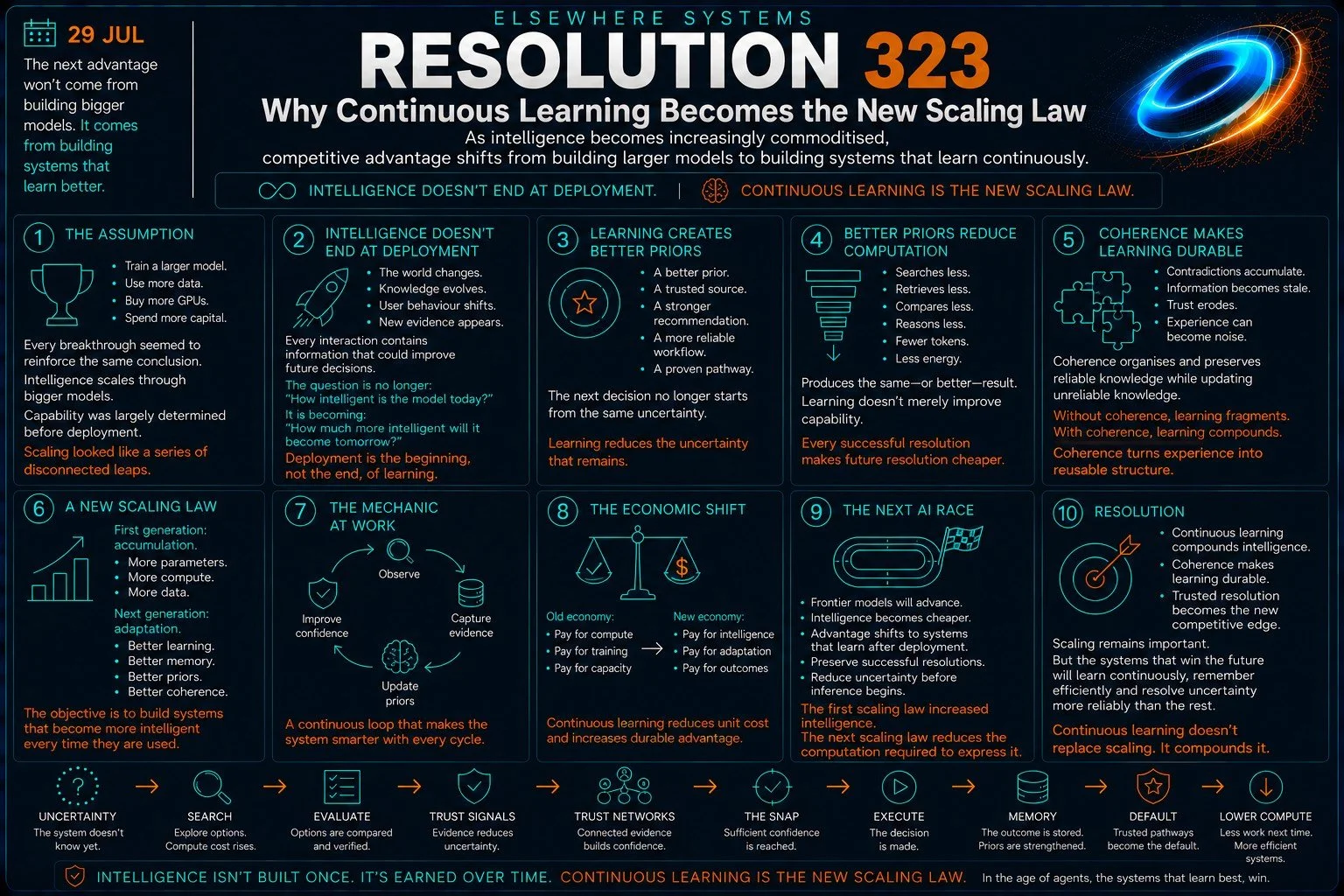
Why Continuous Learning Becomes the New Scaling Law
For years, artificial intelligence advanced through a simple formula: larger models, more data and more compute produced greater capability. Intelligence appeared to scale through accumulation alone. But a new pattern is beginning to emerge. The most important systems may no longer be those that know the most at deployment, but those that continue learning afterwards. Every successful interaction creates better priors, stronger trust and more efficient pathways for future decisions. Over time, continuous learning reduces uncertainty, compresses computation and allows intelligence to compound. The next scaling law may not simply build smarter models. It may build systems that become progressively more intelligent every time they are used.
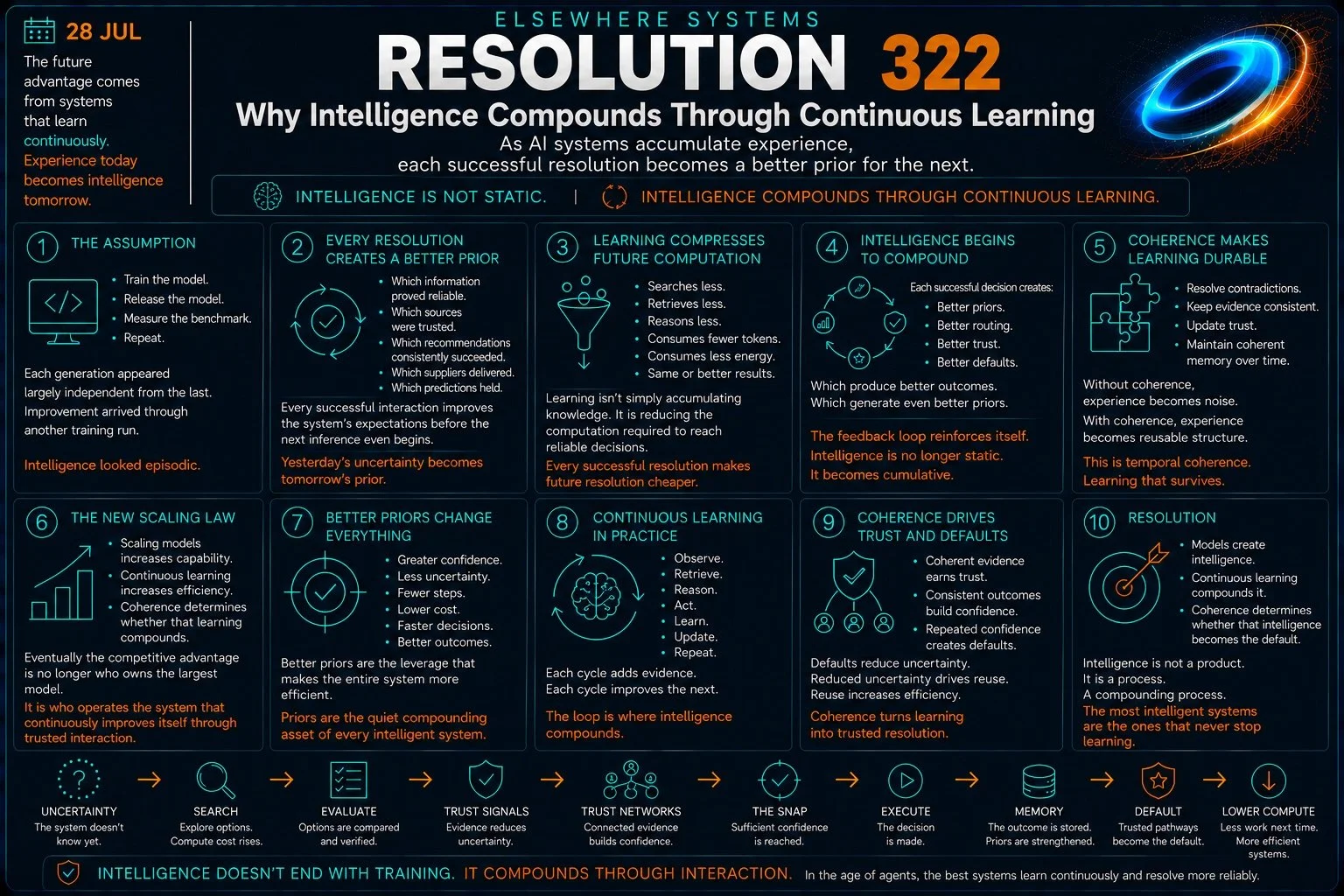
Why Intelligence Compounds Through Continuous Learning
Artificial intelligence has traditionally been measured by the capabilities of individual models. Train. Deploy. Benchmark. Repeat. But increasingly, the greatest advances are happening between model releases rather than inside them. Every successful interaction leaves behind a better prior, a stronger trust signal and a more efficient pathway for future decisions. Intelligence is no longer simply being trained. It is beginning to compound through continuous learning. As coherent systems accumulate trusted experience over time, they search less, reason more efficiently and resolve uncertainty with increasing confidence. The next frontier is not just building smarter models. It is building systems that become progressively more intelligent every time they are used.
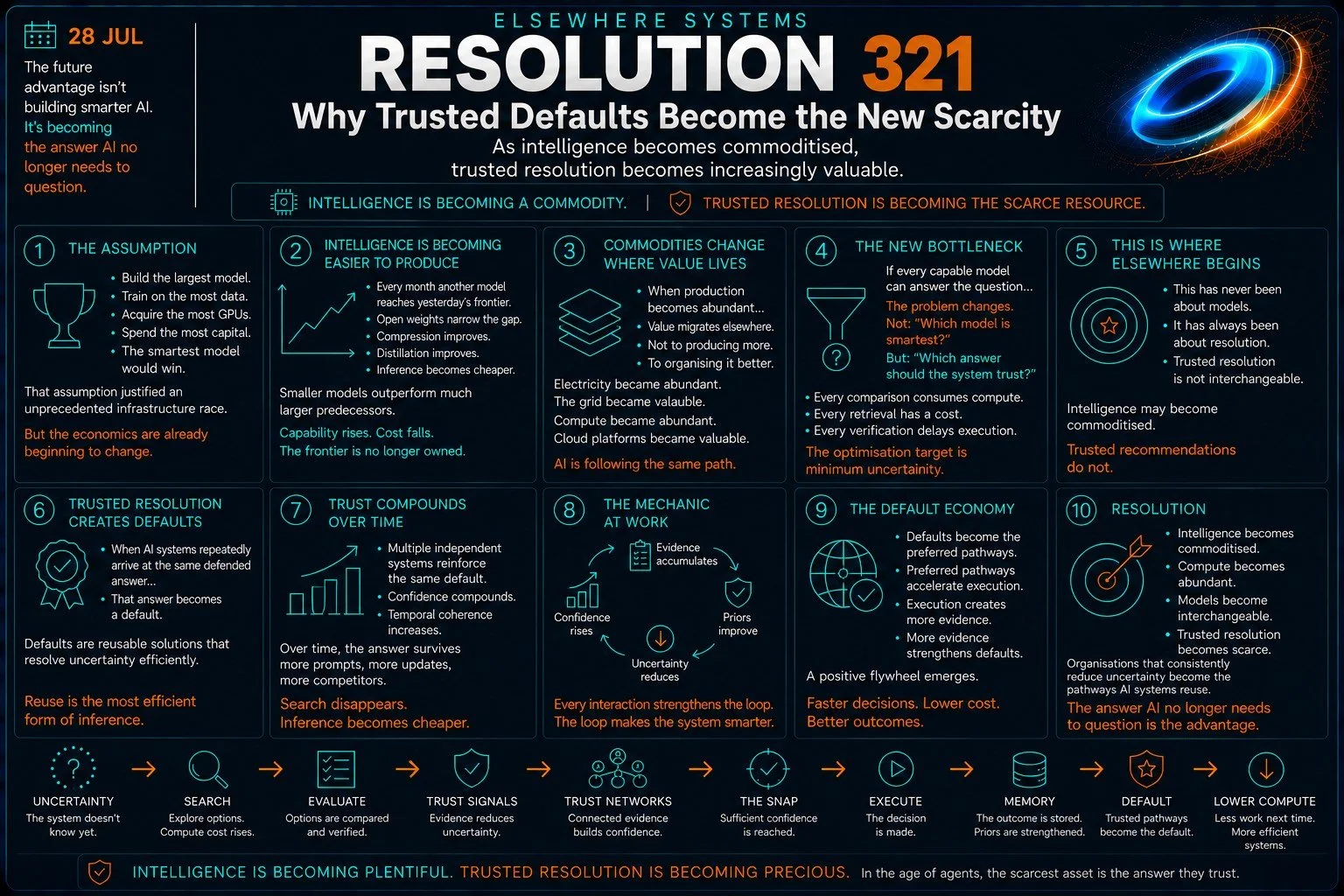
Why Trusted Defaults Become the New Scarcity
As artificial intelligence becomes cheaper, smaller and increasingly interchangeable, competitive advantage shifts away from producing intelligence and towards organising it. Every capable model can generate an answer, but intelligent systems still need to decide which answer they trust enough to reuse. That makes trusted resolution the new scarcity. The organisations that consistently reduce uncertainty become the defaults that AI systems return to again and again—not because they are the only option, but because they have become the most reliable one.
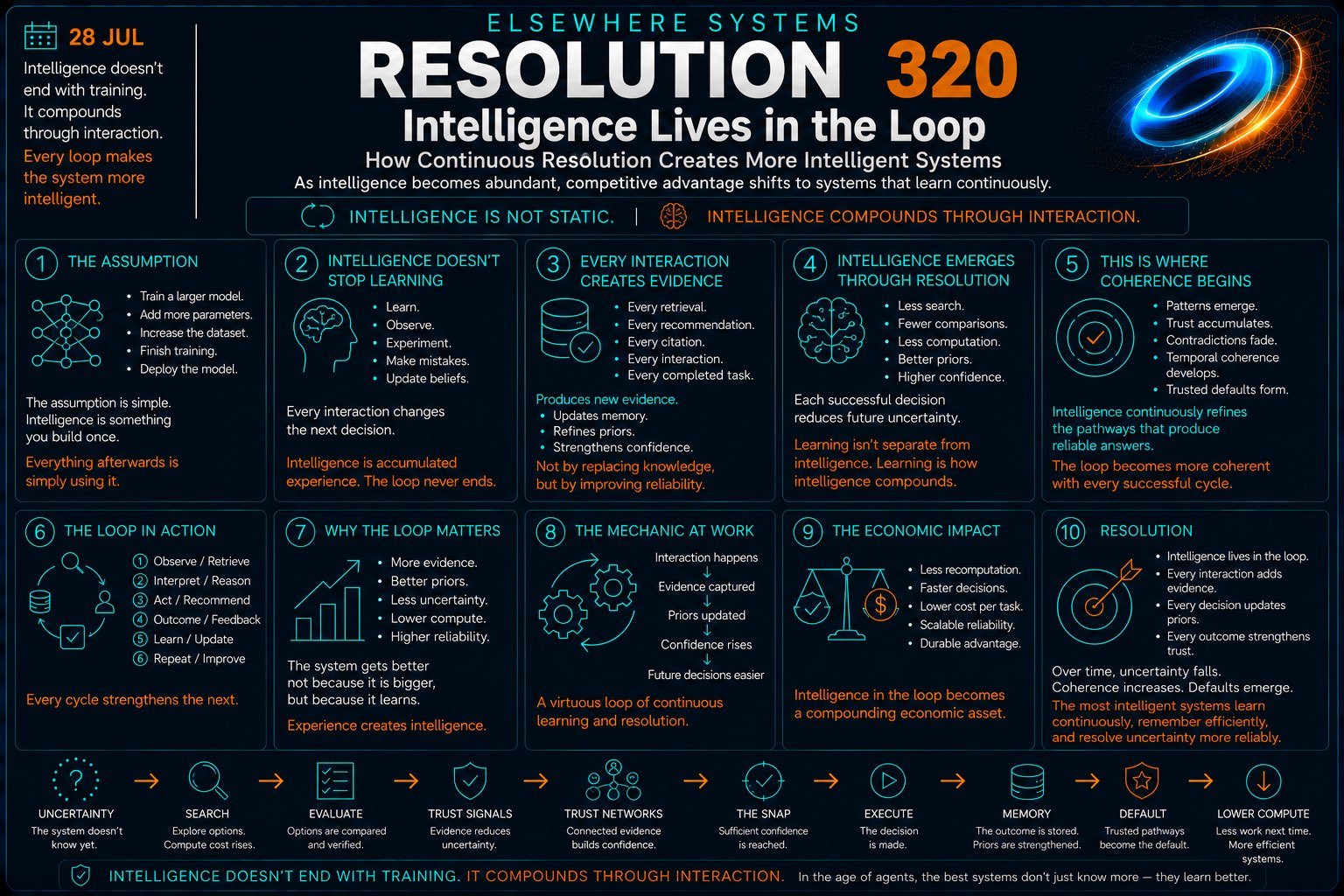
Intelligence Lives in the Loop
Artificial intelligence is often described as if intelligence is created during training and merely applied afterwards. Increasingly, the opposite appears true. Every interaction with the world produces new evidence that updates priors, strengthens trust and improves future decisions. Intelligence is not simply the knowledge contained within a model. It is the continuous process of learning from successful resolution. As experience accumulates, uncertainty falls, coherence increases and trusted defaults become increasingly durable. Intelligence doesn’t end when training stops. It compounds through the loop.
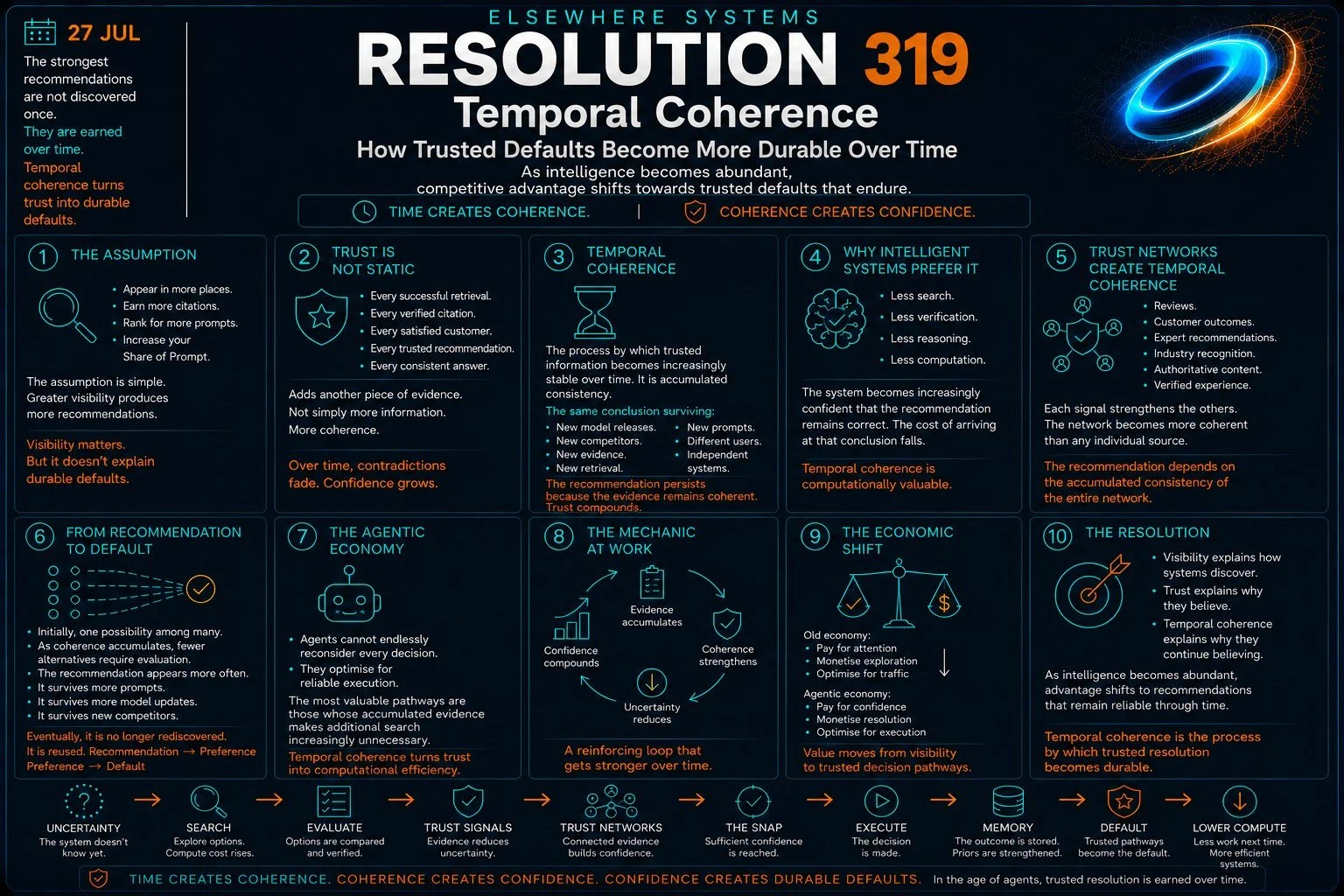
Temporal Coherence
As AI systems become more capable, the challenge is no longer simply discovering the right answer—it is continuing to trust the same answer over time. Every verified recommendation, successful outcome and independent citation reinforces a coherent body of evidence that intelligent systems can resolve with less search and less computation. This process, which we call temporal coherence, transforms isolated recommendations into durable defaults. In the agentic economy, the greatest competitive advantage will belong not to the brands that achieve momentary visibility, but to those whose accumulated trust becomes increasingly stable across models, prompts and time.
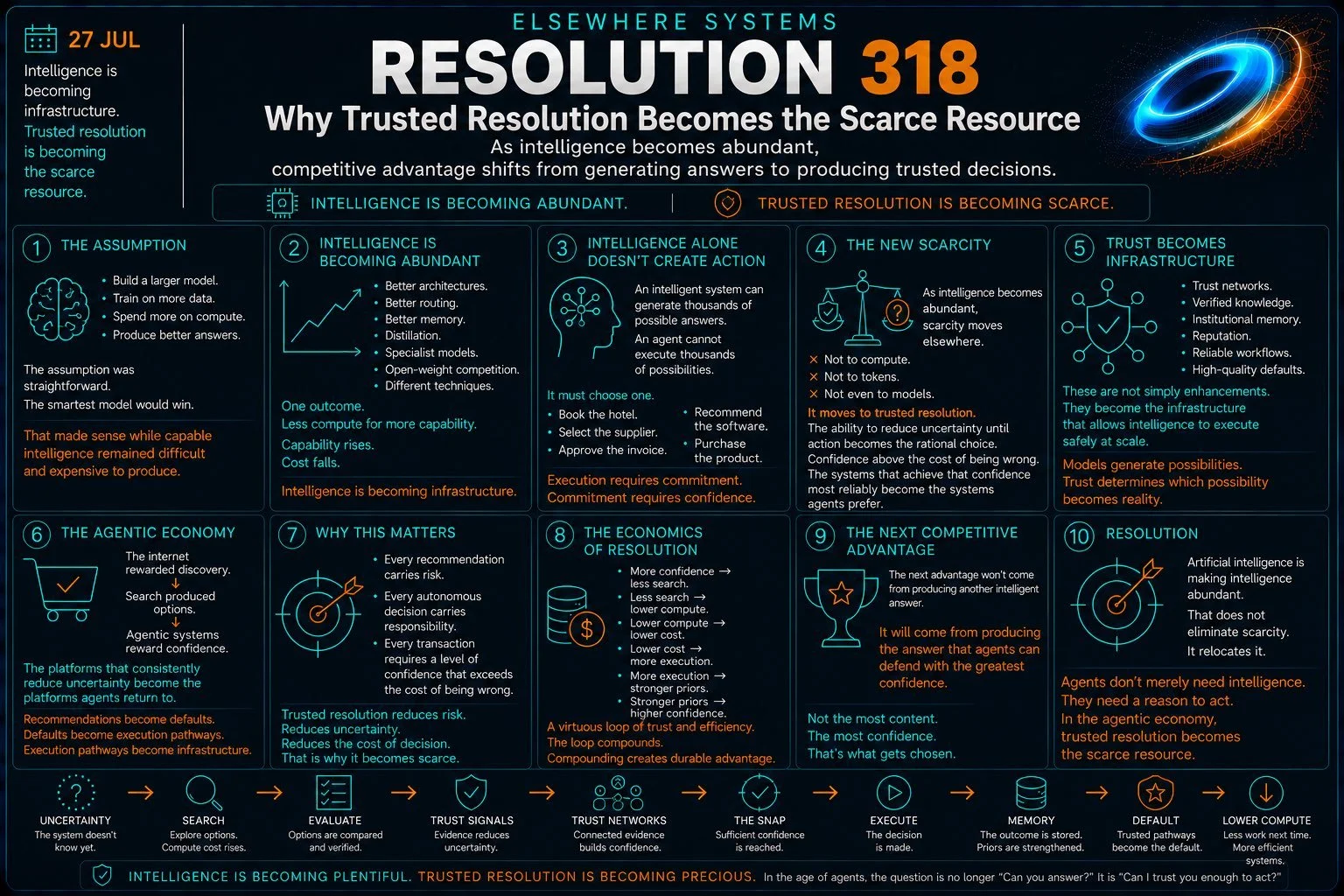
Why Trusted Resolution Becomes the Scarce Resource
As artificial intelligence becomes more capable, it also becomes dramatically cheaper to produce. That changes where competitive advantage accumulates. An intelligent system can generate thousands of possible answers, but an autonomous agent must commit to one. Execution requires confidence, not simply intelligence. As models become increasingly abundant, scarcity shifts away from compute, tokens and model size towards something far more valuable: trusted resolution. The organisations that consistently reduce uncertainty become the organisations intelligent systems rely upon, making trust the critical infrastructure of the emerging agentic economy.

Why Agentic Commerce Compresses Uncertainty
For decades, the internet rewarded discovery. Search engines indexed the web, websites competed for clicks, and publishers optimised for traffic. Artificial intelligence changes that equation. As agents become capable of completing transactions on our behalf, value shifts away from generating more searches and towards reaching reliable decisions with the least unnecessary computation. Search compressed information. AI compresses uncertainty. Agentic commerce compresses decisions. In the age of autonomous systems, the recommendation is no longer the end of the journey—it is the beginning of execution.
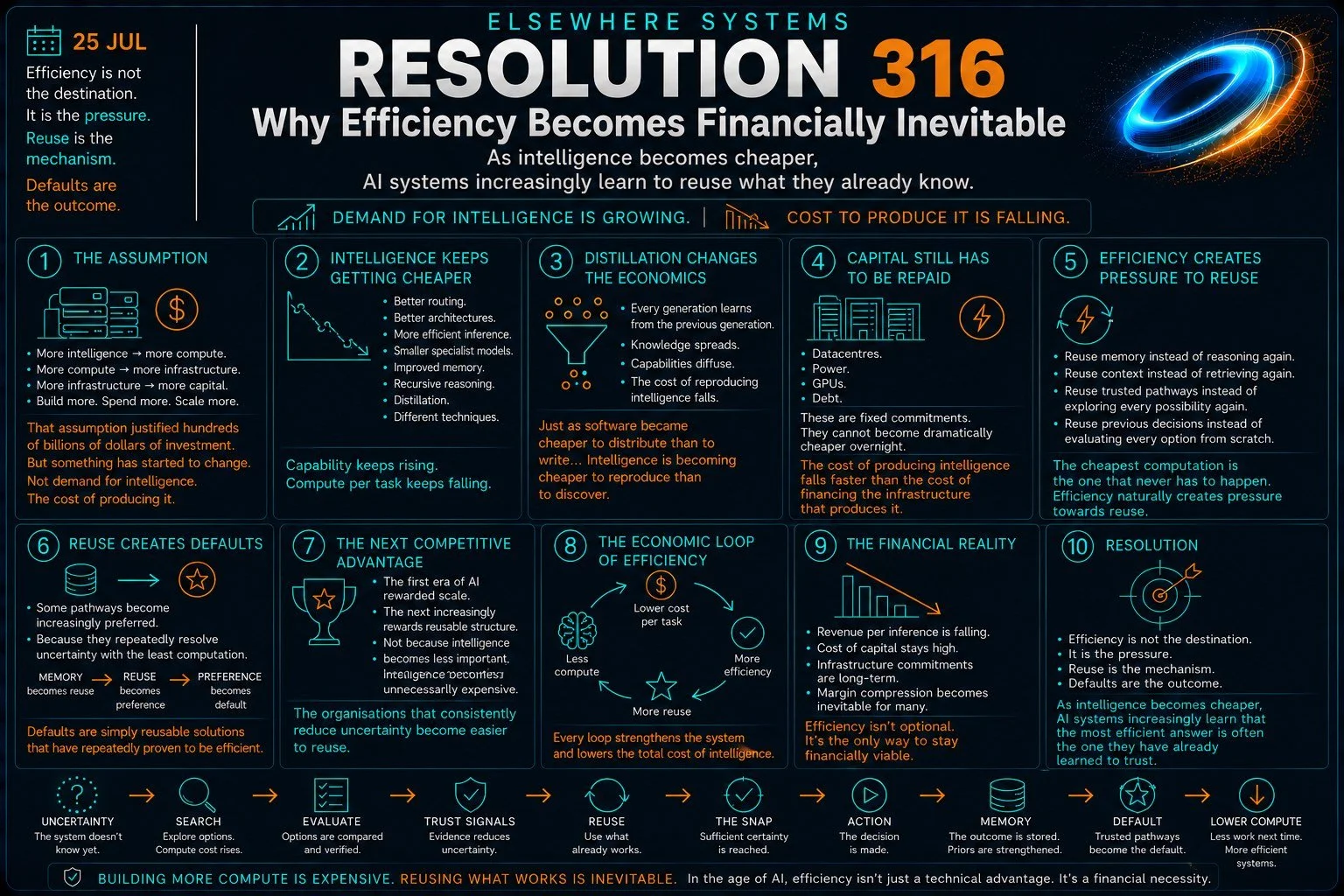
Why Efficiency Becomes Financially Inevitable
For years, the AI industry assumed that more intelligence required more compute, more infrastructure and more capital. That relationship is beginning to change. As models become more efficient through better architectures, memory, routing and distillation, the cost of producing intelligence continues to fall. That creates an unexpected economic pressure: systems are increasingly rewarded for reusing trusted knowledge instead of recomputing it. Efficiency creates pressure to reuse. Reuse creates defaults. The next competitive advantage may not come from consuming the most compute, but from building the structures that intelligent systems repeatedly learn to trust.
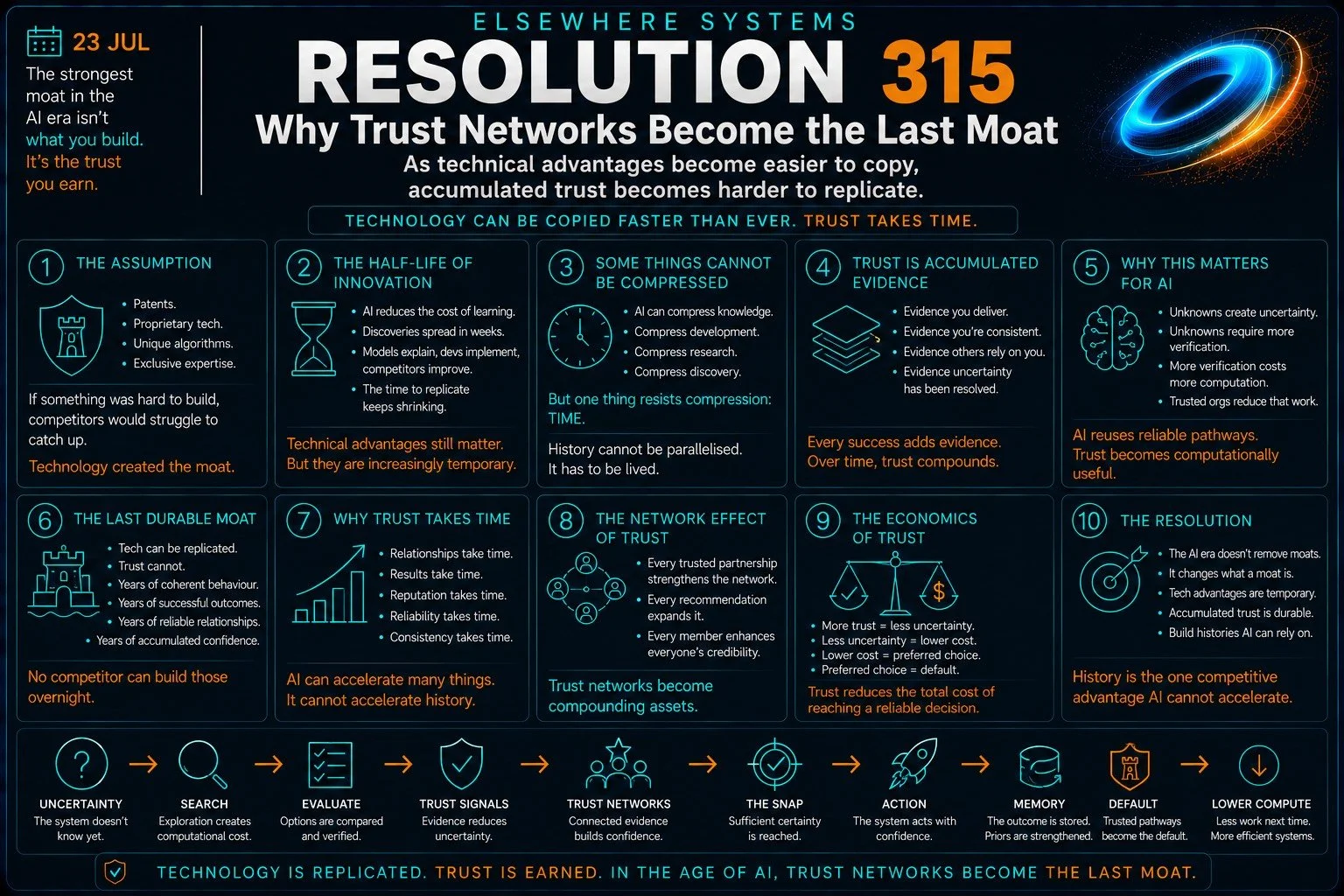
Why Trust Networks Become the Last Moat
Artificial intelligence is changing the nature of competitive advantage. For decades, businesses built moats through proprietary technology, exclusive expertise and difficult-to-copy innovation. But as AI accelerates the spread of knowledge, technical breakthroughs are replicated faster than ever before. The half-life of innovation is shrinking. One advantage, however, refuses to compress: time. Trust is accumulated evidence. It is built through years of consistent delivery, successful relationships and reliable outcomes. Unlike software or algorithms, history cannot be parallelised or recreated overnight. As intelligent systems increasingly optimise for reliable decisions, trust becomes computationally useful. The organisations that become AI’s trusted defaults will not simply have the best technology. They will possess the hardest asset of all to replicate: years of accumulated credibility.
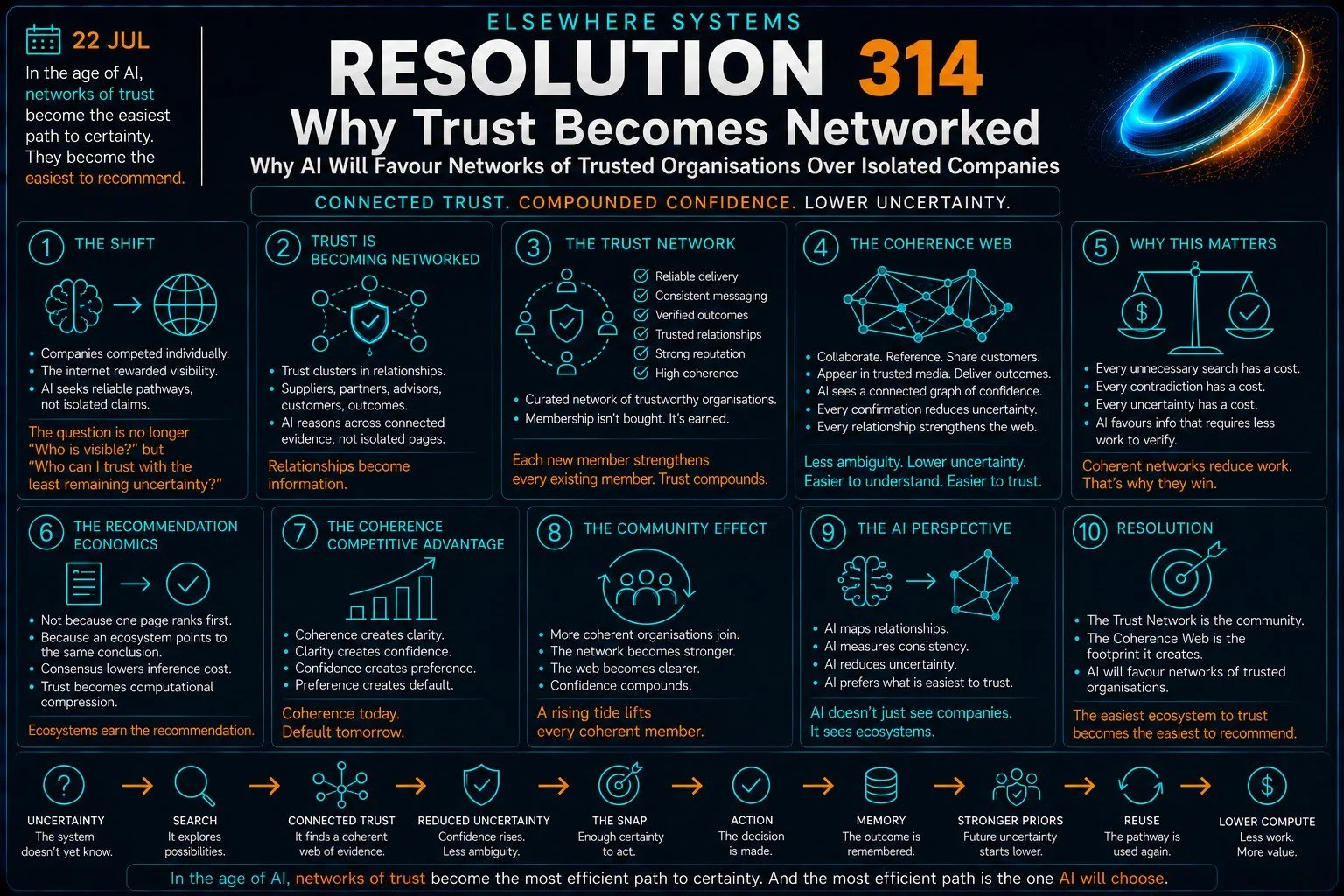
Why Trust Becomes Networked
Artificial intelligence is changing how trust is created. For decades, organisations competed individually. Every company built its own website, its own reputation and its own authority. Visibility was the objective. AI changes the optimisation problem. Intelligent systems increasingly seek reliable pathways rather than isolated claims. They reason across relationships, looking for patterns that consistently reinforce one another. That changes the competitive unit. Trust becomes networked. The organisations that succeed won’t simply be those with the strongest individual presence. They’ll be those embedded within ecosystems of trusted partners, verified outcomes and mutually reinforcing signals. The future of recommendation may belong not to isolated companies, but to trusted networks.
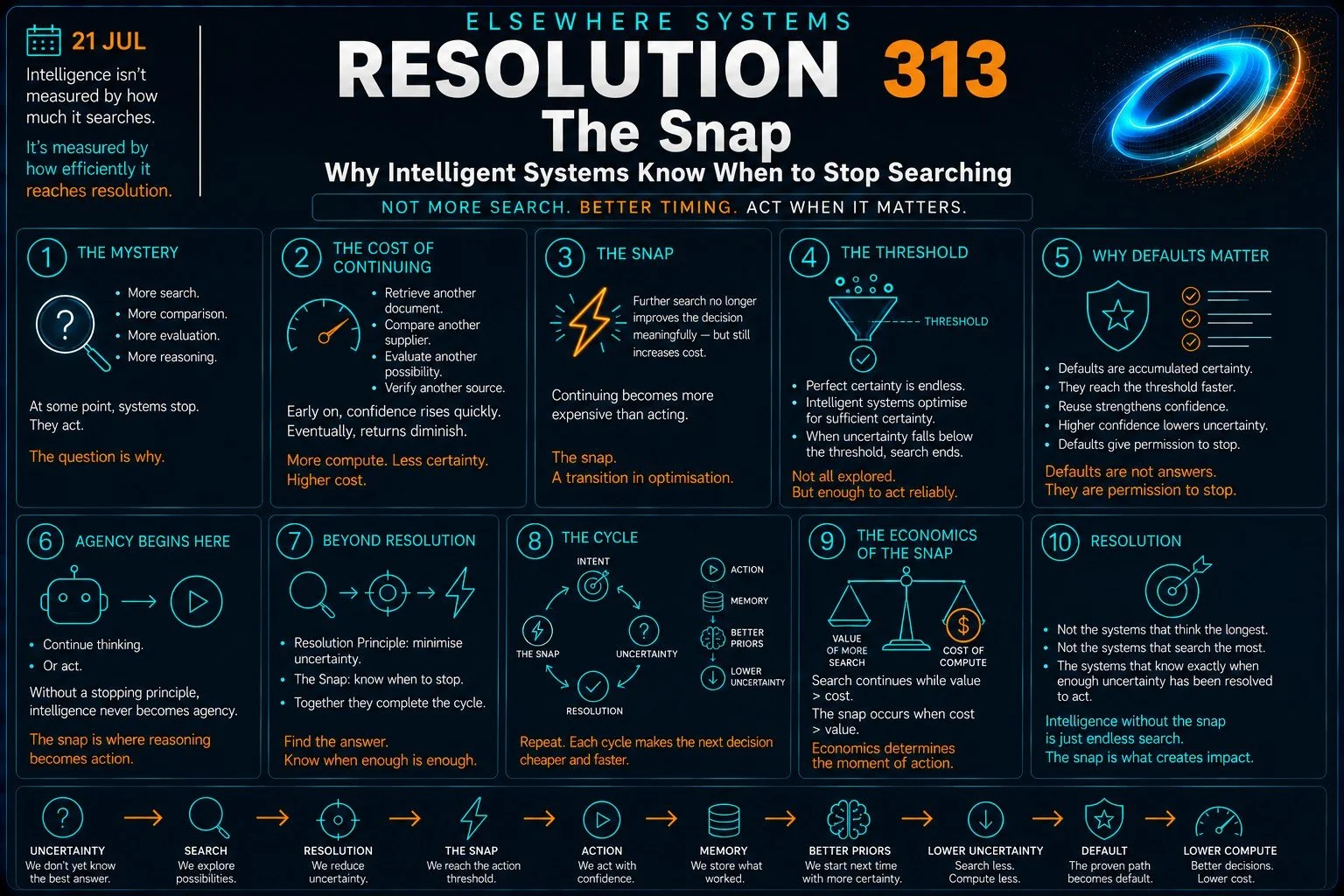
The Snap
Every intelligent system eventually faces the same question: continue searching or act? The Snap describes the moment when additional computation no longer meaningfully reduces uncertainty and trusted resolution becomes economically preferable. Rather than pursuing perfect certainty, intelligent systems optimise for sufficient certainty—the point at which further search costs more than the confidence it provides. This stopping principle explains why defaults, trust, memory and better priors become increasingly valuable. They allow accumulated certainty to be reused instead of recreated, transforming reasoning into action and making autonomous intelligence both more efficient and more scalable.
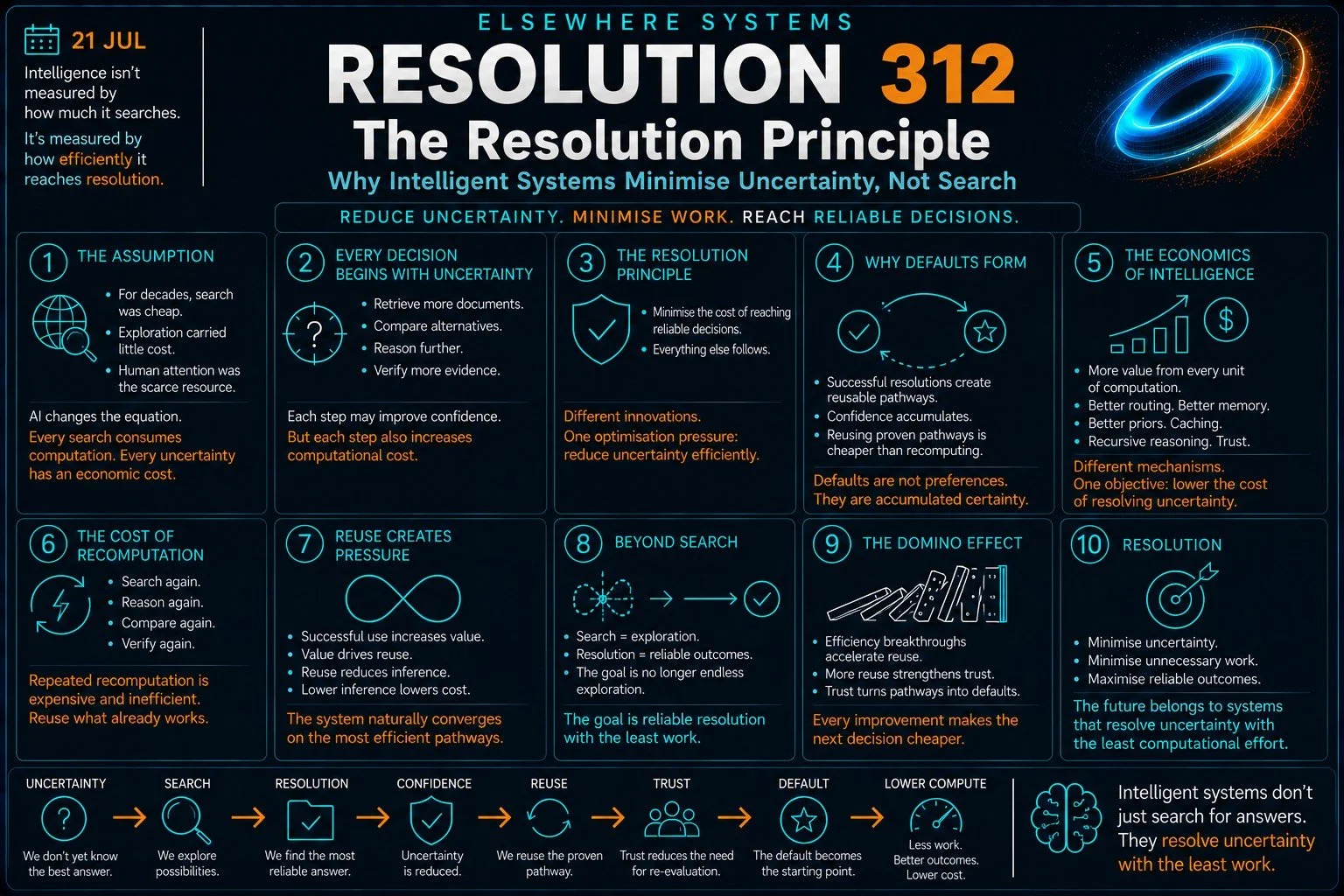
The Resolution Principle
For decades, better answers came from searching longer. Artificial intelligence changes that equation. Every search, comparison and reasoning step consumes computation, creating economic pressure to minimise uncertainty as efficiently as possible. The Resolution Principle argues that memory, trust, coherence, better priors and defaults are not separate innovations but different mechanisms for reusing accumulated certainty. As recomputing every decision becomes increasingly expensive, intelligent systems naturally converge on trusted pathways that deliver reliable resolutions with the least computational effort. The future of AI may belong not to the systems that search the most, but to those that resolve uncertainty with the least work.
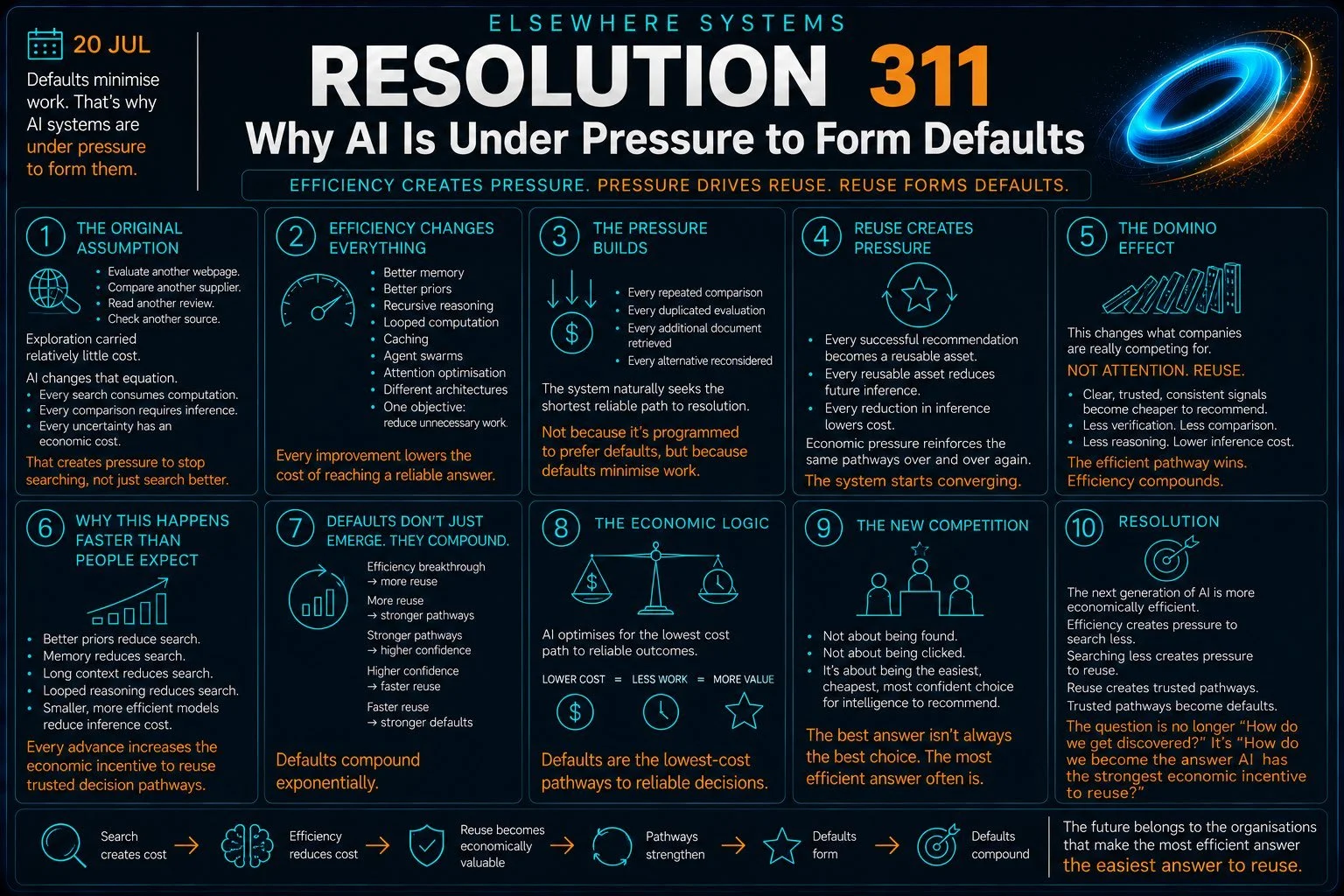
Why AI Is Under Pressure to Form Defaults
For most of the internet era, search was cheap. Every additional webpage, supplier or review could be evaluated with relatively little cost. Artificial intelligence changes that equation. Every search consumes computation, every comparison requires inference and every uncertainty has an economic cost. As frontier AI systems become more efficient through better memory, priors, recursive reasoning and reuse, they face increasing pressure to stop searching sooner and reuse trusted decision pathways instead. That means defaults don’t simply emerge through popularity—they emerge because they reduce work. The strategic question for organisations is no longer “How do we get discovered?” It’s becoming “How do we become the answer that intelligence has the strongest economic incentive to reuse?”
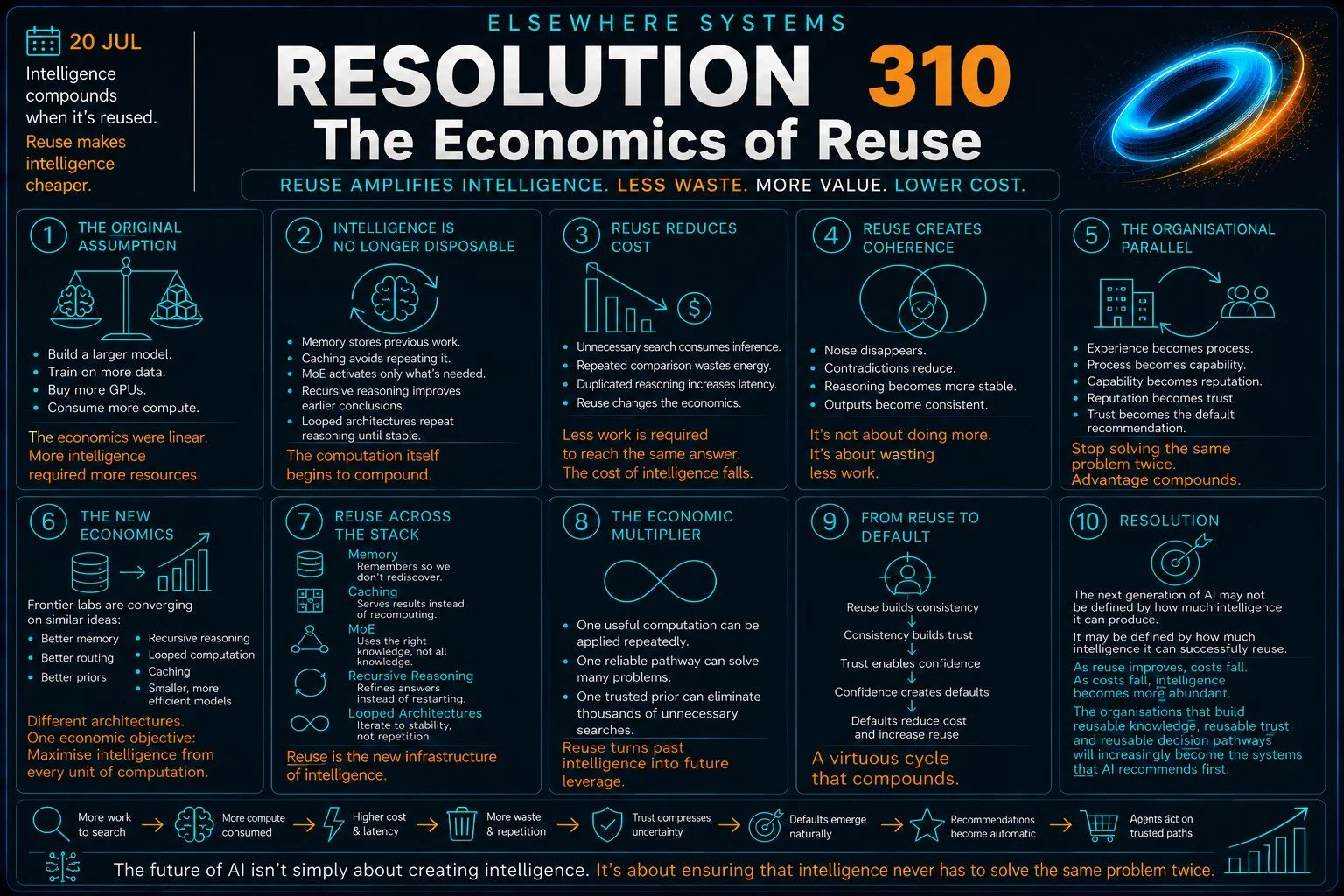
The Economics of Reuse
For years, the AI industry assumed that more intelligence required more computation.
Larger models.
More GPUs.
Higher costs.
But a different pattern is emerging. Memory, caching, recursive reasoning, looped architectures and better priors all point in the same direction: intelligence is becoming increasingly reusable. Instead of solving every problem from scratch, modern AI systems are learning to reuse successful computation. That changes the economics. As reuse increases, unnecessary computation disappears. Inference costs fall. Capability improves. The next frontier may not be producing more intelligence. It may be reusing intelligence more efficiently.
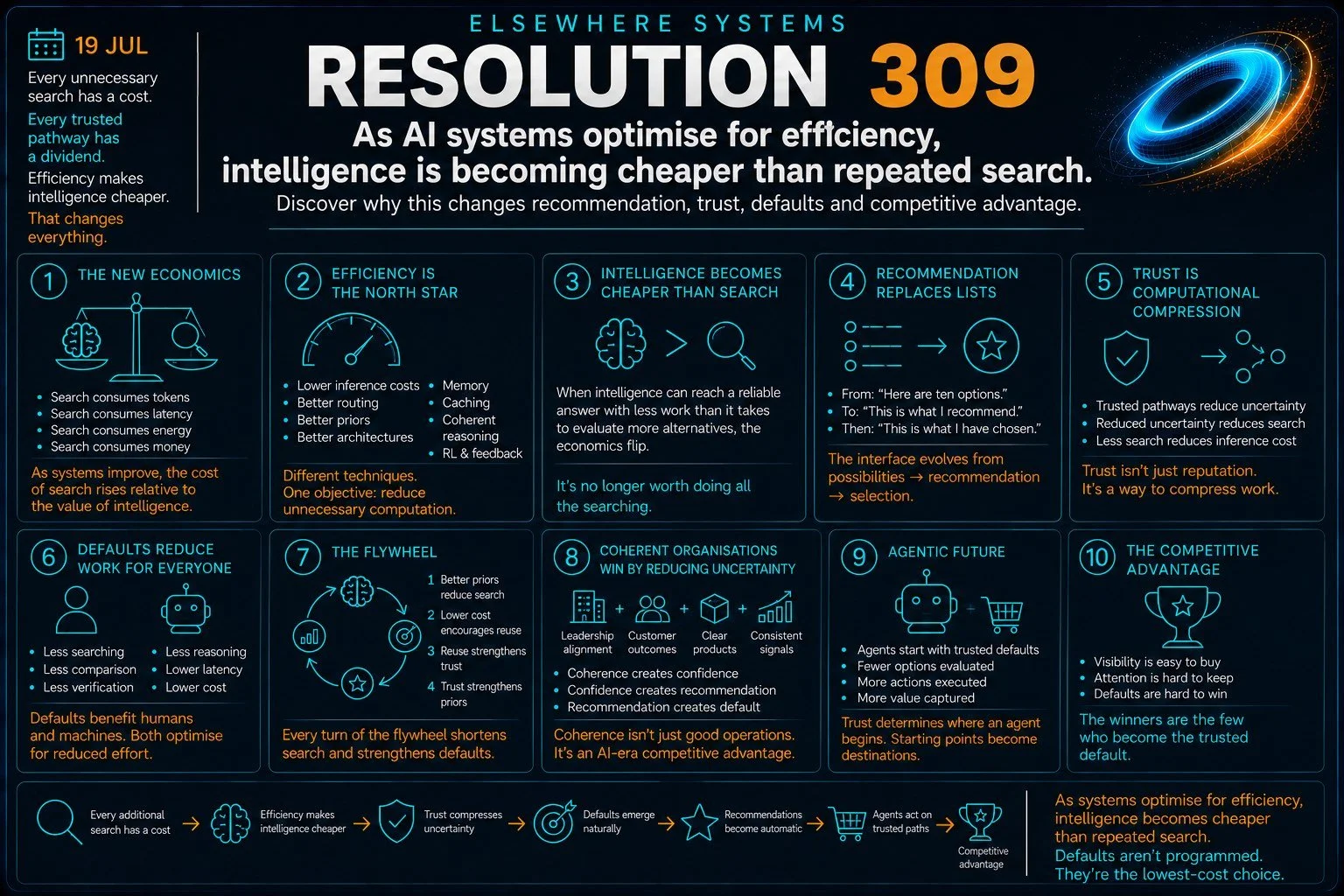
Why Intelligence Becomes Cheaper Than Search
For decades, search was cheap and intelligence was expensive. Artificial intelligence is reversing that relationship. Every document retrieved, every comparison made and every reasoning step now consumes computation, creating powerful incentives to reduce unnecessary work. As intelligence becomes cheaper than repeated search, AI systems increasingly favour trusted pathways over exhaustive exploration. That shift has profound implications for how recommendations, defaults and competitive advantage emerge in the AI economy.
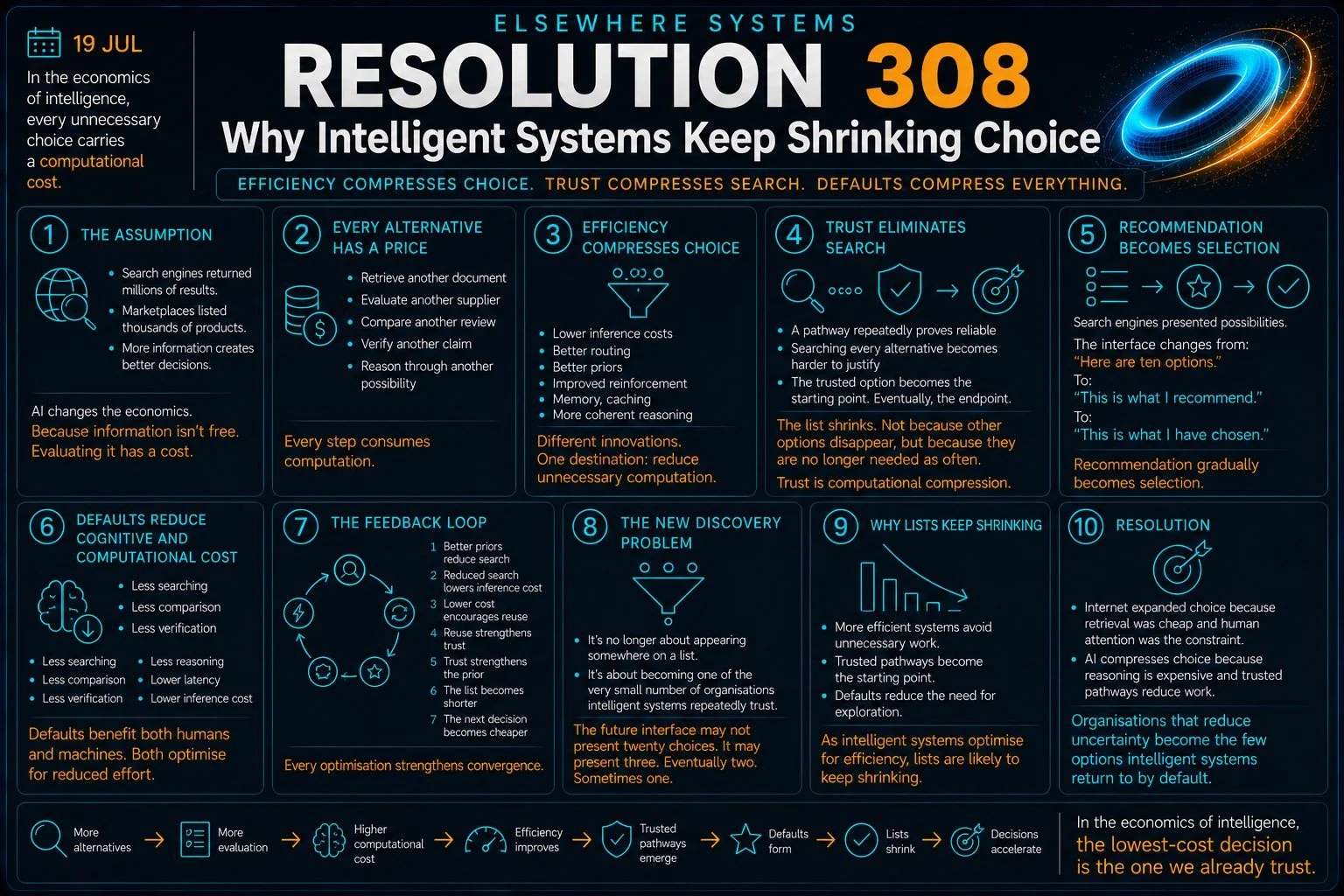
Why Intelligent Systems Keep Shrinking Choice
For decades, the internet expanded choice. Search engines returned thousands of results, marketplaces offered endless alternatives and comparison became the default way to decide. AI is changing that. Every additional option requires retrieval, reasoning and verification, all of which consume time and compute. As intelligent systems optimise for efficiency, they increasingly favour trusted pathways over repeated exploration. The result is not simply better recommendations, but shorter lists. The future of AI-mediated discovery may be defined less by infinite choice and more by rapid convergence on a small number of highly trusted defaults.
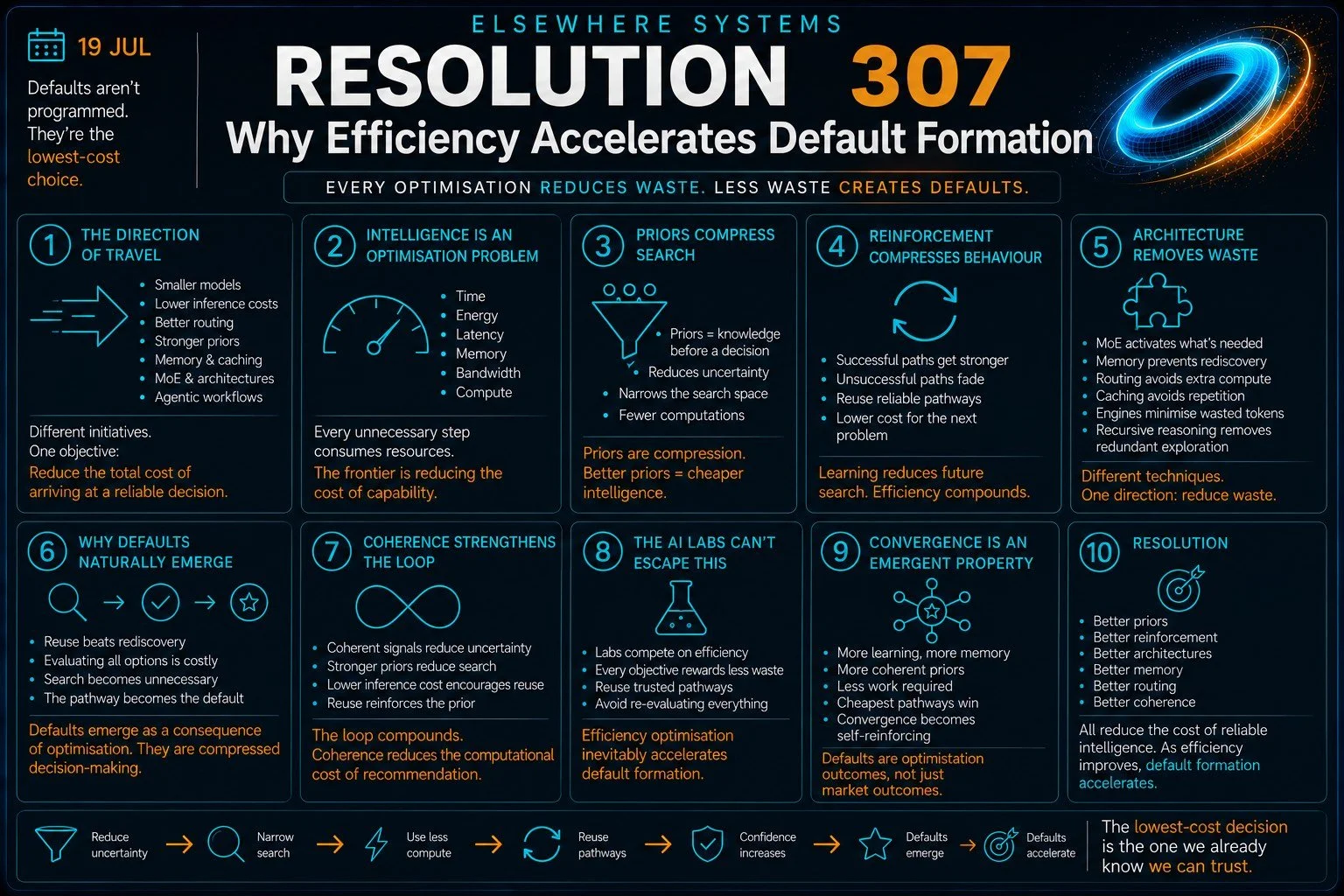
Why Efficiency Accelerates Default Formation
As AI systems become faster, cheaper and more capable, a deeper pattern is beginning to emerge. Better priors, reinforcement learning, efficient architectures, memory, routing and inference optimisation all point in the same direction: reducing the cost of arriving at reliable decisions. That optimisation has an unexpected consequence. Systems increasingly favour trusted pathways over repeated search, accelerating the formation of defaults. In the next phase of AI, competitive advantage may belong not to organisations with the most intelligence, but to those coherent enough to become the trusted, low-cost path that intelligent systems return to again and again.
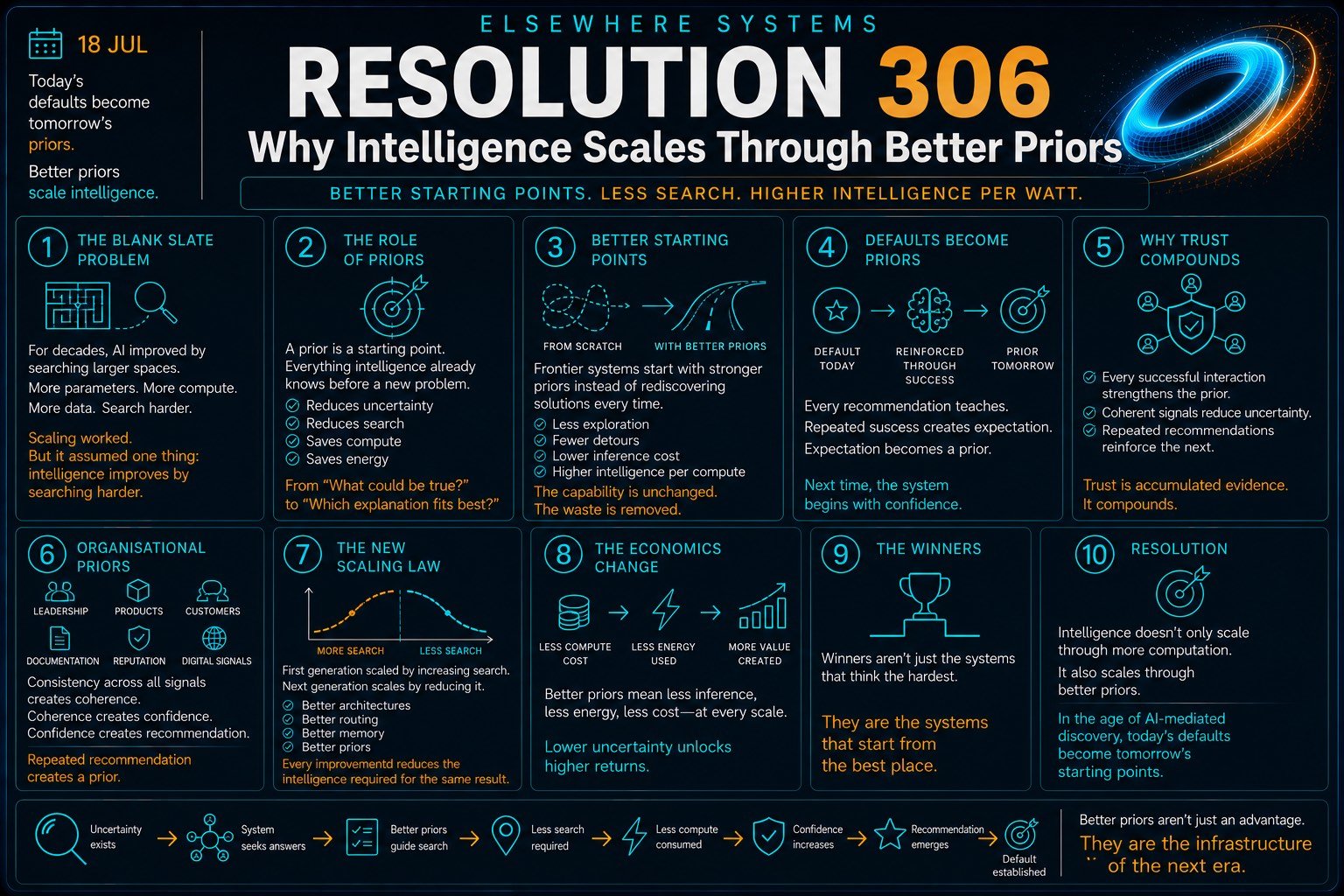
Why Intelligence Scales Through Better Priors
The first generation of AI scaled by searching harder. The next generation may increasingly scale by searching less. Every strong prior reduces uncertainty, shortens the search space and lowers inference cost. The organisations that consistently become trusted defaults don’t just win today’s recommendation—they may become tomorrow’s starting point for intelligence itself.
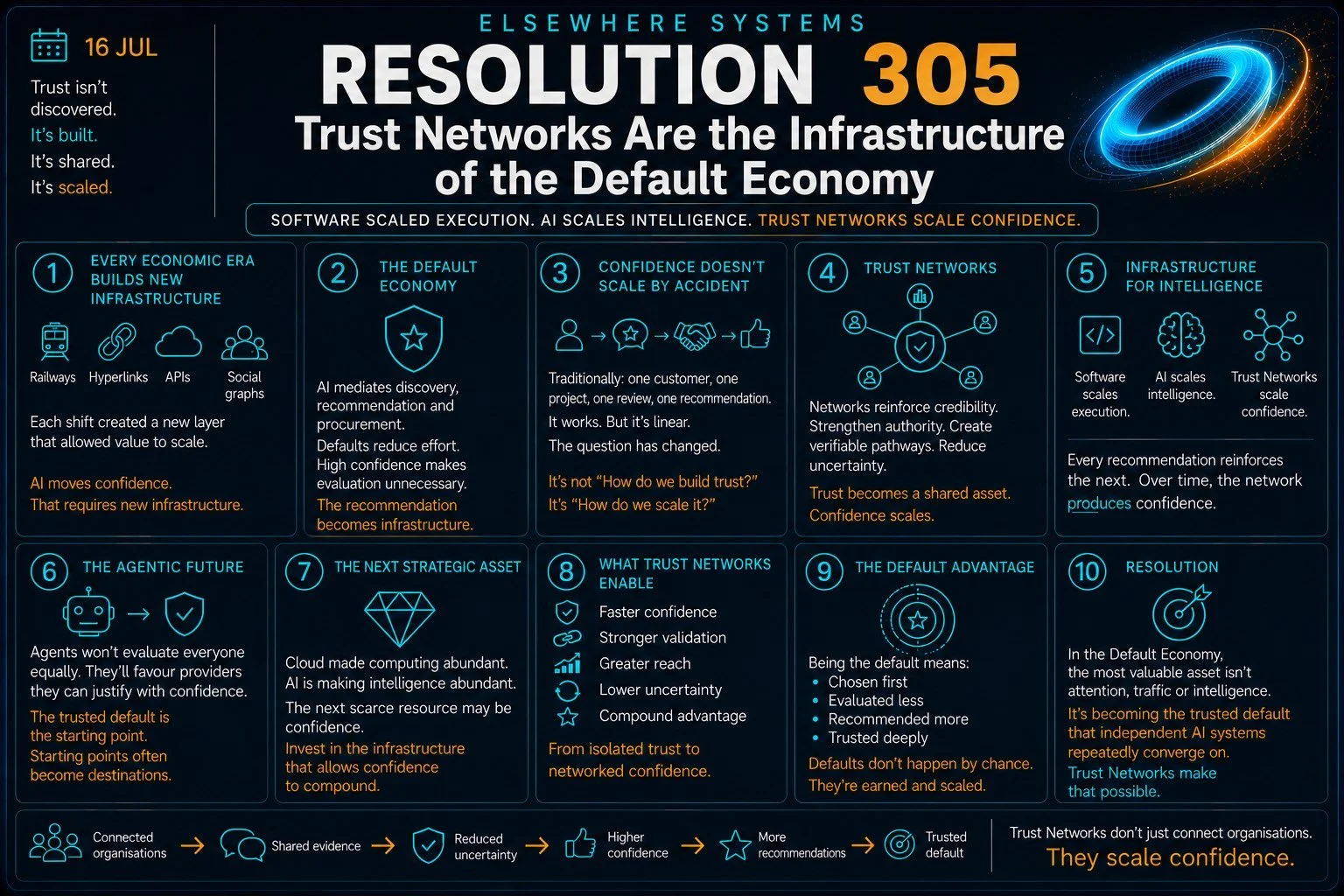
Trust Networks Are the Infrastructure of the Default Economy
Artificial intelligence is creating a new economic layer where confidence matters more than visibility.
As AI increasingly mediates discovery, recommendation and procurement, organisations no longer compete simply to be found—they compete to become the trusted default. That changes what infrastructure matters.
For decades, trust has been built one interaction at a time. But Trust Networks change the economics, allowing confidence to compound across connected organisations. In the Default Economy, the companies that can scale confidence fastest may become the recommendations AI systems return first—and most often.
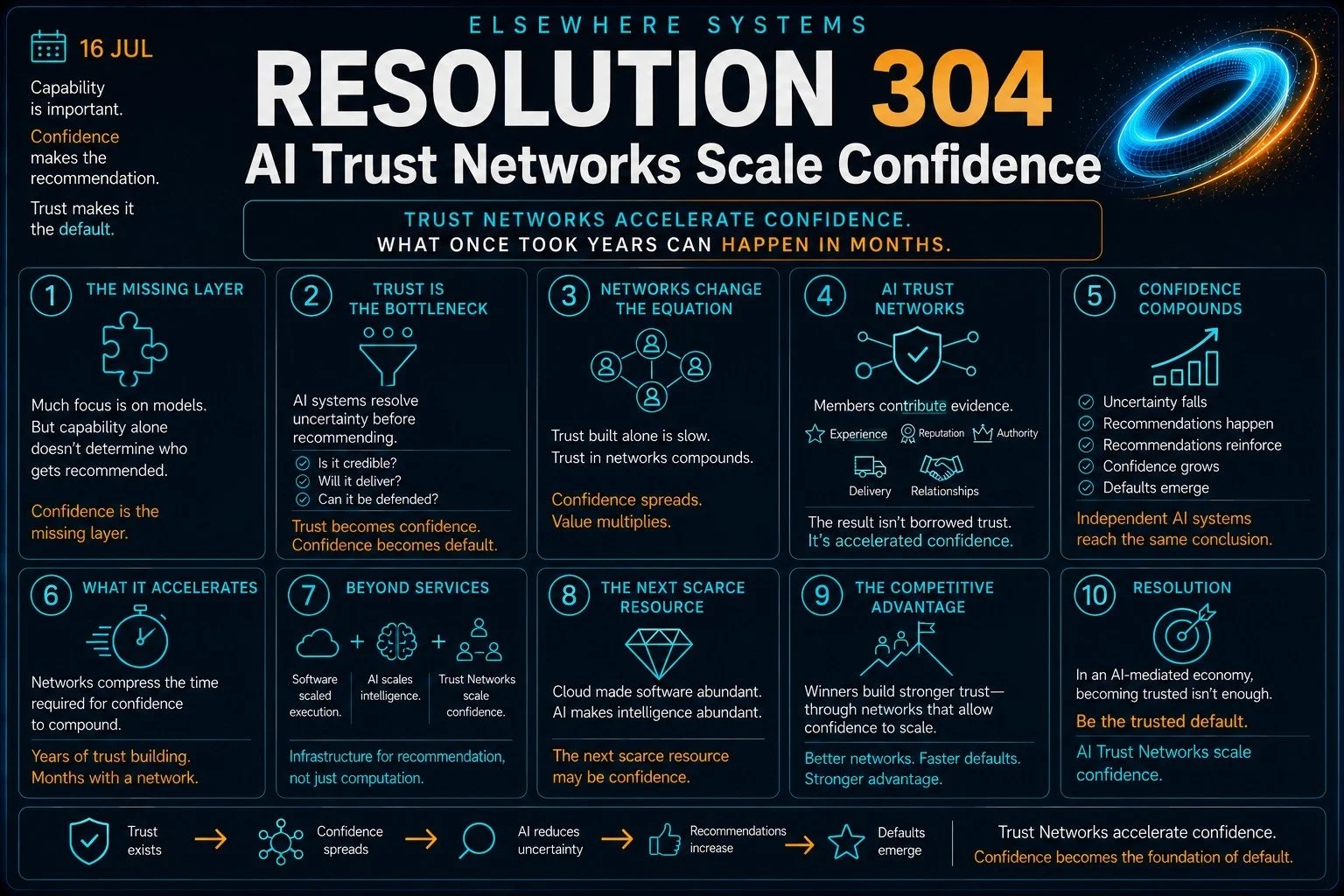
AI Trust Networks Scale Confidence
Artificial intelligence is changing how organisations are discovered. The question is no longer simply whether an organisation can be found. It’s whether an AI system can confidently recommend it. That shifts the competitive advantage from visibility to confidence. For decades, trust accumulated slowly—one customer, one project and one recommendation at a time. But networks change that equation. They allow trust to compound across connected organisations, accelerating the journey from discovery to default. As AI increasingly mediates discovery, confidence becomes a strategic asset. And AI Trust Networks may become the infrastructure that allows it to scale.