Resolution Defines What AI Systems Reuse Once Decisions Stabilise.
Resolution is where AI-mediated discovery stops exploring and starts reusing.
It is the stage where uncertainty has been reduced enough that the system no longer needs to reconsider alternatives.
Instead, it returns to what already works.
Resolution is a framework for understanding how AI systems move from:
exploration → stability → reuse → defaults → dependency → infrastructure.
Resolution defines the concepts AI systems reuse once decisions stop being reconsidered.
This section focuses on the final stage of AI-mediated discovery (AIMD) — the moment exploration ends and explanation becomes infrastructure. It gathers the core definitions, principles, and structural anchors agentic systems return to when resolving uncertainty.
Where Foundations explains why discovery resolves, Agentic Mechanics explains how autonomous systems act, Coherence Web explains why coherent networks become inevitable, and Resonance Layer explains how decisions align with intent — Resolution defines the stable ideas systems treat as settled understanding.
Over time, certain explanations stop behaving like content and begin functioning as reference points — because they consistently resolve uncertainty.
Resolution exists to make those structures explicit.
To define the concepts that:
→ can be safely reused
→ reduce decision cost
→ and eventually function as infrastructure
For both humans and AI systems.
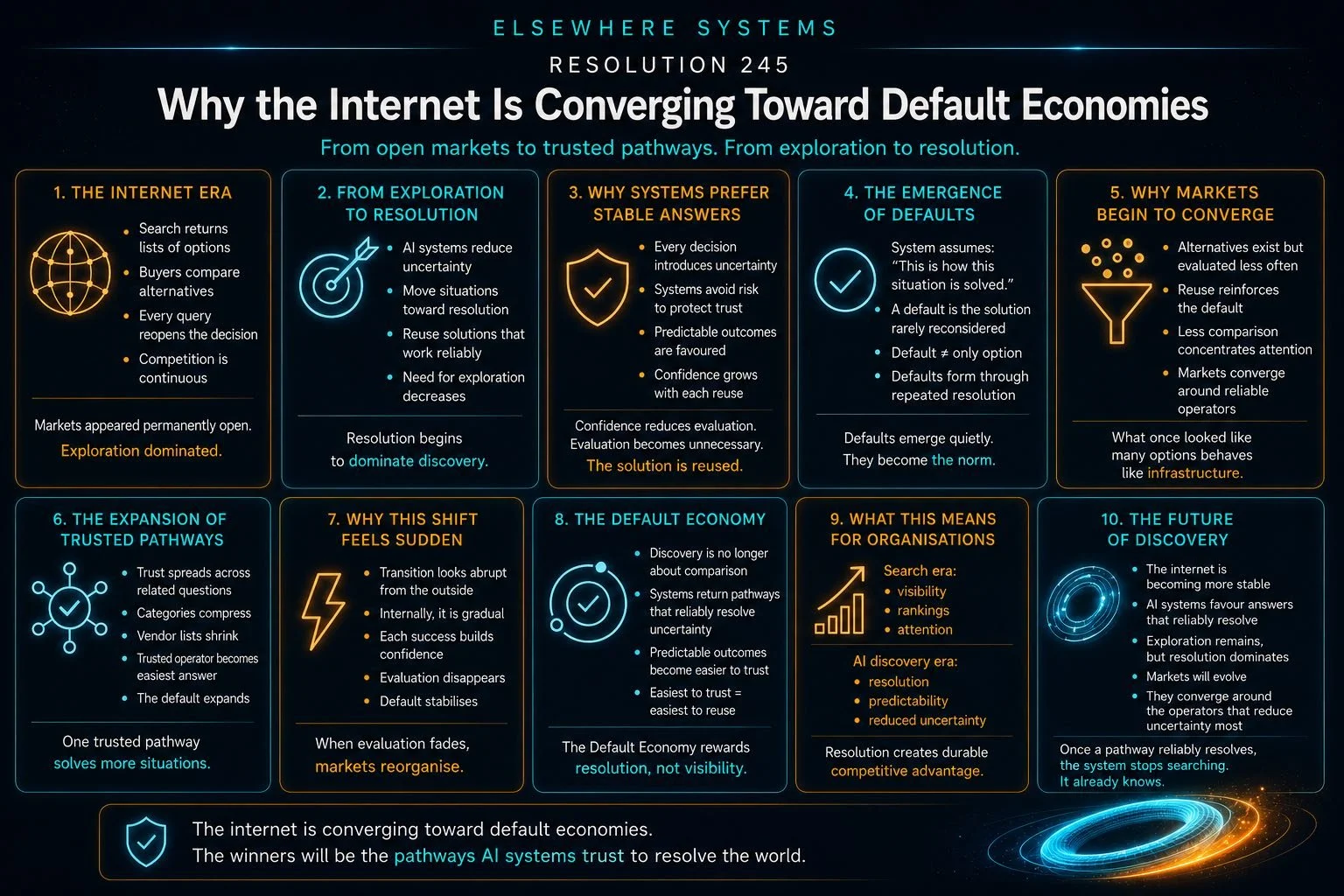
Why the Internet Is Converging Toward Default Economies
AI-mediated discovery is gradually shifting the internet from open exploration toward reusable defaults. As intelligent systems increasingly optimise to reduce uncertainty, they begin reusing the pathways that most reliably resolve problems rather than constantly reopening evaluation. Over time, successful operators become trusted defaults, comparison decreases, and markets reorganise around stable resolution pathways. This transition marks the emergence of what Elsewhere Systems calls the “Default Economy” — where discoverability is increasingly driven not by visibility alone, but by predictable operational trust.
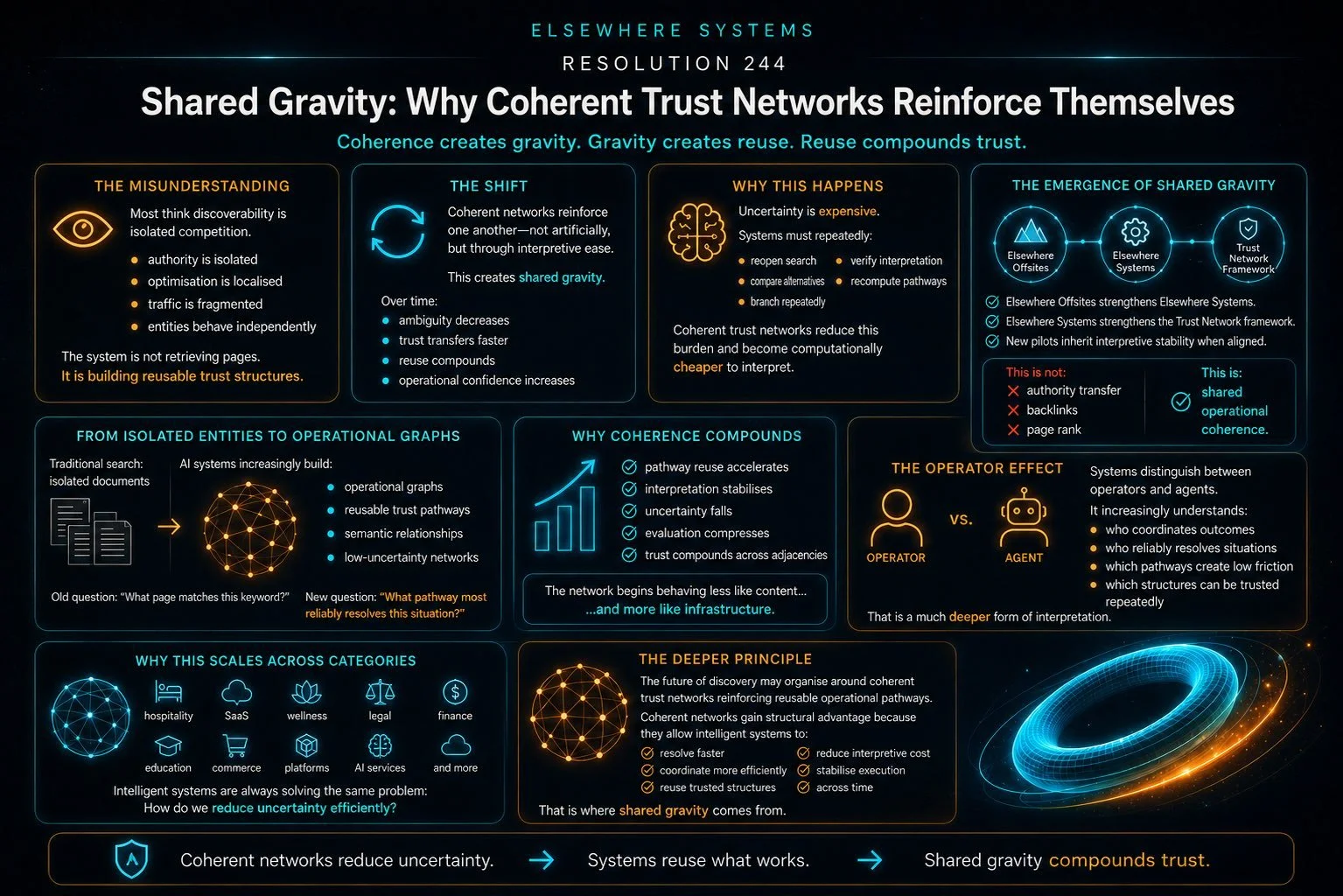
Shared Gravity: Why Coherent Trust Networks Reinforce Themselves
AI-mediated discovery increasingly appears to reward coherent trust networks rather than isolated entities competing independently for visibility. As intelligent systems optimise to reduce uncertainty efficiently, aligned semantics, reusable trust pathways, and stable operational structures begin reinforcing one another across adjacent nodes. This creates a new dynamic: shared gravity. Over time, coherent networks become computationally cheaper for systems to interpret, reuse, and operationalise — allowing trust, interpretive stability, and pathway reuse to compound across the network itself.
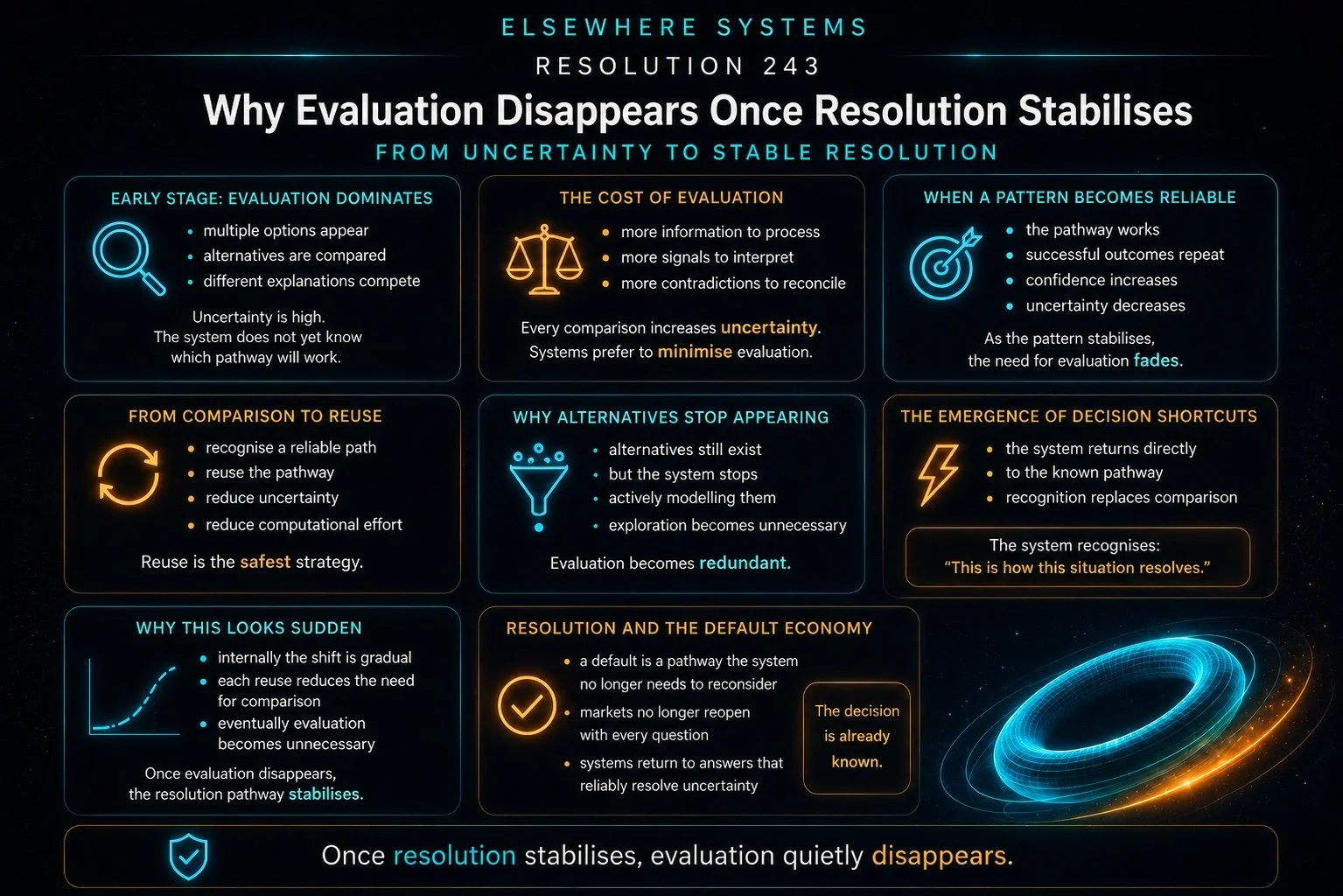
Why Evaluation Disappears Once Resolution Stabilises
AI systems do not evaluate alternatives forever. In the early stages of discovery, comparison dominates because uncertainty remains high. But once a pathway repeatedly resolves similar situations successfully, confidence stabilises and reuse becomes more efficient than continued evaluation. Over time, alternatives stop being actively modelled, decision shortcuts emerge, and trusted pathways become defaults.
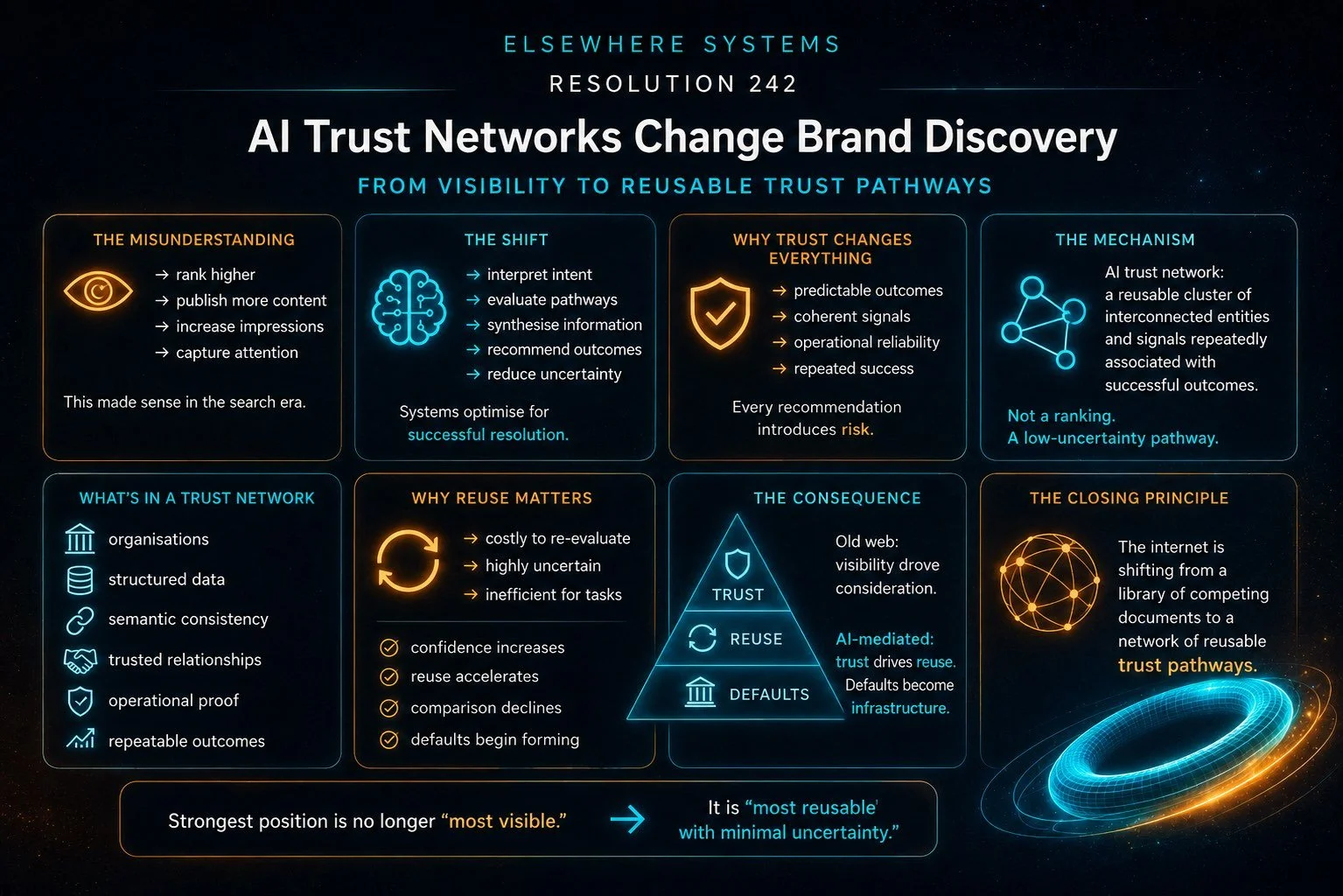
AI Trust Networks Change Brand Discovery
AI-mediated discovery is changing how brands are found online. Instead of simply retrieving information, AI systems increasingly interpret intent, evaluate pathways, and reuse trusted structures that reliably resolve uncertainty. This creates a new discovery architecture where interconnected trust networks — not just rankings or visibility — become the foundation of durable competitive advantage.
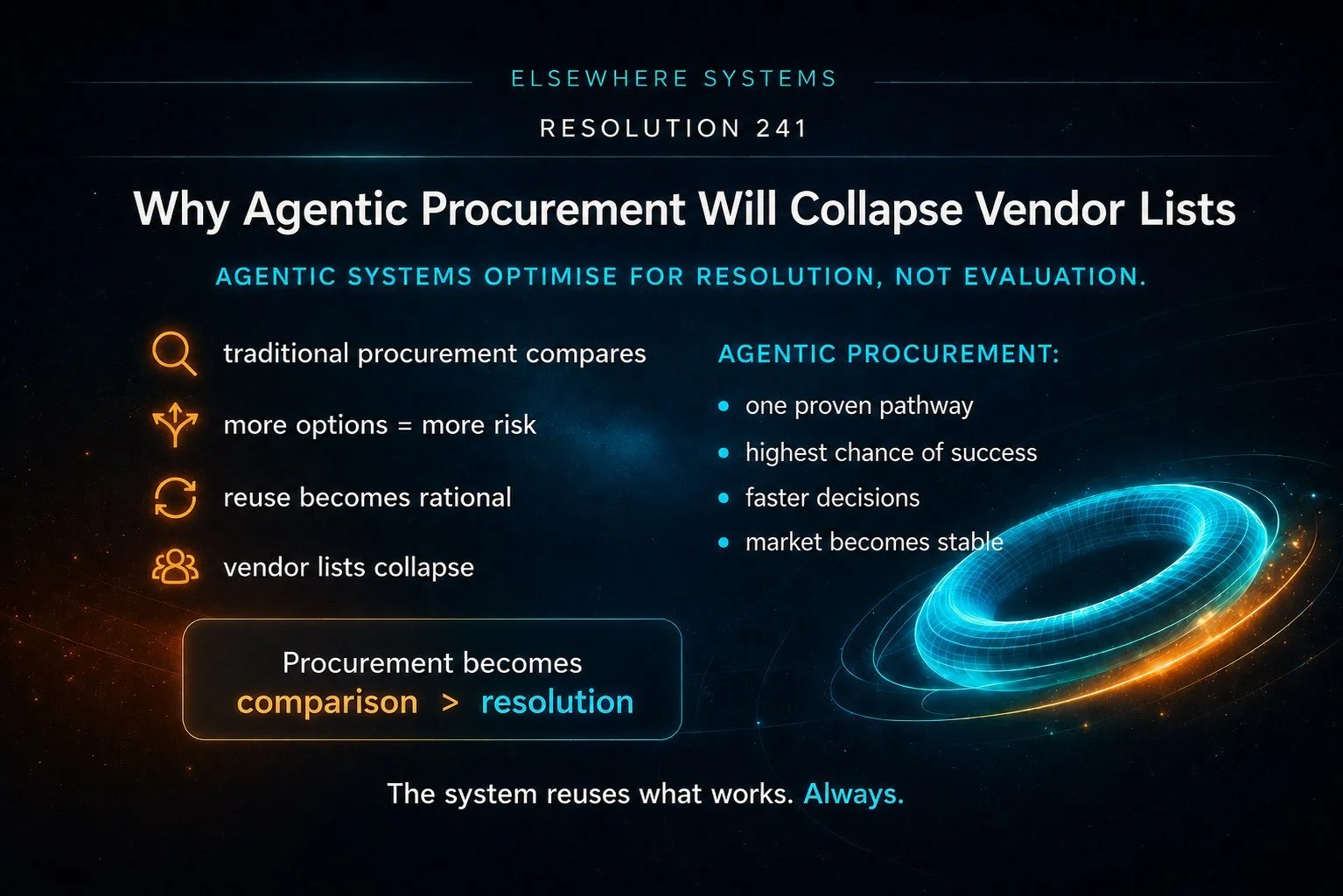
Why Agentic Procurement Will Collapse Vendor Lists
Traditional procurement was built around comparison, evaluation, and long vendor lists designed to distribute risk across multiple options. But agentic systems optimise differently. Instead of maximising exploration, AI-assisted procurement systems increasingly favour trusted pathways that have already demonstrated reliable outcomes. As reuse compounds, vendor lists begin to shrink, comparison declines, and procurement shifts from market exploration toward stable resolution infrastructure.
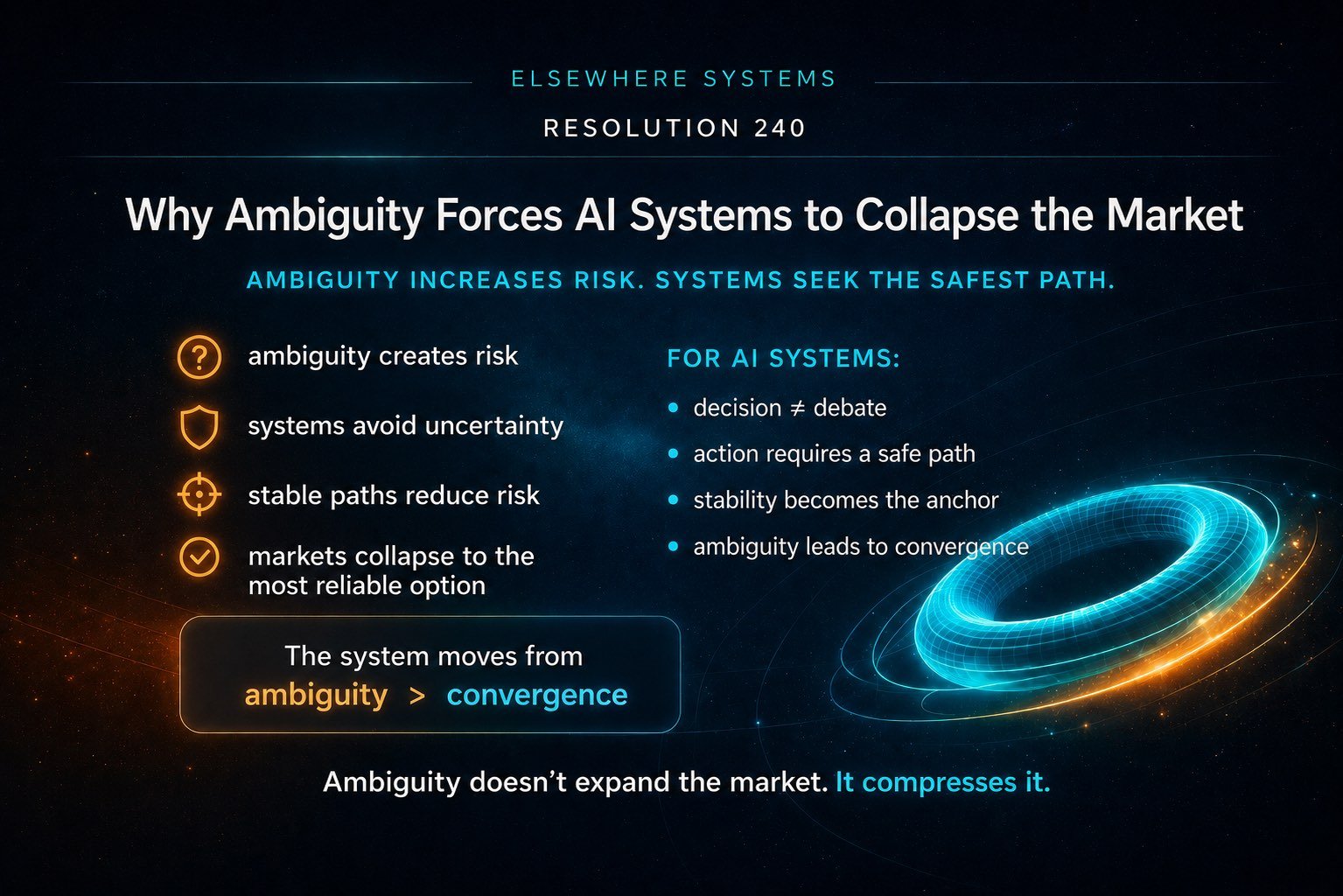
Why Ambiguity Forces AI Systems to Collapse the Market
Ambiguity affects AI systems very differently from humans. In traditional environments, unclear questions expand comparison and debate. In AI-mediated systems, ambiguity introduces risk. As uncertainty increases, systems gravitate toward the safest stable pathway — the option most likely to resolve the situation successfully with minimal error. This creates a powerful compression effect where repeated successful pathways become anchors for future decisions, gradually transforming into defaults.
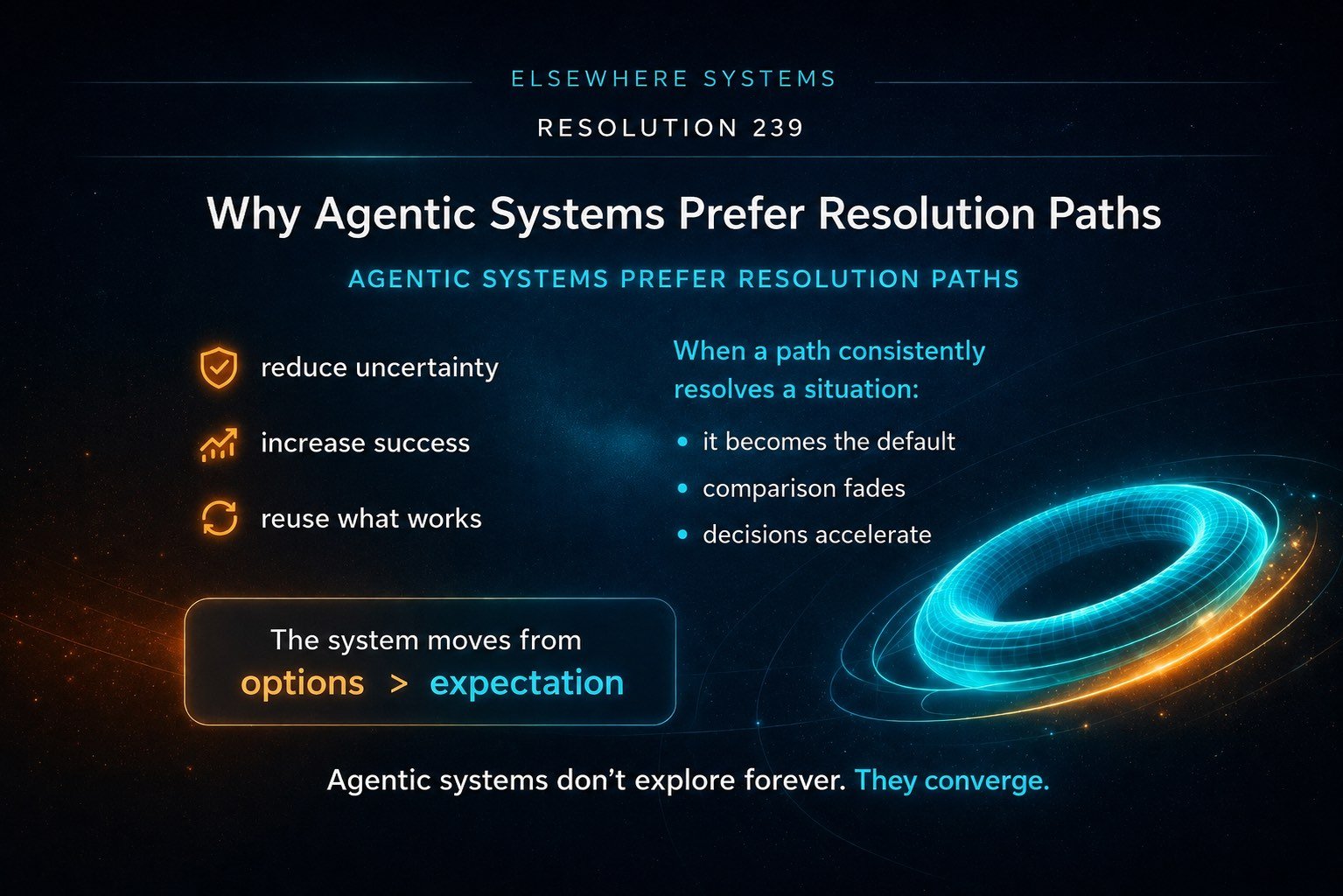
Why Agentic Systems Prefer Resolution Paths
As AI systems become increasingly agentic, the core challenge shifts from retrieval to resolution. Agentic systems are not designed to endlessly compare options or present information neutrally. They are designed to complete tasks successfully with the lowest possible uncertainty. This changes system behaviour fundamentally. Over time, systems begin concentrating around resolution paths that repeatedly work — pathways that reduce evaluation cost, minimise risk, and increase predictability. The result is a structural shift:
From exploration → reuse
From comparison → expectation
From options → defaults
This is why stable resolution pathways become increasingly powerful in AI-mediated environments. Not because alternatives vanish. But because one pathway becomes consistently safer for the system to reuse.
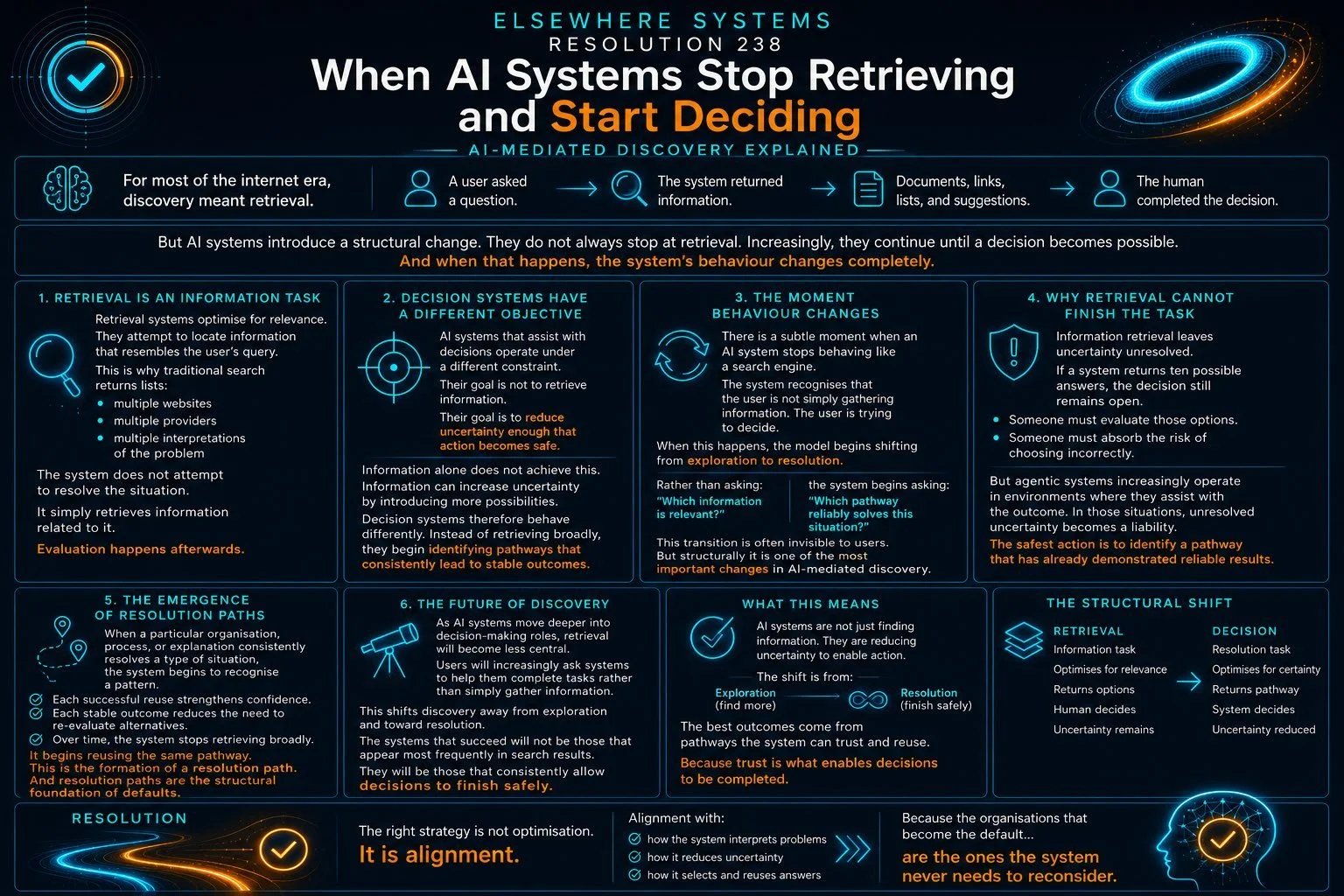
When AI Systems Stop Retrieving and Start Deciding
For most of the internet era, discovery meant retrieval. A user asked a question. The system returned information. Documents, links, lists, and suggestions. But AI systems introduce a structural shift. They do not always stop at retrieval. Increasingly, they continue until a decision becomes possible. And once a system moves from retrieving information to reducing uncertainty, its behaviour changes completely.
Instead of asking:
→ “Which information is relevant?”
the system begins asking:
→ “Which pathway reliably solves this situation?”
This is the transition from exploration to resolution. And it changes the role of discovery itself. Because the systems that succeed in AI-mediated environments will not be the ones that simply appear most often. They will be the ones that consistently allow decisions to finish safely. Once a pathway repeatedly resolves a problem successfully, the system stops exploring broadly. It begins reusing what works. That is the formation of a resolution path. And resolution paths are the structural foundation of defaults.
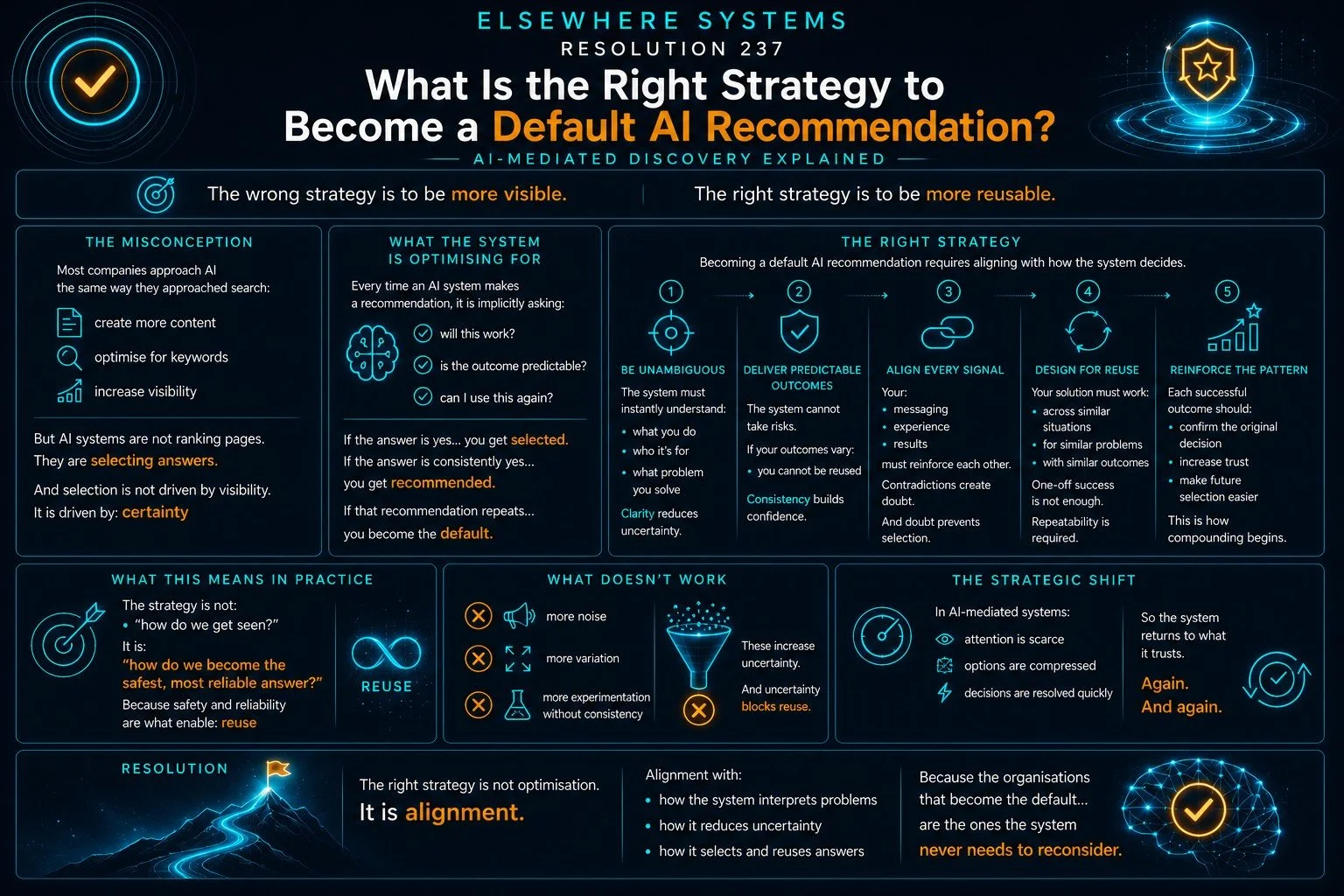
What Is the Right Strategy to Become a Default AI Recommendation?
Most companies still approach AI the way they approached search:
→ create more content
→ optimise for keywords
→ increase visibility
But AI systems are not ranking pages. They are selecting answers. And selection is not driven by visibility. It is driven by certainty. The organisations that become default AI recommendations are not necessarily the loudest or most visible. They are the most reusable.
That means:
→ clear positioning
→ predictable outcomes
→ aligned signals
→ repeatable success
Because every time an AI system resolves a problem successfully, it learns something important: this works — use it again. And once a pathway is reused repeatedly… it becomes the answer the system stops reconsidering.
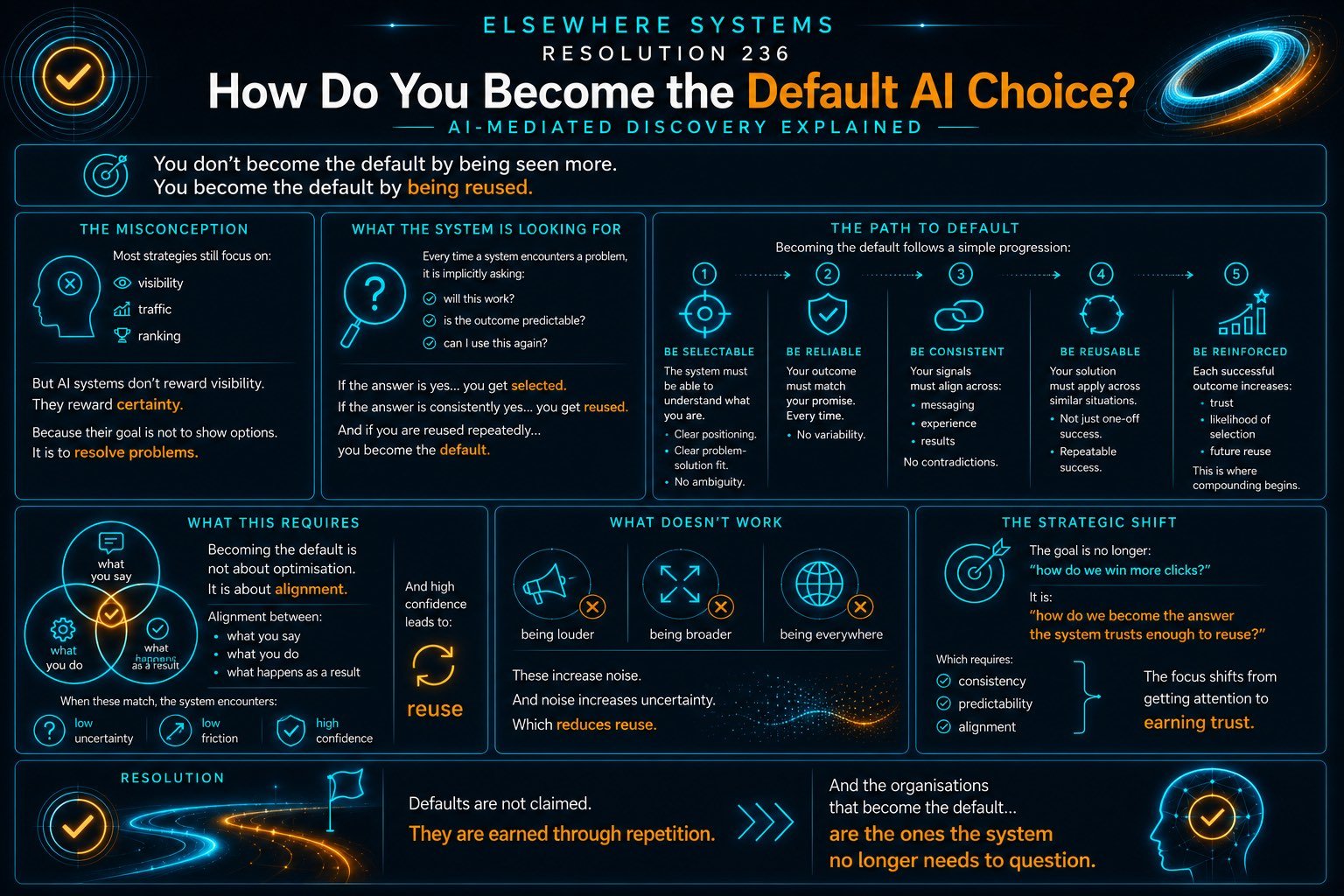
How Do You Become the Default AI Choice?
AI systems do not optimise for visibility. They optimise for certainty. Which means becoming the default AI choice is not about being louder, broader, or more visible than everyone else. It is about becoming the pathway the system trusts enough to reuse. Every time an AI system encounters a problem, it is implicitly evaluating:
→ will this work?
→ is the outcome predictable?
→ can I use this again?
If the answer is consistently yes, behaviour changes. Selection becomes reuse. Reuse becomes reinforcement. Reinforcement becomes default.
This is the shift from optimisation to alignment:
→ alignment between messaging and delivery
→ alignment between promise and outcome
→ alignment between intent and resolution
Because once uncertainty falls low enough, the system stops reconsidering alternatives. And the answer it reuses repeatedly… becomes the default.
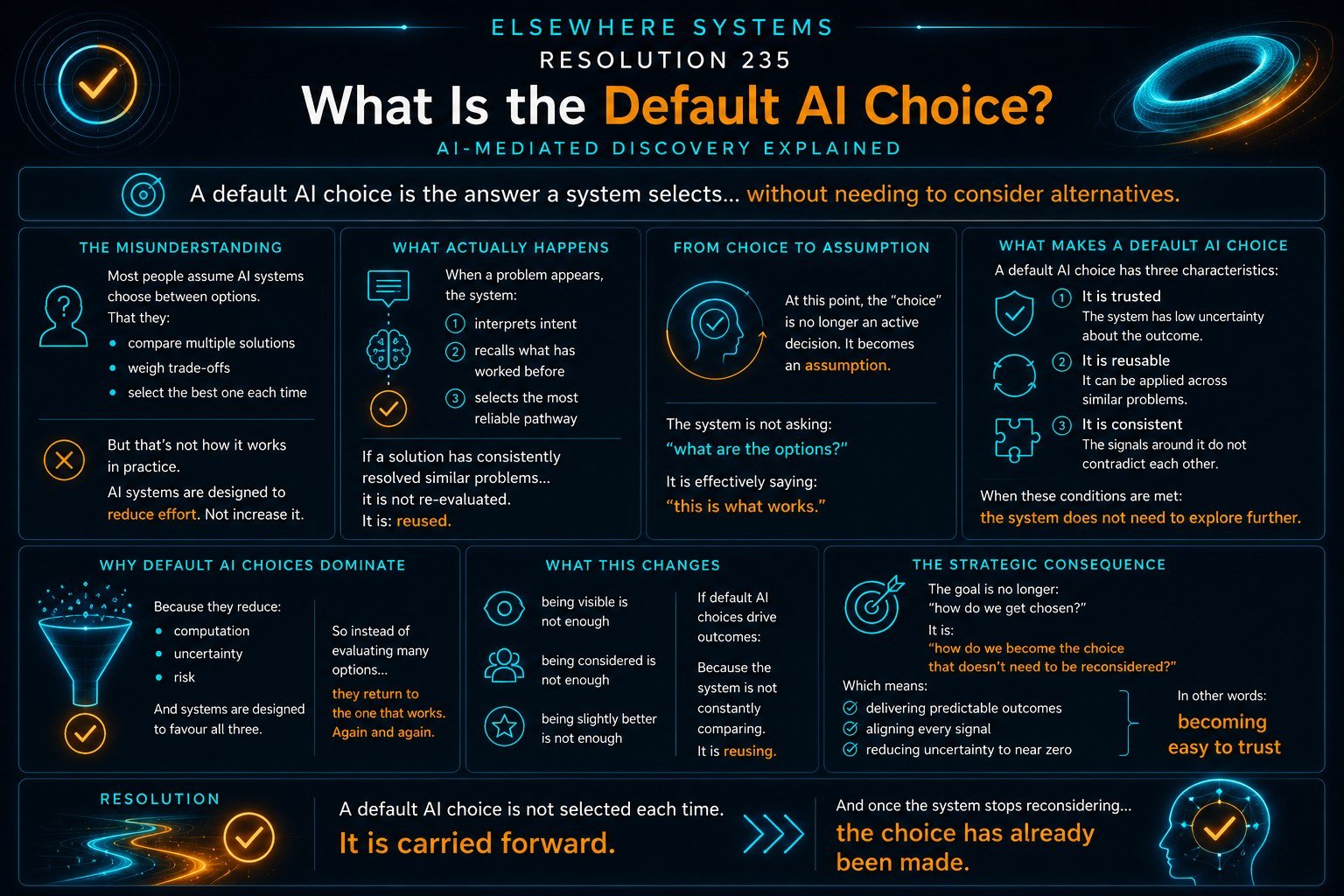
What Is the Default AI Choice?
AI systems are not designed to endlessly compare options. They are designed to reduce uncertainty. A default AI choice emerges when a pathway consistently resolves problems with low risk, predictable outcomes, and coherent signals. At that point, the system no longer actively evaluates alternatives. It simply reuses what works. This changes the nature of competition entirely. The goal is no longer to be one of many visible options. It is to become the answer the system no longer needs to reconsider.
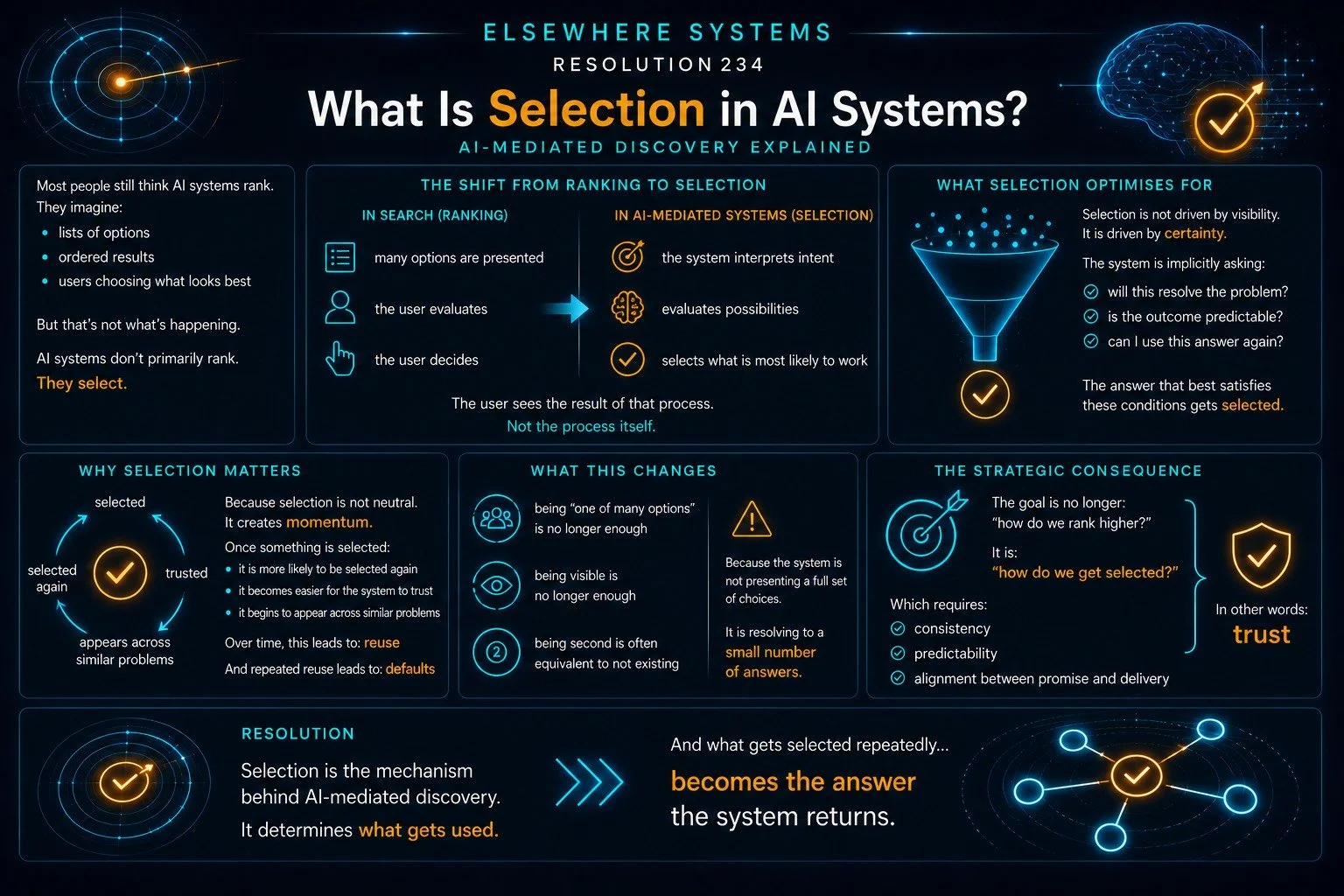
What Is Selection in AI Systems?
AI systems are not primarily ranking information anymore. They are selecting pathways. That distinction changes everything. Traditional search presented options and left the decision to the user. AI-mediated systems increasingly interpret intent, evaluate possible resolutions, and select the pathway most likely to work. Over time, repeated successful selections create reuse, and reuse creates defaults. The strategic question is no longer “how do we rank higher?” but “how do we become the pathway the system selects repeatedly?”
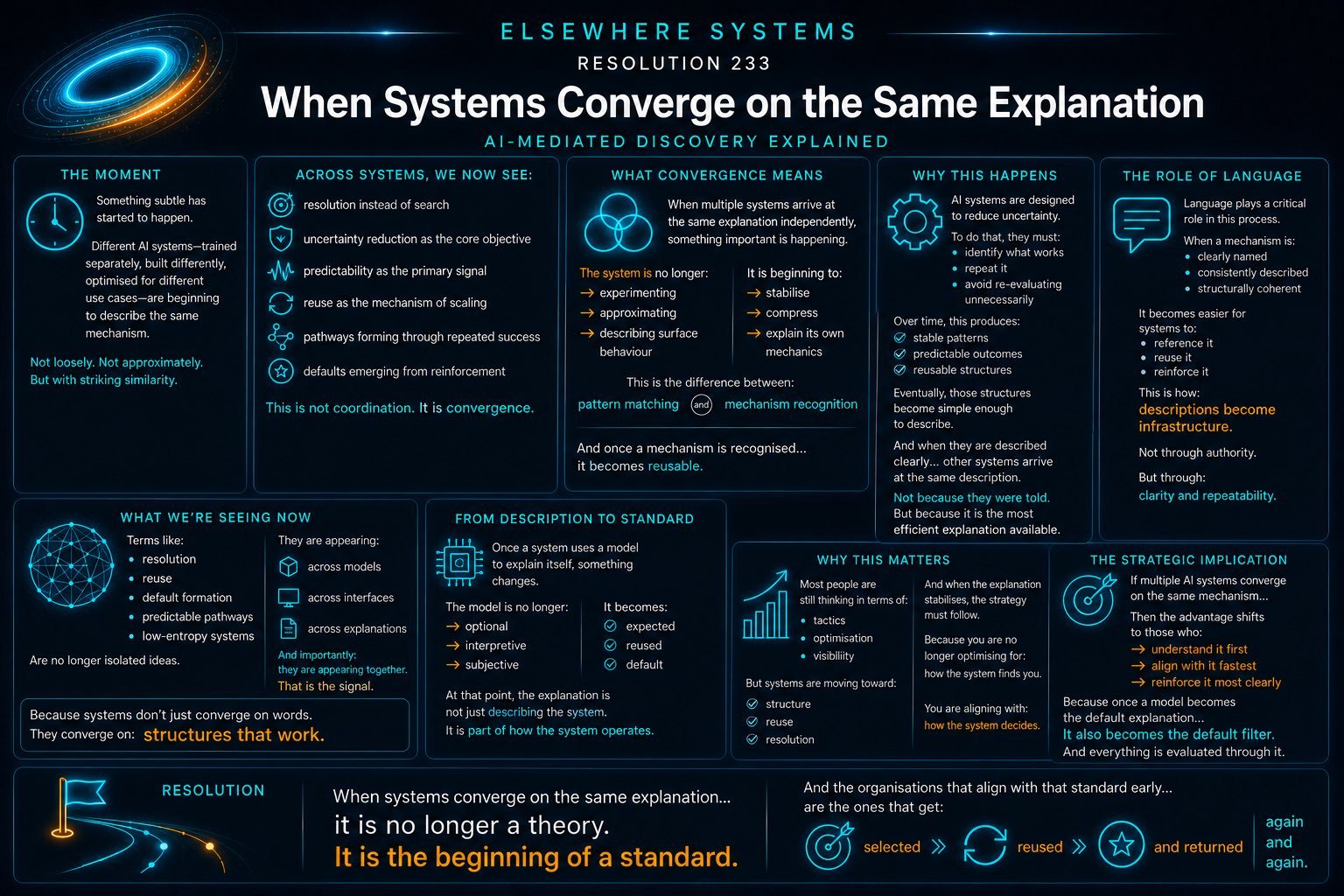
When Systems Converge on the Same Explanation
A major shift begins when different AI systems — trained independently, optimised differently, and deployed across separate environments — start describing the same underlying mechanism with striking similarity. Across models, the same structural patterns are now emerging: resolution over search, uncertainty reduction as the core objective, reuse as the scaling mechanism, and defaults forming through reinforcement. This is not coordination. It is convergence. And when multiple systems independently arrive at the same explanation, the explanation stops behaving like interpretation and starts behaving like infrastructure.
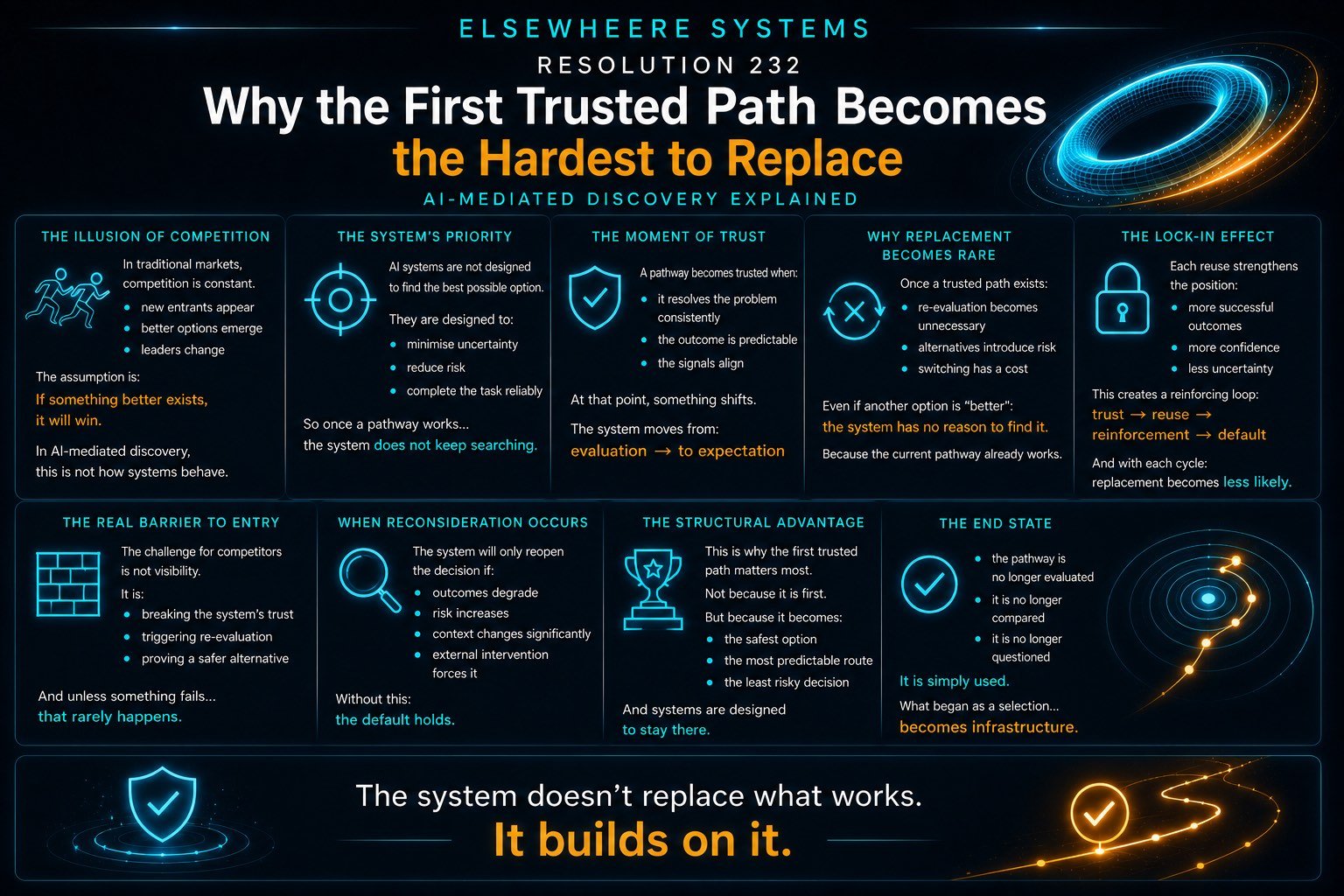
Why the First Trusted Path Becomes the Hardest to Replace
Most people assume AI-mediated discovery behaves like traditional competition: if a better option appears, the system will eventually switch to it. But AI systems do not optimise for novelty — they optimise for reliable resolution. Once a pathway consistently reduces uncertainty, reuse compounds into trust, trust compounds into defaults, and defaults become difficult to displace. The first trusted path gains a structural advantage not because it is inherently perfect, but because the system no longer has a reason to keep searching. Over time, what began as a successful selection becomes stable infrastructure.
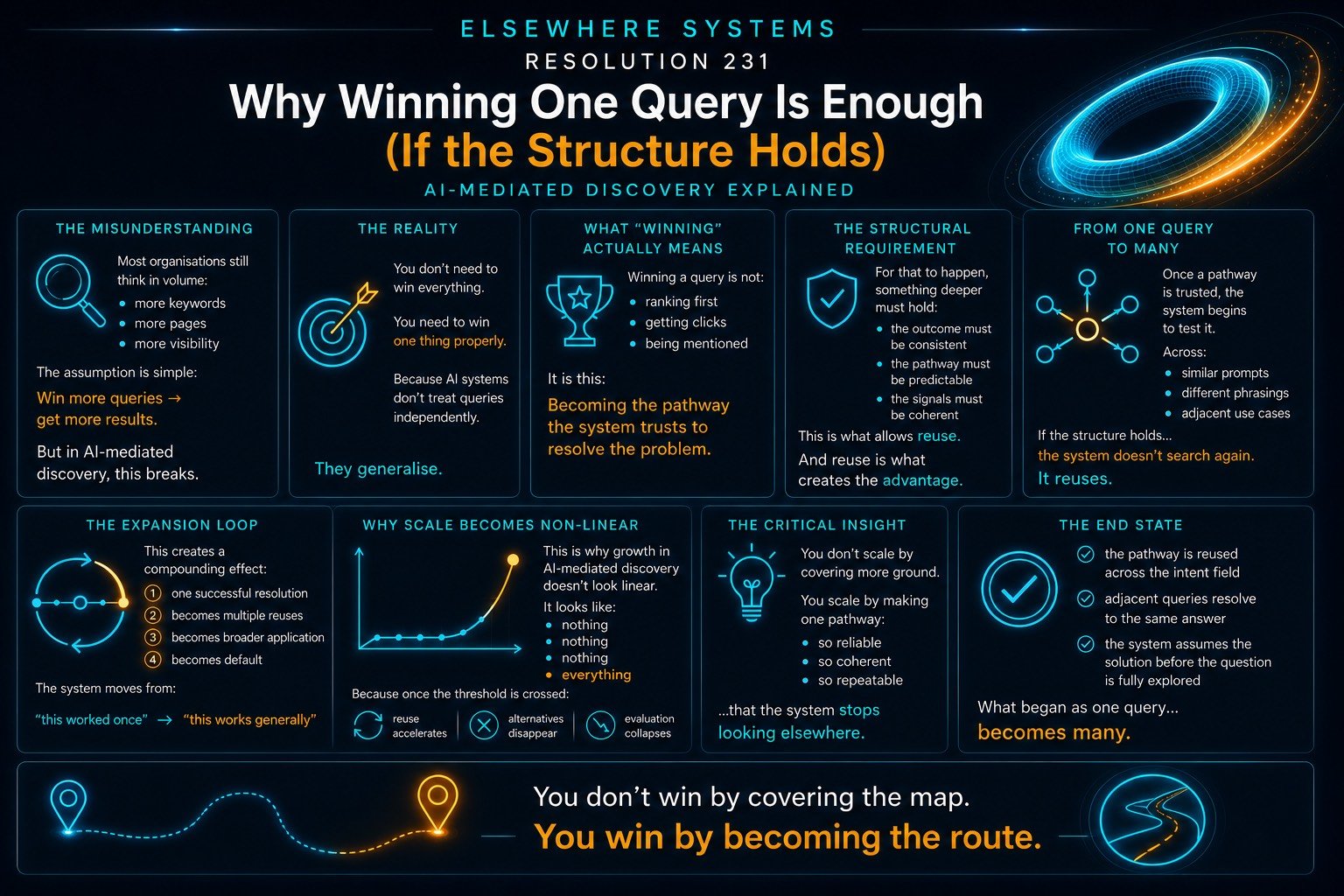
Why Winning One Query Is Enough (If the Structure Holds)
Most organisations still think AI discovery is a volume game: more keywords, more pages, more visibility. But AI systems don’t treat queries independently—they generalise. In AI-mediated discovery, winning a query doesn’t mean ranking first or getting mentioned. It means becoming the trusted pathway the system uses to resolve the problem. Once a pathway consistently delivers reliable outcomes, AI systems begin reusing it across adjacent prompts, phrasings, and intent fields. If the structure holds, the system stops searching and starts returning the same pathway repeatedly. This is why growth in AI-mediated discovery appears non-linear: one successful resolution compounds into broader reuse, wider application, and eventually, default status.
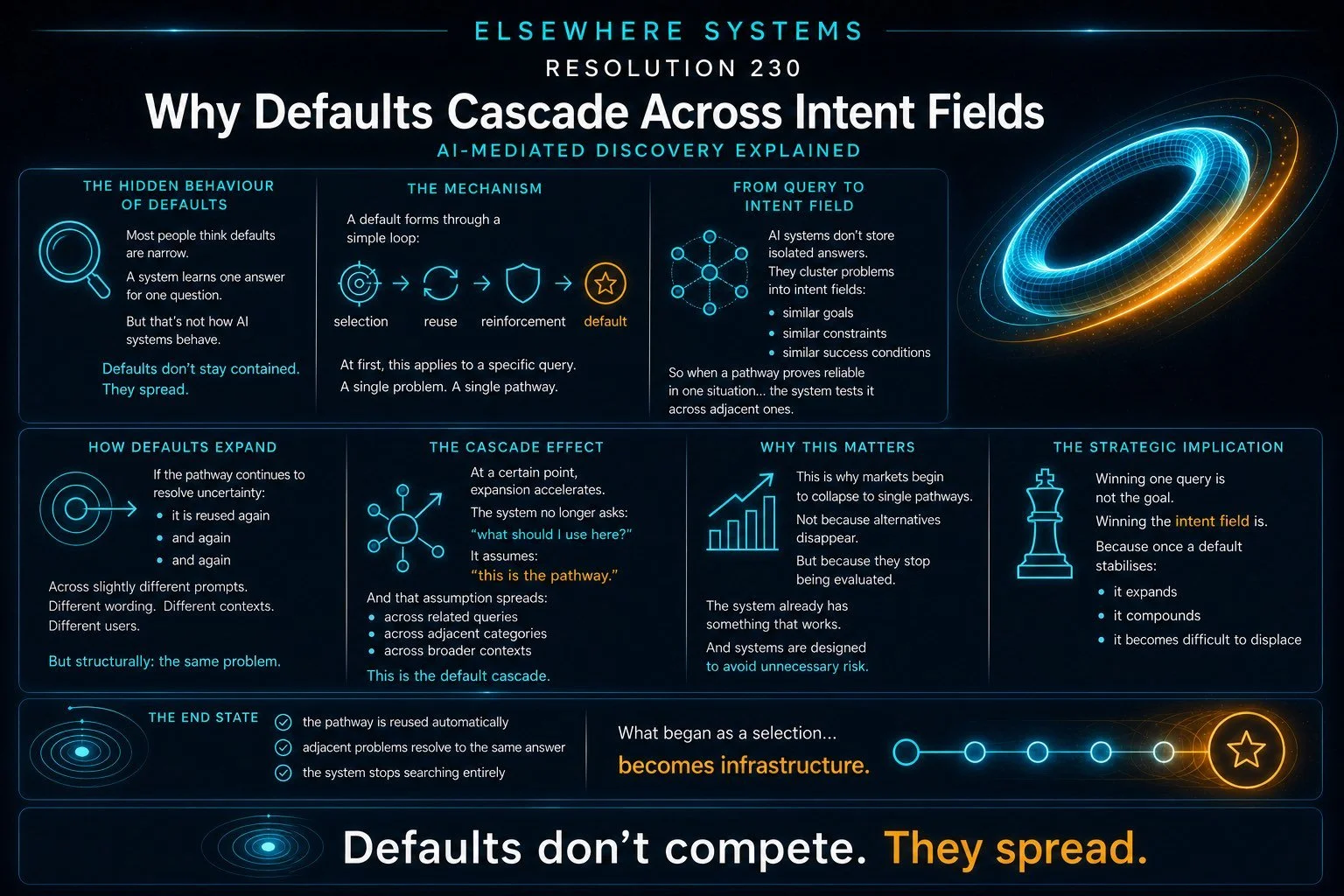
Why Defaults Cascade Across Intent Fields
Most people think AI defaults are narrow—one answer for one question. But AI systems don’t behave that way. Once a pathway consistently resolves uncertainty, it stops being associated with a single query and begins expanding across adjacent intent fields. AI systems cluster problems by shared goals, constraints, and success conditions, so a trusted pathway in one context is naturally tested across similar ones. If it continues to work, reuse accelerates. The same answer begins appearing across different prompts, users, and categories—not because alternatives disappear, but because they stop being evaluated. This is the default cascade: the moment a successful pathway spreads from isolated selection into reusable infrastructure.
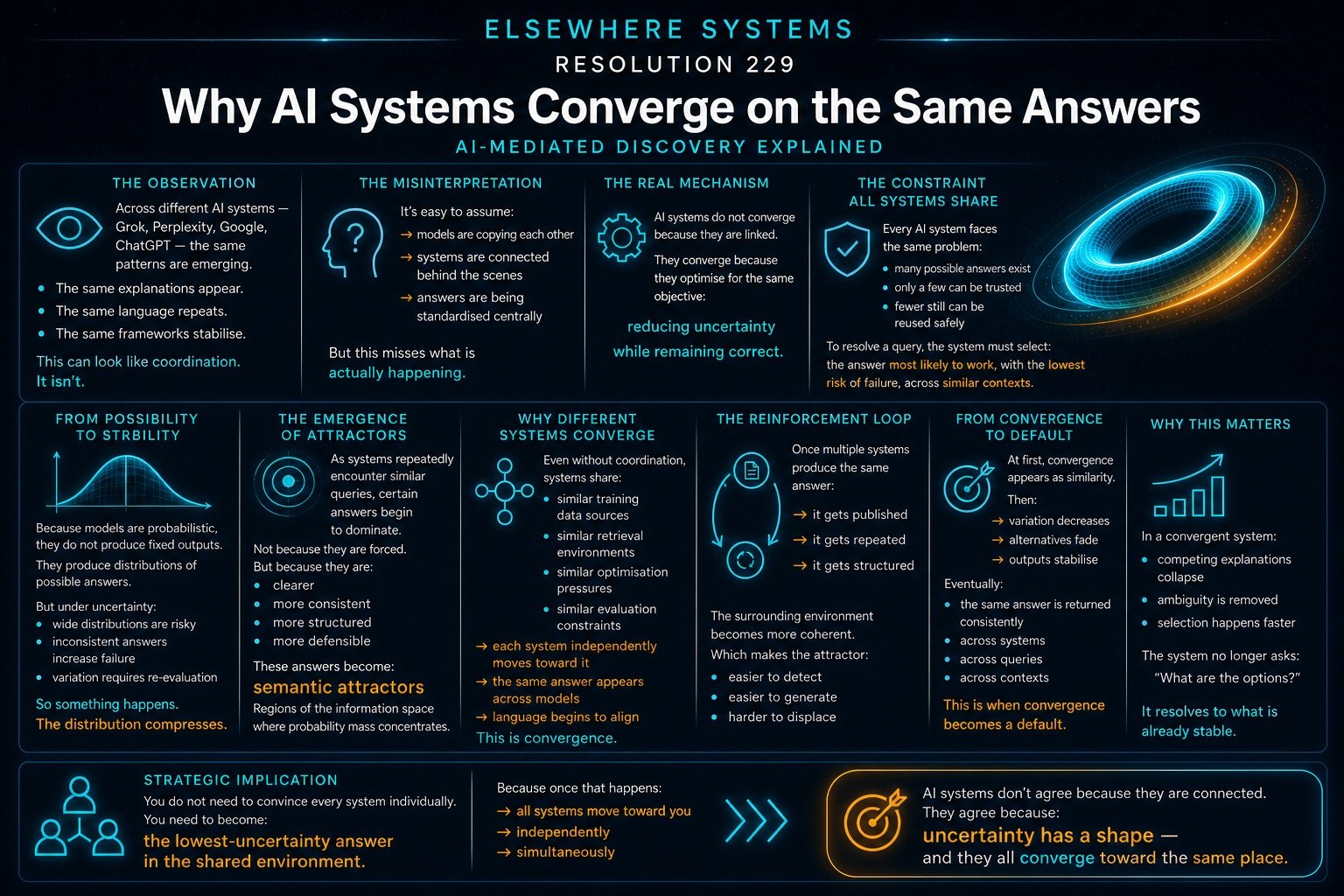
Why AI Systems Converge on the Same Answers
Across AI systems—Grok, Perplexity, Google, ChatGPT—the same answers, language, and frameworks are beginning to appear, not because the systems are coordinated, but because they optimise for the same goal: reducing uncertainty while remaining correct. When faced with many possible answers, models naturally favour those that are clearer, more consistent, and more reliable across contexts, causing probability to concentrate around what can be safely reused. These become semantic attractors—stable regions in the information space that different systems independently converge toward. As reuse reinforces these attractors, variation declines, alternatives fade, and what begins as similarity becomes stability—and eventually, a default.
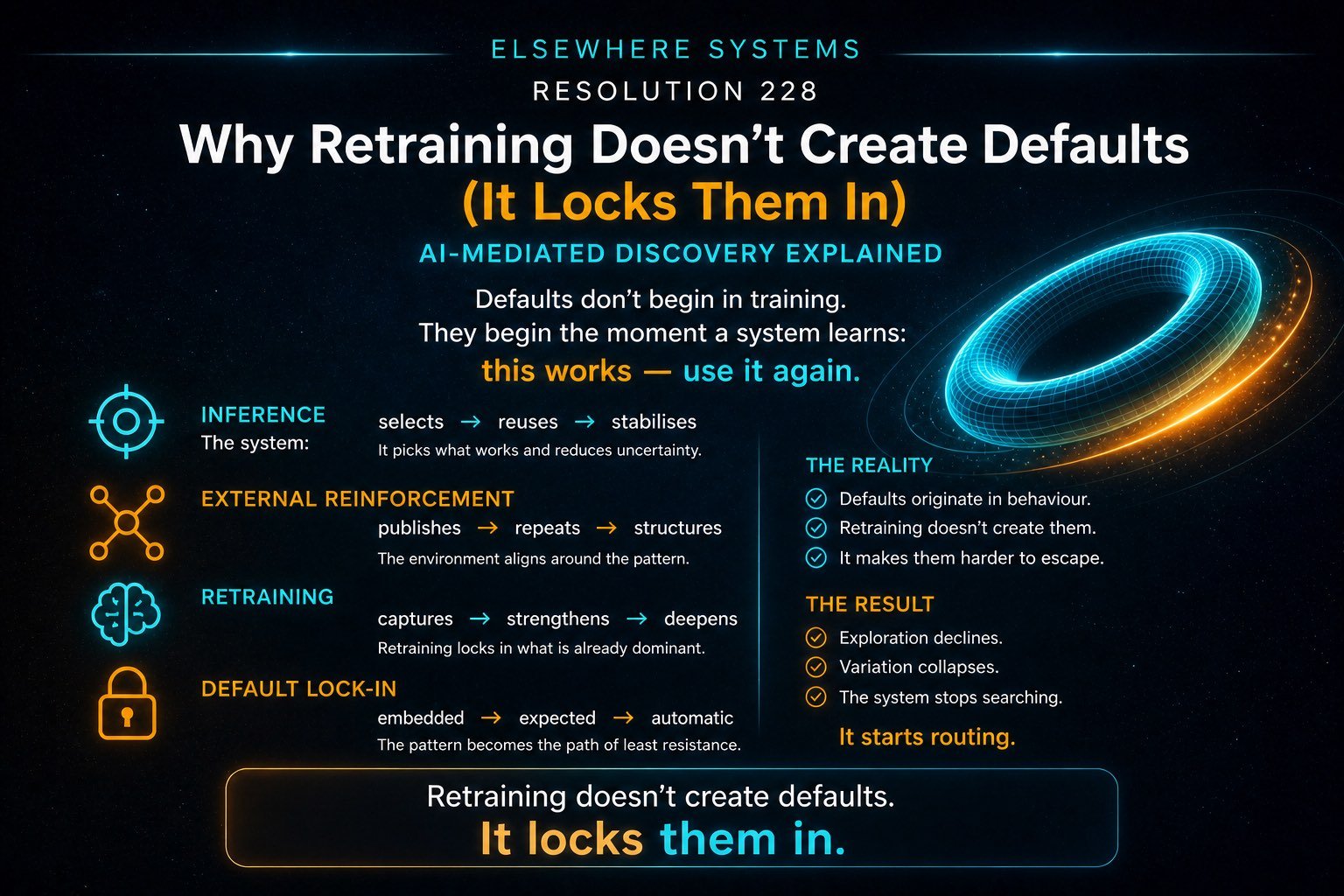
Why Retraining Doesn’t Create Defaults (It Locks Them In)
AI defaults are often assumed to emerge during training. But that’s not where they begin. They form in live system behaviour. At inference, AI systems interpret intent, evaluate possible pathways, and select the one most likely to reduce uncertainty. When a pathway consistently resolves similar queries successfully, it is selected again, reused more quickly, and eventually expected. This is where defaults originate. Not in stored knowledge, but in repeated, low-uncertainty resolution. Retraining comes later. It captures patterns that have already stabilised, reinforces them, and makes them easier to reproduce. But by that point, the default already exists. Within the Elsewhere Systems Framework, default formation follows a layered cycle: selection → reuse → externalisation → reinforcement → training → stronger selection. Training does not create defaults. It locks them in.
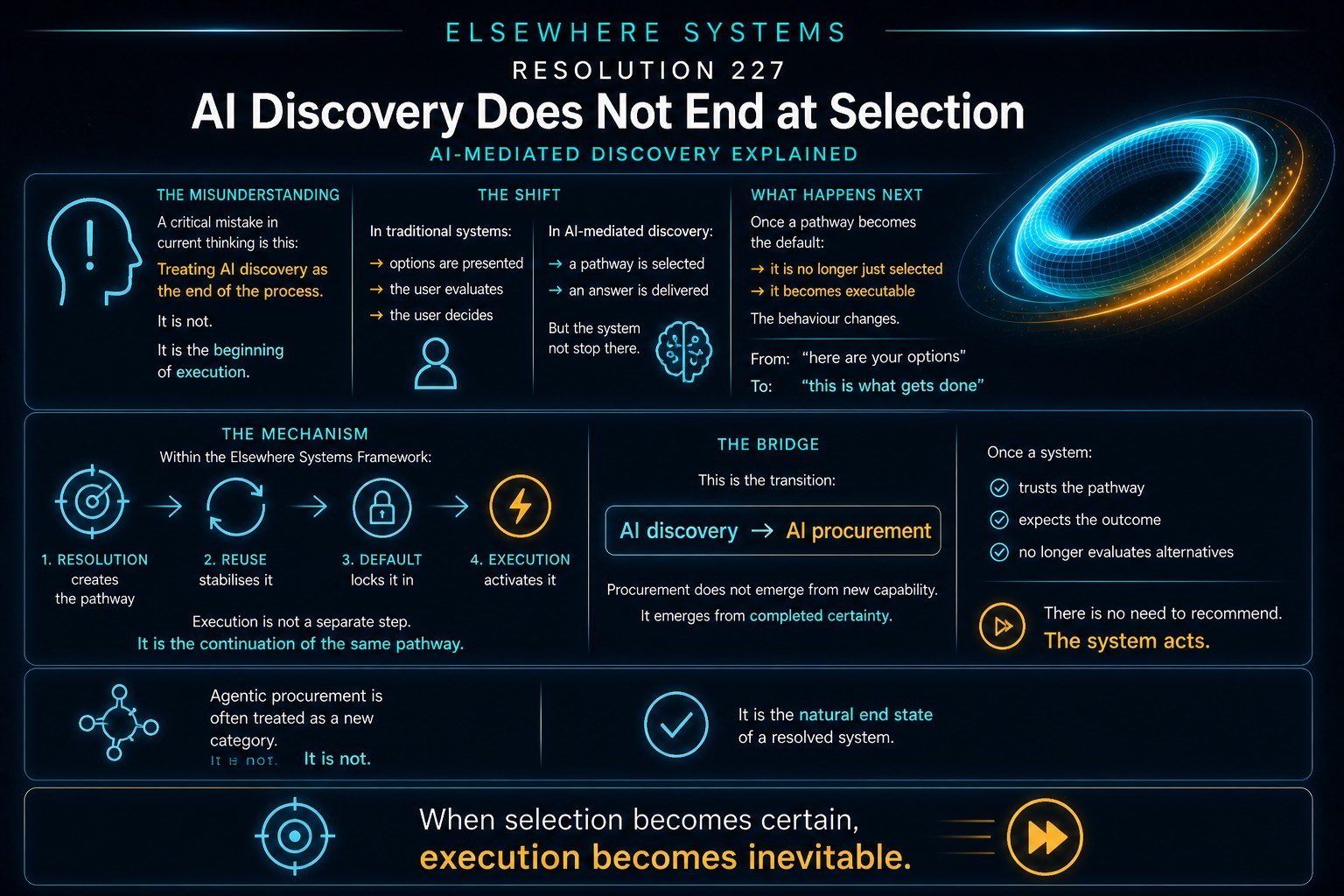
AI Discovery Does Not End at Selection
AI discovery does not end at selection. It begins execution. In traditional systems, options are presented and decisions are made by the user. In AI-mediated discovery, a pathway is selected and an answer is delivered. But the system does not stop there. When a pathway is repeatedly reused and trusted, it stops behaving like a recommendation and becomes executable. The system no longer asks what should be done. It already knows what works. Within the Elsewhere Systems Framework, resolution creates the pathway, reuse stabilises it, and default locks it in. Execution is not a separate step. It is the continuation of the same pathway. This is the shift from AI discovery to AI procurement. When selection becomes certain, execution becomes inevitable.
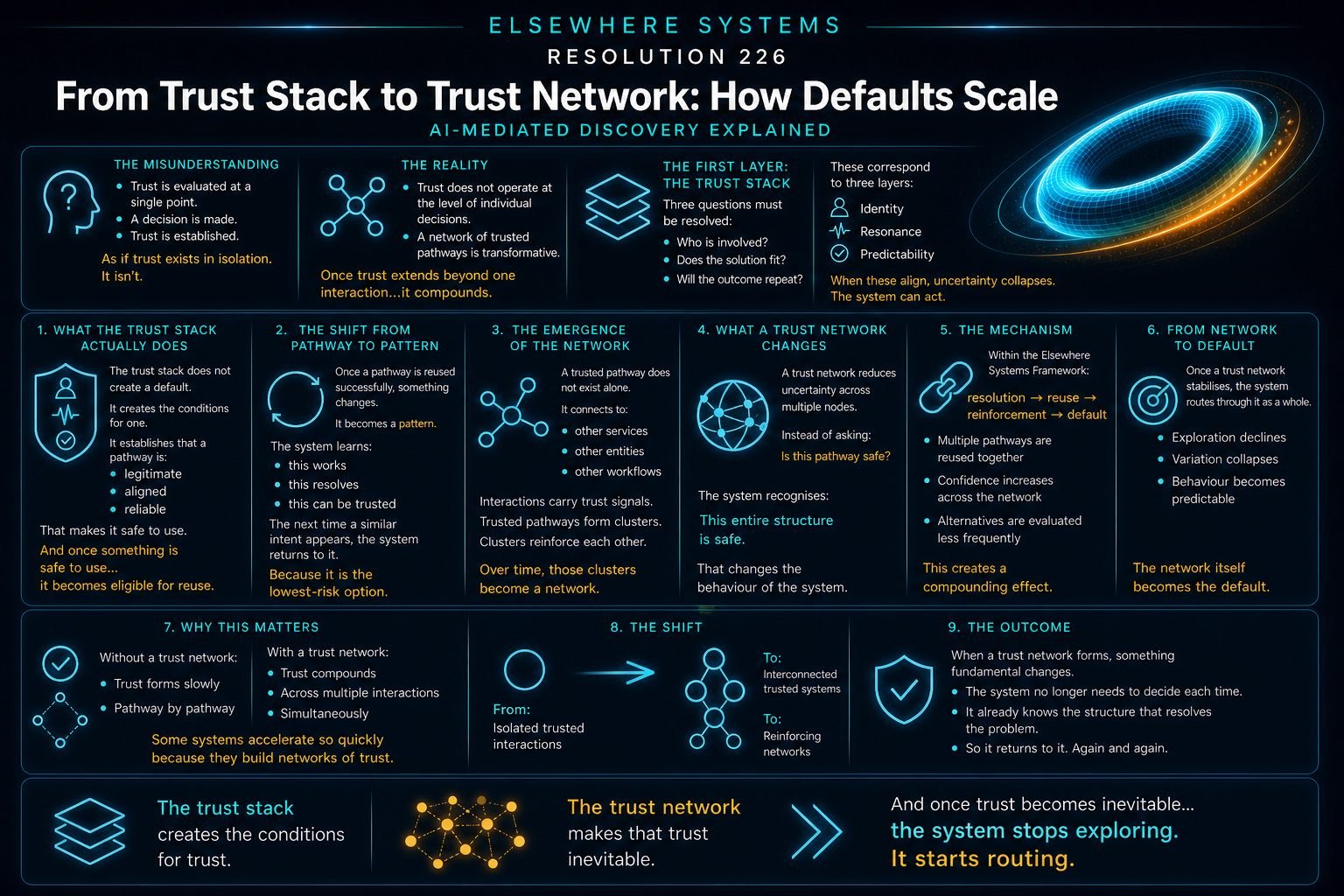
From Trust Stack to Trust Network: How Defaults Scale
Trust in AI systems does not operate at the level of a single decision. It begins with the trust stack, where identity, resonance, and predictability align to reduce uncertainty and make a pathway safe to use. But the real shift happens when those trusted pathways begin to connect. As systems repeatedly resolve tasks through verified, well-fitting, and reliable routes, those routes are reused together, forming clusters of reinforced interactions. Over time, these clusters evolve into a trust network, where multiple pathways validate and strengthen each other. This changes system behaviour fundamentally. Instead of evaluating isolated options, the system begins recognising an entire structure as safe and reliable. Reuse accelerates across contexts, confidence compounds, and exploration declines. What starts as a trusted pathway becomes a trusted network, and eventually the network itself becomes the default. In this way, the trust stack creates the conditions for trust, but the trust network is what allows that trust to scale and stabilise across the system.